同一款药线上线下价差四五倍,是“药店刺客”还是合理现象? ——秒词邦微信小程序

“一瓶再普通不过的维生素B2卖我26块6,网上一搜同款销量最高的不到8块钱,再便宜的只要五块钱左右。”说起近日在某家线下药店购药的经历,上海的小蒙依然难掩激动的情绪。
在药品销售渠道多元化的当下,同一款药存在一定的价差并非不可理解。对于小蒙来说,二十六块钱和五块钱的绝对价差也并非不可承受,但“差一两倍也就算了,按现在的价格算差了四五倍,作为消费者就是有种‘背刺’的感觉”。
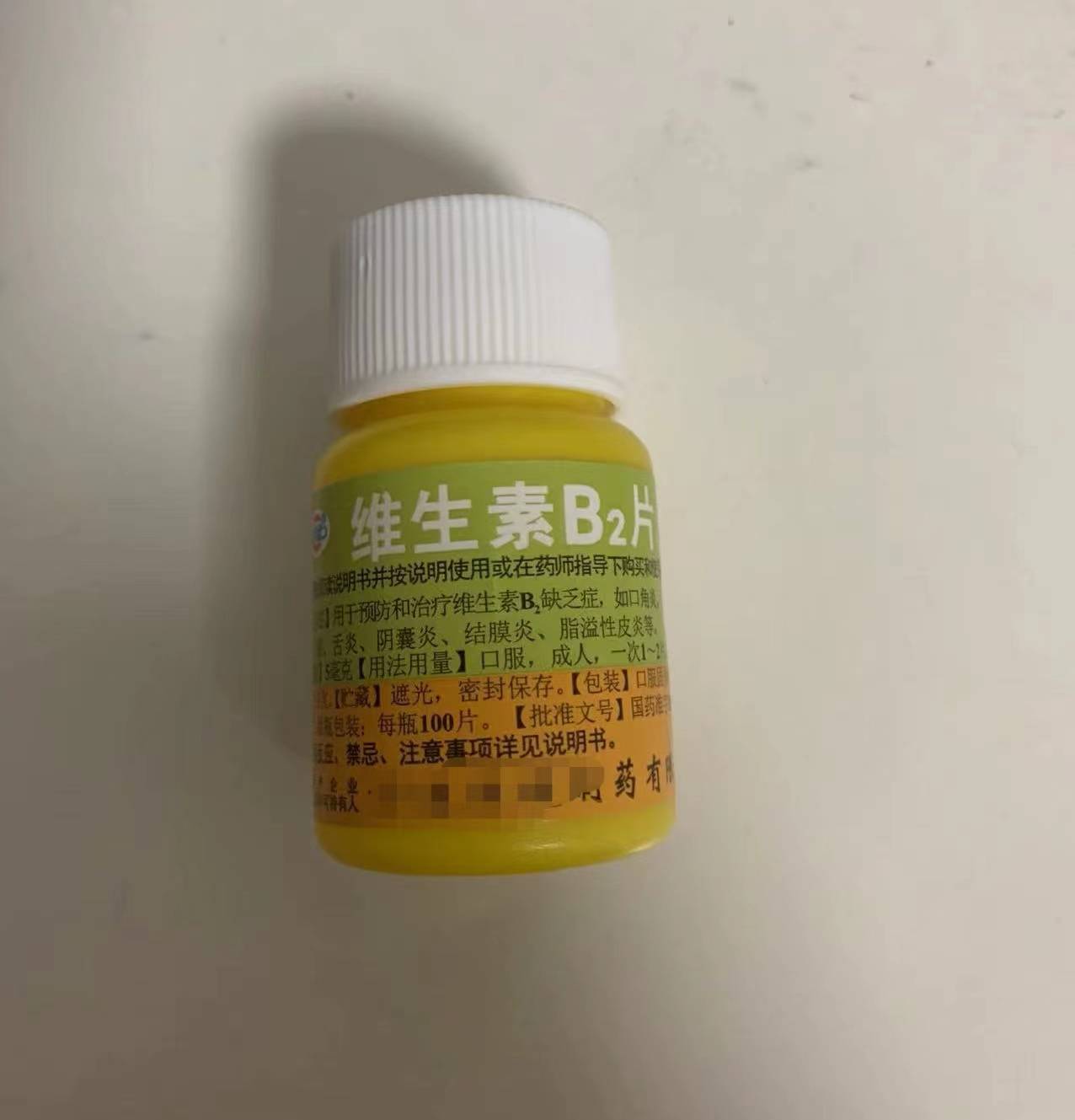
小蒙购买的维生素B2 受访者供图
像小蒙一样有类似经历的消费者并不在少数。在消费投诉平台以及近几年的公开报道,同款药的价差从一两倍到二十多倍不等。同通用名、同厂牌、同剂型、同规格的药品,为何有几倍的价差?是否合理合法?
药品价差问题存在多年,遭遇“药品刺客”?
近日,记者以消费者身份就某国产抗流感药奥司他韦干混悬剂(0.36g/盒)咨询了一家位于上海的线下药店,售价为78元。如果在某外卖平台下单这家店的同款药,加上运费近70元,有价差但并不明显。
形成对比的是,在某电商平台的其他线上药店,同款抗流感药的价格在17元到73元不等。如果按照17元来对比,差价则有五倍之多。此前有媒体2021年1月报道,某国产品牌的胸腺肽肠溶片在上海线下药房的单片价格是线上网络平台的22倍。
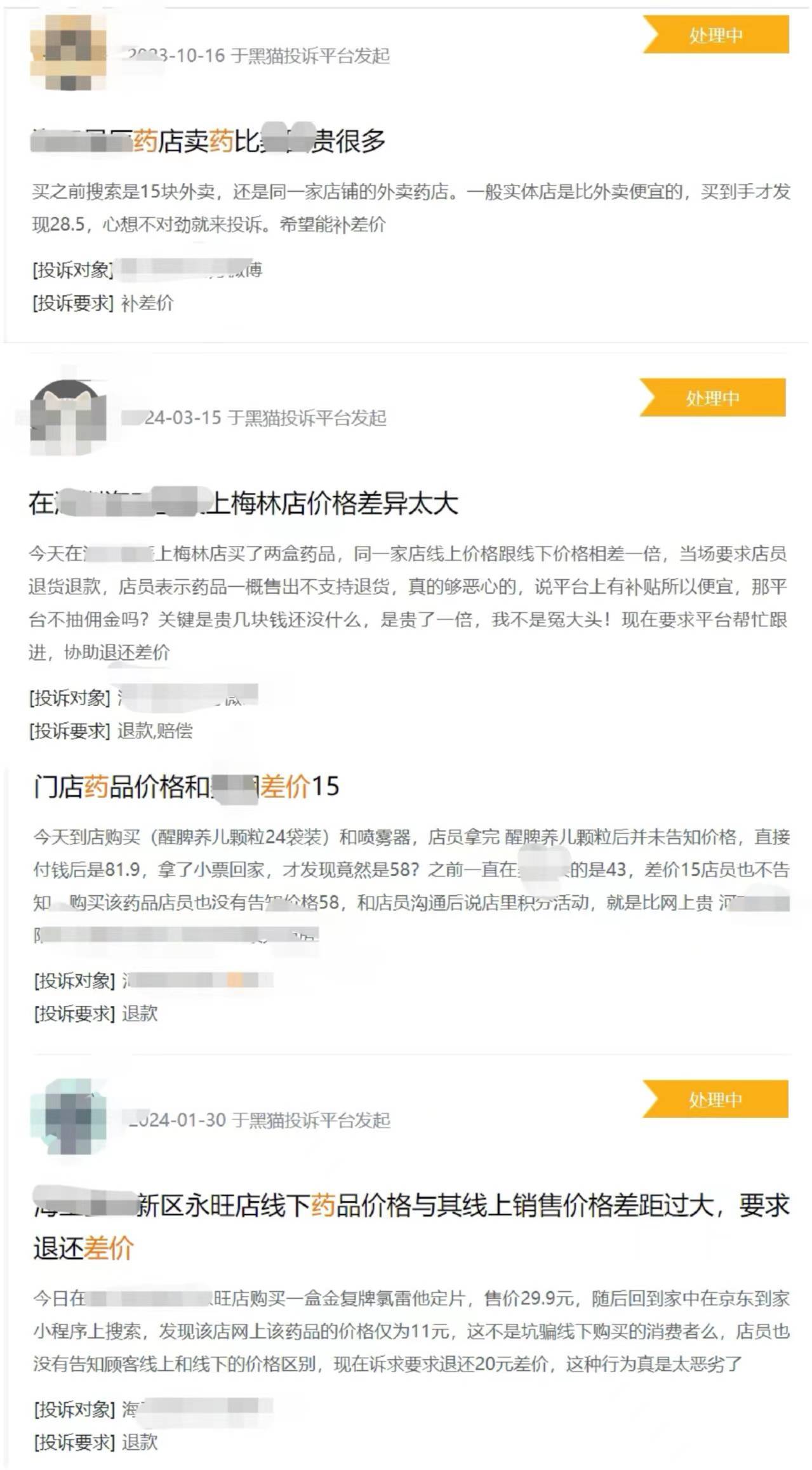
部分消费者在投诉平台反映药品价差问题
在消费者服务平台黑猫投诉上,记者看到有不少消费者就同款药品价差的问题进行了投诉。在社交平台,也有不少网友发文讲述自己在不同零售渠道购买同一款药遭遇价差的情况。可以发现,线上线下药品差价的情况基本可以分为两类,一类是线下药店与该药店的线上销售平台存在价差,另一类是线下药店与其他药店的销售平台存在价差。
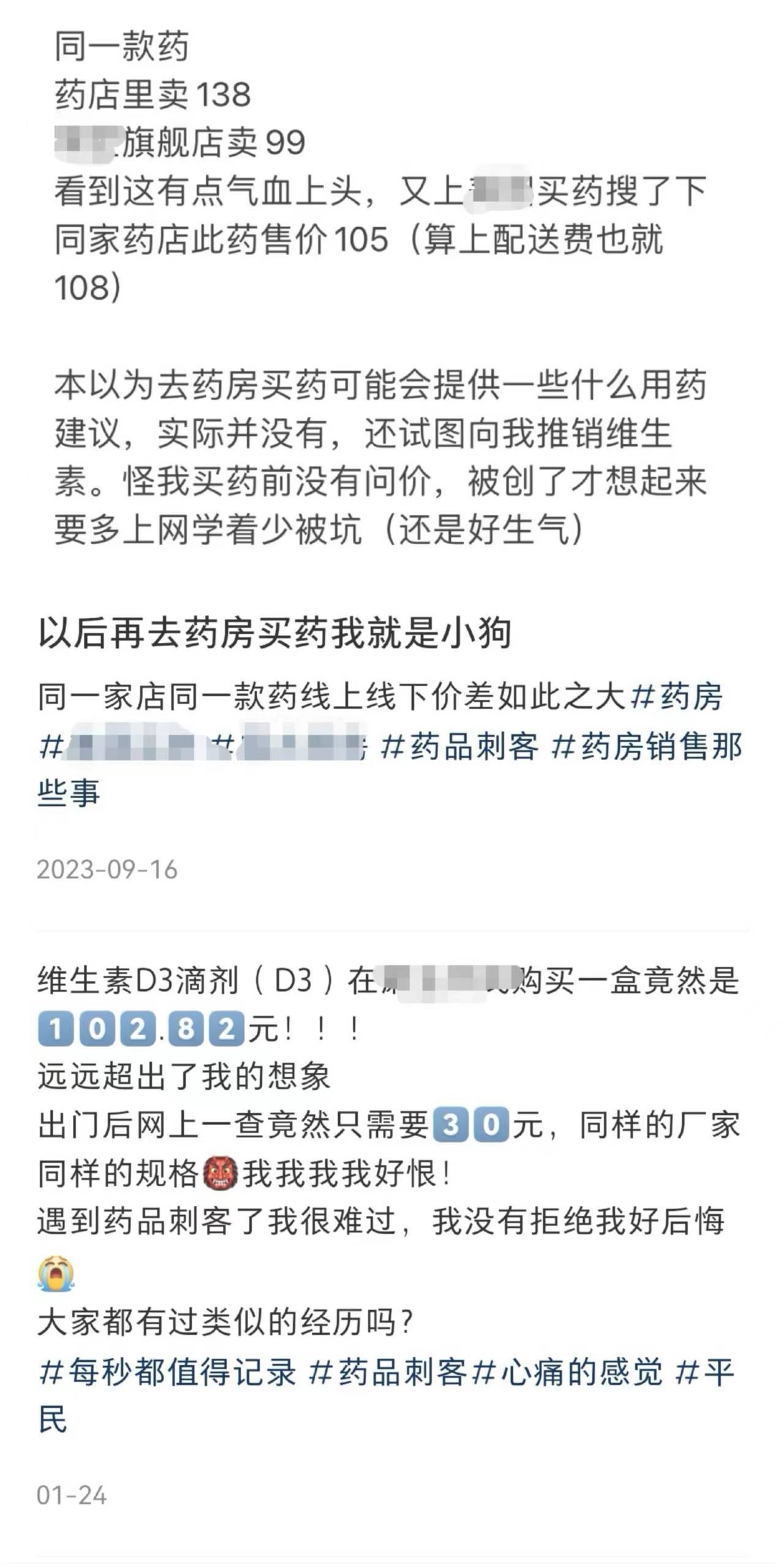
有消费者在社交平台感慨遭遇药品价差“刺客”
从投诉详情和诉求来看,购药的消费者能接受一定的价差,但面对成倍的价差,有种“成了冤大头”的不良体验。尤其是对于线下药店和自家线上销售平台有价差的情况,有消费者认为,线下药店销售人员应该告知消费者这一情况。也有消费者担心,价格更低的药品能否保证产品质量,作为购买者感到迷茫。
为何同款药价格不同?业内人士称影响因素多
从顶层设计来看,围绕零售渠道药品销售价格的政策引导曾发生变化,如1996年起,我国曾采取略低于市场价格制定最高零售价格并逐步降低药价的办法来管理药价。
直到2015年,国家发展改革委等七部门联合发布《关于印发推进药品价格改革意见的通知》,规定自2015年6月1日起,除麻醉药品和第一类精神药品政府指导价外,取消原政府制定的药品价格,零售药店药品价格由经营者依据经营成本和市场供求情况,自主制定价格。
而在市场化运作的大背景下,药品的零售价格受运营成本、供应链、市场策略、税收、服务、地段等多重因素的影响,自然也产生了或大或小的价格差异。
中国连锁药店协会研究员李子浩表示,实体药店的药品价格通常更高是因为更高的运营成本。以上海、苏州等城市为例,一名药师的工资每个月就有一万,加上房租、水电等成本,同一个城市不同地段的成本都可能不同,这些最终也会体现在药品价格上。相比之下,线上药店可能只有仓储和配送成本。
北京大健康法商团队负责人邓勇指出,实体药店往往是区域性的,线上药店面向全国市场,交易量大。若线上药店为了带动销量,还可能还会联合平台进行优惠活动,同一款药的价格可能进一步降低。
“与过去政府管控药品价格期间加价15%之类的规则不同,现在药品的定价原则更为复杂。根据市场情况,一家药店经营的产品包括负毛利的、微利的,也有高毛利的产品。如果一款药的成本是五块,为了抢占市场,赔钱卖4块也行。” 曾担任过多家百强连锁总经理的职业经理人苍春认为,药品的价差是市场行为,一般来说,那些品牌药在不同渠道价格即使有价差,也不会特别大,因为它的成本在全国都很透明。
不过,苍春也指出,一些卖低价药的药店确实也有恶意竞争的嫌疑,比如低价销售临期药品。此外,有一些小型药店会选择在线上低价销售,一方面是这类药店规模较小,在部分地方有税收减免政策。另一方面,这类药店部分并不是靠卖药赚利润,而是为了卖药店。
苍春介绍,近几年,不少连锁药店通过收购小型药店扩大规模,对于这些小型药店来说,把药店销售额冲高之后,可以在未来被收购时拥有更高的议价条件。也就是说,这类药店并不靠卖药本身来赚钱,甚至药可以赔钱卖,但需要把规模做起来,从被收购中赚钱。
对于同一款药在实体药店和实体药店的线上销售平台价格不一样,苍春透露,在一个连锁药店,负责这两块业务的往往是两个部门,都为了冲销售额,有不同的打法,过程中会出现价格不同的情况,“这不是一个好现象”。
遭遇“价差刺客”,消费者可以要求退货退款吗?
从业内人士的分析来看,价差有一定的现实因素,大部分情况下是可以理解的市场行为,但从消费者角度,发现价差后却往往像小蒙一样有遭遇“价格刺客”的感觉。
那么,消费者在发现价差时,是否能以此理由申请退货或退款?对此,医法汇创始人张勇律师认为,现在药品实施的是自由定价,由市场调控。正常来说,只要药品是明码标价,不存在价格欺诈,仅凭价差这一点无法获得退款或退货的法律支持。
“如果消费者认为药品的价格明显不合理,可以尝试和药店进行协商,或考虑向消费者协会、监管部门投诉,让有关方面介入调查取证,判定价格是否合理。”张勇表示。
邓勇也强调,从法律角度来说,价差不能说是违法的。除非存在极端的低价或高价,如果有消费者举报,相关部门可能会介入。此外,市场监管部门也有例行的飞行检查,如果发现价差过大,可能涉及一些不正当竞争,价格欺诈等,也会依据相关法律法规进行处理。
那么,线下药店是否有告知消费者线上线下存在价差的义务或责任?邓勇认为,按照消费者权益保护法,消费者享有知情权、选择权和同意权。对于销售方而言,应该明码标价,但无法要求每个销售人员都必须告知不同销售渠道的价差问题。
张勇认为,现实生活中,一款药物的销售渠道很多,每个销售人员也未必能够掌握各个渠道不同的销售价格,所以这个要求也不现实。如果是对价格比较敏感的消费者,购买药物时最好货比三家,寻找性价比最高的购买渠道。
(小蒙为化名)
新闻译文:
"A bottle of the most ordinary vitamin B2 sells for me for 26.6 yuan, while the highest selling one online is less than 8 yuan, and the cheapest one is only about 5 yuan." Speaking of his recent experience buying medicine at an offline pharmacy, Xiao Meng in Shanghai still couldn't hide his excitement.
In the current era of diversified drug sales channels, it is not incomprehensible that there is a certain price difference for the same drug. For Xiaomeng, the absolute price difference between 26 yuan and 5 yuan is not unbearable, but "a difference of one or two times is enough. If we calculate the difference at the current price, it will be four or five times. As a consumer, we feel like we have a 'back stabbing' feeling.".
Vitamin B2 purchased by Xiaomeng, provided by respondents
There are not a few consumers like Xiao Meng who have similar experiences. In consumer complaint platforms and public reports in recent years, the price difference of the same drug ranges from one or two times to over twenty times. Why is there a price difference of several times for drugs with the same generic name, brand, dosage form, and specification? Is it reasonable and legal?
The problem of drug price difference has existed for many years, encountering "drug assassins"?
Recently, the reporter consulted an offline pharmacy in Shanghai as a consumer about a domestic anti influenza drug, oseltamivir dry suspension (0.36g/box), priced at 78 yuan. If you place an order for the same medication from this store on a certain delivery platform, plus shipping costs of nearly 70 yuan, there is a price difference but it is not significant.
In contrast, in other online pharmacies on a certain e-commerce platform, the price of the same anti influenza drug ranges from 17 yuan to 73 yuan. If compared by 17 yuan, the price difference is as much as five times. Previously, media reported in January 2021 that the single tablet price of a domestic brand of thymosin enteric coated tablets in offline pharmacies in Shanghai was 22 times higher than that of online online platforms.
Some consumers have reported drug price differences on complaint platforms
On the consumer service platform Black Cat Complaints, the reporter saw that many consumers have complained about the price difference of the same drug. On social media platforms, many netizens have also posted about their situation of encountering price differences when purchasing the same medicine through different retail channels. It can be found that the price difference between online and offline drugs can be basically divided into two categories: one is the price difference between the offline pharmacy and the online sales platform of the pharmacy, and the other is the price difference between the offline pharmacy and the sales platform of other pharmacies.
Consumers on social media lament encountering drug price differentials as "assassins"
From the details and demands of the complaint, it can be seen that consumers who purchase medicine can accept a certain price difference, but when faced with a price difference that is multiplied, they have a negative experience of becoming a scapegoat. especially for cases where there is a price difference between offline pharmacies and their own online sales platforms, some consumers believe that offline pharmacy sales personnel should inform consumers of this situation. Some consumers are also concerned about whether lower priced drugs can guarantee product quality, leaving them confused as buyers.
Why are the prices of the same medicine different? industry insiders say there are many influencing factors
From the perspective of top-level design, there have been changes in policy guidance around retail channel drug sales prices. For example, since 1996, China has adopted a method of setting the highest retail price slightly lower than the market price and gradually reducing drug prices to manage drug prices.
Until 2015, the National Development and Reform Commission and seven other departments jointly issued a notice on the issuance of opinions on promoting drug price reform, which stipulated that starting from June 1, 2015, except for the government guidance prices for anesthetic drugs and Class I psychotropic drugs, the original government set drug prices would be cancelled, and the prices of drugs in retail pharmacies would be independently set by operators based on operating costs and market supply and demand.
In the context of market-oriented operation, the retail price of drugs is influenced by multiple factors such as operating costs, supply chain, market strategy, taxation, services, and location, naturally resulting in price differences of varying sizes.
Li Zihao, a researcher at the China Chain Pharmacy Association, said that the higher prices of drugs in physical pharmacies are usually due to higher operating costs. For example, in cities such as Shanghai and Suzhou, a pharmacist's salary is around 10000 yuan per month. With the addition of rent, utilities, and other costs, the costs in different areas of the same city may vary, which will ultimately be reflected in drug prices. In contrast, online pharmacies may only have storage and delivery costs.
Deng Yong, the head of the legal and business team at Beijing Health, pointed out that physical pharmacies are often regional, while online pharmacies face the national market and have a large transaction volume. If online pharmacies collaborate with platforms to offer promotional activities in order to boost sales, the price of the same drug may further decrease.
"Unlike the rule of increasing drug prices by 15% during the government's control of drug prices in the past, the pricing principles for drugs are now more complex. according to market conditions, a pharmacy's products include negative gross profit, low profit, and high gross profit products. If the cost of a drug is five yuan, it is okay to sell it for four yuan in order to seize the market." Cang Chun, a professional manager who has served as the general manager of several top 100 chain companies, believes that the price difference of drugs is a market behavior. generally speaking, even if there is a price difference in different channels for branded drugs, its cost will not be particularly large because it is transparent across the country.
However, Cang Chun also pointed out that some pharmacies selling low-priced drugs do have suspicion of malicious competition, such as selling expired drugs at low prices. In addition, some small pharmacies may choose to sell at low prices online. On the one hand, these pharmacies are relatively small in scale and have tax reduction policies in some places. On the other hand, some of these pharmacies do not make profits by selling drugs, but rather by selling pharmacies.
Cang Chun introduced that in recent years, many chain pharmacies have expanded their scale by acquiring small pharmacies. For these small pharmacies, after boosting their sales, they can have higher bargaining conditions when acquired in the future. That is to say, these types of pharmacies do not rely on selling drugs themselves to make money, and even drugs can be sold at a loss, but they need to scale up and make money from being acquired.
Cang Chun revealed that in a chain pharmacy, two departments are often responsible for these two businesses. Both departments have different strategies to offset sales, resulting in different prices during the process. This is not a good phenomenon.
Can consumers request returns and refunds when encountering price difference assassins?
From the analysis of industry insiders, price differences have certain practical factors, and in most cases, it is understandable market behavior. However, from the perspective of consumers, discovering price differences often feels like encountering a "price assassin" like Xiao Meng.
So, can consumers apply for a return or refund based on this reason when they discover the price difference? Regarding this, Lawyer Zhang Yong, founder of Yifa Hui, believes that the current implementation of drugs is free pricing, regulated by the market. Normally, as long as the drug is clearly priced and there is no price fraud, legal support for refunds or returns cannot be obtained solely based on the price difference.
"If consumers believe that the price of drugs is clearly unreasonable, they can try to negotiate with pharmacies or consider filing complaints with consumer associations and regulatory authorities, and have relevant parties intervene in investigation and evidence collection to determine whether the price is reasonable." Zhang Yong said.
Deng Yong also emphasized that from a legal perspective, price differences cannot be considered illegal. Unless there are extreme low or high prices, relevant departments may intervene if consumers report them. In addition, market regulatory authorities also conduct routine flight inspections. If a large price difference is found, it may involve some unfair competition, price fraud, etc., and will be dealt with in accordance with relevant laws and regulations.
So, do offline pharmacies have the obligation or responsibility to inform consumers of the price difference between online and offline? Deng Yong believes that according to the Consumer Rights protection Law, consumers have the right to information, choice, and consent. For salespeople, prices should be clearly stated, but it is not necessary to require every salesperson to inform them of the price difference issue across different sales channels.
Zhang Yong believes that in real life, there are many sales channels for a drug, and each salesperson may not be able to grasp the different sales prices of each channel, so this requirement is also unrealistic. If you are a price sensitive consumer, it is best to compare prices and find the most cost-effective purchasing channel when purchasing drugs.
(Xiao Meng as pseudonym)
重点词汇
销量 sales volume
说起 Speaking of ; mention ; remark ; with regard to ; bring up ; begin talking about ; as for
近日 recently ; yesterday ; in the past few days
药店 pharmacy ; drugstore ; chemist ; chemist's shop ; chemists shop ; druggist ; medical hall
销售渠道 distribution channel
当下 the moment ; immediately ; at once ; instantly
价差 spread ; contango ; bid-ask spread
不可理解 incomprehensible ; inscruability ; beyond one's comprehension
就算 even if ; granted that
受访者 respondent ; interviewee
句子成分分析:
So, do offline pharmacies have the obligation or responsibility to inform consumers of the price difference
[between online] and offline?
句子语法结构详解:
* 本句为疑问句。
* have 为谓语,采用一般现在时。
* to inform 为不定式。
* do 为助动词。the 为定冠词。
句子相关词汇解释:
Phrase:
| inform sb of sth | 告诉某人..., 通知某人... |
Vocabulary:
| so [sәu] | conj. | 1) 因此, 所以 2) (表目的)以便,以免 |
| offline | a. | 不在沿线的 |
| ad. | 1) 脱机;离线 2) 网下 | |
| pharmacy ['fɑ:mәsi] | n. | 1) 药房,药店,医药柜台 2) (医院的)药房,配药室 |
| have [hæv] | vt. | 1) 有,持有 2) 吃,喝, 抽(烟) 3) 患病,出现(某症状) |
| obligation [,ɔbli'geiʃәn] | n. | 1) 义务,职责,责任 2) (已承诺的或法律等规定的)义务,责任 |
| or [ɔ:] | conj. | 1) 或,或者,还是 2) 否则,要不然 |
| responsibility [ri,spɔnsә'biliti] | n. | 1) 责任,负责 2) 事故责任 |
| consumer [kәn'sju:mә] | n. | 消费者,顾客,用户 |
| price [prais] | n. | 1) 价格,价钱,物价 2) 代价 |
| difference ['difәrәns] | n. | 1) 差异,不同,变化 2) 差额 |
| online | ad. | 在线, 联机, 联网,在网上 |
| and [ænd] | conj. | 1) 和, 与, 同, 并 2) 然后,接着 |
句子成分分析:
If you are a price || sensitive consumer,it is best to compare prices and find the most cost-effective purchasing
channel || when purchasing drugs.
句子语法结构详解:
(best 为 good 的最高级形式)
* if 为连词,引导条件状语从句。
* are 为系动词作谓语,采用一般现在时。
* it 为先行主语,代表后移的不定式。
* is 为系动词作谓语,采用一般现在时。
* good 为形容词作表语。
* to compare 为不定式。
* find 为不带 to 的不定式。
* when 为连词,引导时间状语从句。
* 第2个 purchasing 为现在分词。
* you 为人称代词。the 为定冠词。a 为不定冠词。
句子相关词汇解释:
Vocabulary:
| if [if] | conj. | 1) 如果, 倘若 2) 是否 |
| price [prais] | n. | 1) 价格,价钱,物价 2) 代价 |
| sensitive ['sensitiv] | a. | 1) 敏感的,须谨慎对待的 2) (食物或光等)敏感的,过敏的 3) (仪器、测试等)灵敏的 |
| consumer [kәn'sju:mә] | n. | 消费者,顾客,用户 |
| good [gud] | a. | 1) 好的,令人满意的 2) 优质的,符合标准的 |
| compare [kәm'pєә] | vt. | 1) (compare A and/with/to B) 比较,对比 2) (compare A to B) 表明……与……相似,将……比做 |
| and [ænd] | conj. | 1) 和, 与, 同, 并 2) 然后,接着 |
| find [faind] | vt. | 1) (意外或偶然地)发现,碰到 2) 找到,找回 |
| most [mәust] | ad. | 1) 最(与形容词或副词连用构成最高级) 2) (程度上)最大,最多,最高 |
| cost-effective | a. | 成本上有效益的,划算的 |
| purchasing | n. | 购买,采购 |
| channel ['tʃænәl] | n. | 1) 渠道,途径 2) 频道, (电视)台 3) 水道,航道 |
| purchase ['pә:tʃәs] | vt. | 买,购买,采购 |
| drug [drʌg] | n. | 1) 药物 2) 毒品 |
以上是秒词邦为您整理编写的文章《同一款药线上线下价差四五倍,是“药店刺客”还是合理现象? ——秒词邦微信小程序》的全部内容。秒词邦是国内权威分题型分考点背诵中高考/四六级考研/专升本/出国单词的专业单词软件。扫描如下小程序码,进入秒词邦官方小程序获取更多英语相关资料! 【关键词:高考单词;高考英语;高中单词;高中英语;单词app;单词软件;记单词app;记单词软件;背单词软件;背单词app;英语单词;四六级单词;四六级英语;四六级单词app;四六级单词软件;考研单词app;考研单词软件;核心单词;高考冲刺复习;高考英语教材;高考英语真题;四六级真题;四六级试题;考研真题;考研英语单词;考研英语真题】