“世界屋脊”越来越拥挤,尼泊尔如何给珠峰大扫除? ——秒词邦背单词app

界面新闻记者 | 陈升龙
界面新闻编辑 | 刘海川
每年的3月初至5月末春季,是攀登“世界屋脊”珠穆朗玛峰的黄金季节。
自1992年首次商业登山以来,8848.86米的海拔吸引着越来越多人挑战体能和意志的极限。新冠疫情过后,每年约有800人试图分别从十多条路线登顶珠峰。因坡度较缓,尼泊尔境内的珠峰的南坡路线更受普通攀登者欢迎。登山爱好者花费4万-10万美元就可以在当地夏尔巴向导带领下登顶。
旅游业是尼泊尔的一大经济支柱,政府每年通过发放珠峰攀登许可获得超300万美元的收入。今年,登山者将首次被组织者要求佩戴GPS跟踪设备,每人支付10美元。已三次成功登顶珠峰的曾燕红向界面新闻透露,每年尼泊尔方面对她的收费在42000-45000美元之间。
2023年,尼泊尔总计发放了478张面向外国人的许可。截至4月10日,已有209名登山者获准在今年春季攀登15座6000米以上的高峰。来自中国、美国、日本、英国、俄罗斯、波兰、澳大利亚等42个国家的人士获得了尼政府的许可。曾燕红此次的目标是6828米的阿玛达布拉姆峰。现就职于互联网货运平台货拉拉的她,原是中国香港的一名教师,从2014年就开始尝试登珠峰。
外国人都会从首都加德满都前往大本营,在那里休整后再通过各条路线向顶峰冲刺。通常情况下,从南坡大本营出发要4天才能登顶。
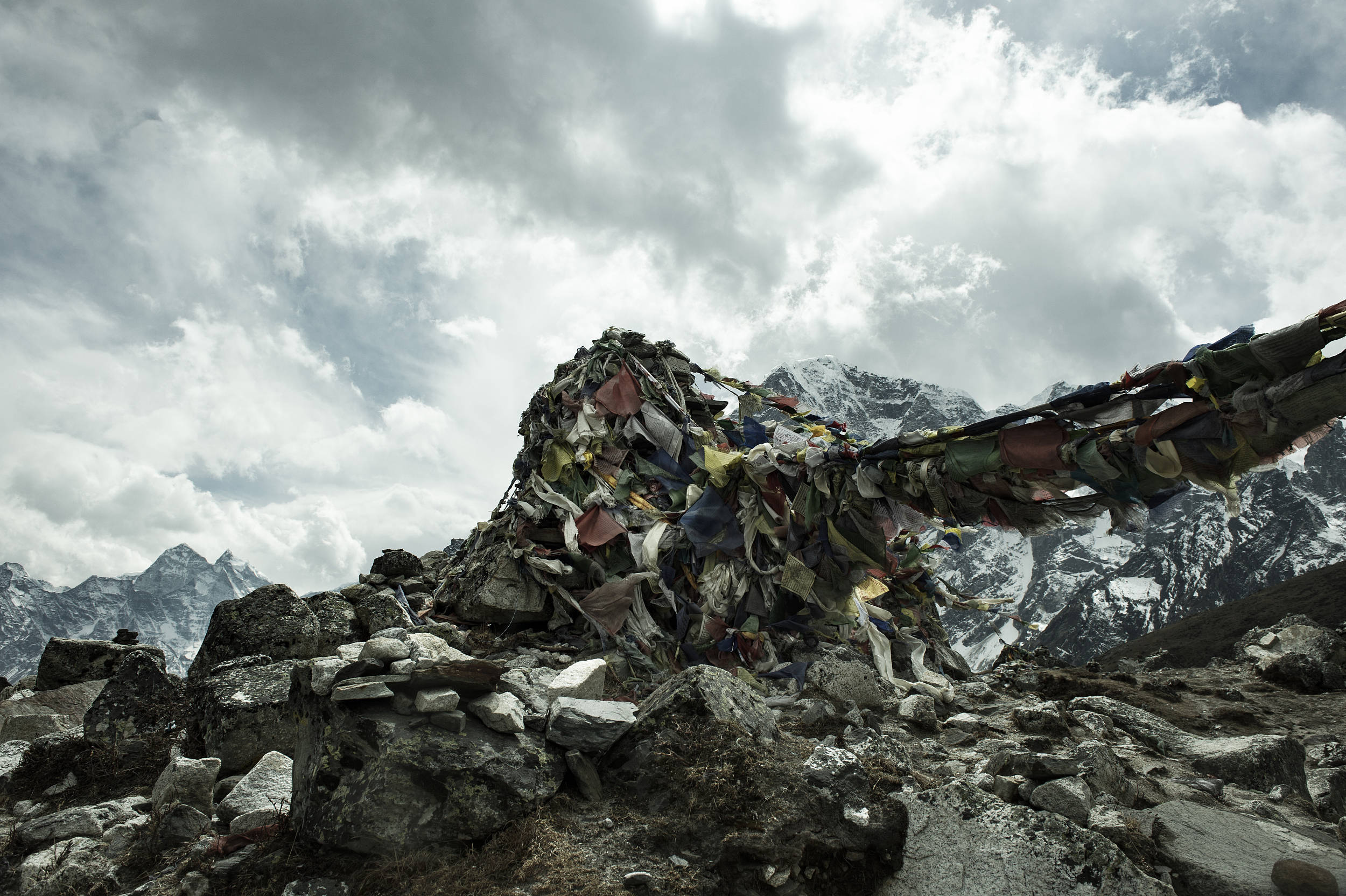
而随着登山运动的普及和人类活动增加,珠峰的生态承受着越来越大的压力,尤其是在营地,以及昆布冰川附近等高海拔区域。
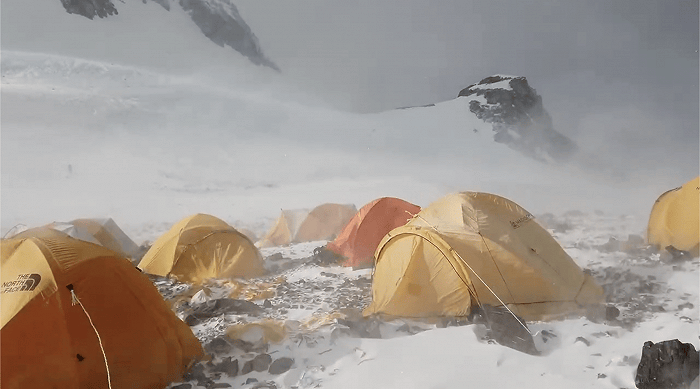
2017年时候的4号营地,海拔8000米。拍摄:曾燕红
2019年4月登山季,尼泊尔政府与多家跨国消费品巨头联名发起持续六周的“清扫高山行动”,当年共收集了十多吨垃圾,包括废弃氧气瓶、攀爬设备、帐篷、塑料容器和人类排泄物。2020年1月起,尼泊尔禁止使用所有厚度小于30微米的一次性塑料制品。截至2023年,“清扫高山行动”共收集了110吨垃圾。
今年尼泊尔军队再次派出总共30人的登山队前往珠峰、洛子峰和努布策山清运垃圾,他们和其他攀登者一样于4月14日从大本营出发,并计划首次带回登山者的遗体。整个清理行动持续50天,6月5日世界环境日当天返回。可生物降解的废弃物将被带到小镇纳姆切巴扎,并移交给萨迦玛塔污染控制委员会处理;而不可生物降解的垃圾和遗体将被送往加德满都。
在曾燕红过去10年多的印象中,珠峰南坡的四个营地中有三个卫生状况良好,其中4号营地由于地处受风面,清运难度非常大,经常会在那里看到被强风吹烂的帐篷、被遗弃的氧气瓶。但总体而言环保状况在逐年提高。
截至2023年底,全世界已累计有6664人成功攀登过珠峰。他们面临的最大挑战在7620米以上的“死亡区”。那里坡度陡峭、极度寒冷、空气含氧量仅为海平面的三分之一,攀登者通常在这个区域不会超过48小时。被誉为“中国速登珠峰第一人”的曾燕红在2021年5月23日以25小时50分钟完成了登顶。
另外,自1924年两名英国登山队员遇难以来,至少已有330人在攀登期间去世。由于搬运的难度极高,尤其是在“死亡区”,仍有约三分之二的遗体留在原地。曾燕红告诉界面新闻,遗体的搬运费用视其所处海拔等难度而定,如果是陷入在冰缝中的最高可达10万美元。目前尚不清楚尼泊尔方面具体会用什么方法把遗体运下来。
为减少伤亡,尼泊尔政府多年来商议制定措施禁止新手(没有攀登过6500米高峰经验)、身体有残疾者、年老及年幼者攀登珠峰,还要求导游公司支付最低费用,以避免低预算的登山活动,但截至目前仍未正式宣布新规。
今年尼泊尔政府还采取新措施解决人类排泄物问题,统一发放8000个特制袋子在高海拔山地区使用,攀登者需自行带下山。这些袋子可重复使用,内含化学物质和粉末的混合物,旨在固化人类排泄物,以及除味。而低海拔大本营的导游公司通常会为客户搭建帐篷作为临时卫生间。
随着气候变暖加速冰雪融化,人类排泄物还可能污染山谷中的水源。曾燕红认为,把排泄物带下来对珠峰生态保护来说一个很大的进步。而成功登顶世界七大洲最高峰的John Waechter在博客中写道,南极洲的最高峰文森山(4892米)和北美最高峰德纳里山德纳里山(6193米)都有类似向攀登者发放袋子的措施,效果很不错。
新闻译文:
Interface News reporter | Chen Shenglong
Interface News Editor | Liu Haichuan
Spring, from early March to late May each year, is the golden season for climbing Mount Everest, the "Roof of the World".
Since the first commercial mountaineering in 1992, the altitude of 8848.86 meters has attracted more and more people to challenge their physical and mental limits. After the COVID-19, about 800 people try to climb Mount Everest from more than 10 routes each year. due to its gentle slope, the southern route of Mount Everest in Nepal is more popular among ordinary climbers. Mountaineering enthusiasts can spend $40000 to $100000 to climb the summit under the guidance of local Sherpa guides.
The tourism industry is a major economic pillar of Nepal, and the government earns over 3 million US dollars annually through the issuance of climbing permits for Mount Everest. This year, mountaineers will be required by organizers to wear GPS tracking devices for the first time, with each person paying $10. Zeng Yanhong, who has successfully climbed Mount Everest three times, revealed to Interface News that Nepal charges her between $42000 and $45000 annually.
In 2023, Nepal issued a total of 478 permits for foreigners. As of April 10th, 209 climbers have been granted permission to climb 15 peaks over 6000 meters this spring. Individuals from 42 countries including China, the United States, Japan, the United Kingdom, Russia, Poland, Australia, etc. have obtained permission from the Nigerian government. Zeng Yanhong's goal this time is to reach the Amadabram Peak at 6828 meters. Now working as a teacher in Hong Kong, China, she has tried to climb Mount Everest since 2014.
Foreigners will travel from the capital Kathmandu to their base camp, where they will rest and then sprint towards the summit through various routes. Normally, it takes 4 days to reach the summit from the main camp on the south slope.
With the popularization of mountaineering and the increase of human activities, the ecology of Mount Everest is under increasing pressure, especially in campsites and high-altitude areas near the Kunbu Glacier.
In 2017, Camp 4 was located at an altitude of 8000 meters. Shooting: Zeng Yanhong
In April 2019, during the mountaineering season, the Nepalese government and several multinational consumer goods giants jointly launched a six week "mountain cleaning operation". That year, more than ten tons of garbage were collected, including discarded oxygen cylinders, climbing equipment, tents, plastic containers, and human excrement. Starting from January 2020, Nepal banned the use of all disposable plastic products with a thickness less than 30 microns. As of 2023, the "Clean Mountains Action" has collected a total of 110 tons of garbage.
This year, the Nepalese army once again dispatched a mountaineering team of a total of 30 people to clear garbage from Mount Everest, Mount Lozi, and Mount Nubutze. Like other climbers, they set off from their base on April 14th and planned to bring back the remains of the climbers for the first time. The entire cleanup operation lasted for 50 days and returned on June 5th, World Environment Day. Biodegradable waste will be brought to the small town of Namchebaza and handed over to the Sakyamata pollution Control Committee for processing; And non biodegradable garbage and bodies will be sent to Kathmandu.
In Zeng Yanhong's impression over the past 10 years, three of the four campsites on the south slope of Mount Everest are in good hygiene condition. Among them, Camp 4 is located on a windy surface, making it very difficult to clear and often seeing tents torn apart by strong winds and abandoned oxygen cylinders there. But overall, the environmental protection situation is improving year by year.
As of the end of 2023, a total of 6664 people worldwide have successfully climbed Mount Everest. Their biggest challenge is the "dead zone" above 7620 meters. The slope is steep, extremely cold, and the oxygen content in the air is only one-third of the sea level. Climbers usually do not stay in this area for more than 48 hours. Zeng Yanhong, known as the "first person in China to climb Mount Everest quickly", completed the summit in 25 hours and 50 minutes on May 23, 2021.
In addition, since the deaths of two British mountaineers in 1924, at least 330 people have died during the climbing process. Due to the extremely high difficulty of transportation, especially in the "death zone", about two-thirds of the body remains in place. Zeng Yanhong told Interface News that the cost of transporting the body depends on the difficulty of its altitude and other factors. If it is trapped in an ice crevice, the maximum cost can reach 100000 US dollars. It is currently unclear what specific methods Nepal will use to transport the remains.
In order to reduce casualties, the Nepalese government has been discussing measures to prohibit beginners (without experience climbing the 6500 meter peak), people with disabilities, elderly and young people from climbing Mount Everest, and has also required tour guide companies to pay the minimum fee to avoid low budget mountaineering activities. However, the new regulations have not been officially announced so far.
This year, the Nepalese government has also taken new measures to address the issue of human excrement, distributing 8000 specially designed bags for use in high-altitude mountain areas. Climbers are required to bring them down the mountain themselves. These bags are reusable and contain a mixture of chemicals and powders designed to solidify human excreta and remove odors. And tour guide companies in low altitude campuses usually set up tents as temporary bathrooms for clients.
As climate change accelerates the melting of ice and snow, human excrement may also contaminate water sources in valleys. Zeng Yanhong believes that bringing down excrement is a great progress for the ecological protection of Mount Everest. John Waechter, who successfully climbed the highest peaks in the world's seven continents, wrote in his blog that the highest peak in Antarctica, Mount Vincent (4892 meters), and the highest peak in North America, Mount Denali (6193 meters), both have similar measures to distribute bags to climbers, which have been very effective.
重点词汇
新闻记者 journalist ; reporter ; newsman ; newspaperman ; journo
新闻编辑 news editor
世界屋脊 roof of the world (Mt. Qomolangma/Everest)
珠穆朗玛峰 Mount Everest ; Mount Qomolangma ; zolmo Lungma
越来越多 more and more ; increasingly ; a growing number of
登顶 Climbing to the top ; reach the peak/summit (of a mountain)
攀登者 climber ; scaler
旅游业 tourism ; tourist industry
经济支柱 economic pillars
登山者 climber ; mountaineer ; alpinist
句子成分分析:
These bags are reusable and contain a mixture (of chemicals and powders designed to solidify human excreta and
remove odors).
句子语法结构详解:
* are 为系动词作谓语,采用一般现在时。
* reusable 为形容词作表语。
* contain 为谓语。
* designed 为过去分词,作后置定语。
* to solidify 为不定式,作状语。
* remove 为不带 to 的不定式。
* a 为不定冠词。
句子相关词汇解释:
Vocabulary:
| these [ði:z] | a. | 这些 |
| bag [bæg] | n. | 1) 袋子,手提包,旅行袋 2) (尤指商店用的)纸袋,塑料袋 |
| reusable [ri:'ju:zәbl] | a. | 可重复使用的;可再次使用的 |
| and [ænd] | conj. | 1) 和, 与, 同, 并 2) 然后,接着 |
| contain [kәn'tein] | vt. | 1) 包含,含有,容纳 2) 控制,克制,抑制(感情) |
| mixture ['mikstʃә] | n. | 1) 混合物 2) 混合,结合体 |
| chemical ['kemikl] | n. | 化学制品 |
| powder ['paudә] | n. | 1) 粉末,细面 2) 扑面粉,美容粉 |
| design [di'zain] | vt. | 1) 设计,制图,构思 2) 计划,筹划,制订 |
| solidify [sә'lidifai] | vt. | 1) 使凝固,变硬,变得结实 2) 使变得坚定,变得稳固,巩固 |
| human ['hju:mәn] | a. | 1) 人的,显示人的本性的 2) 有人情味的,有人性的 |
| excreta [ek'skri:tә] | n. | (身体的)排泄物 |
| remove [ri'mu:v] | vt. | 1) 移开,拿开,去掉,从……机构开除 2) 脱去(衣服等),摘下 |
| odor ['әudә] | n. | 气味, 香味, 名声, 意味 |
句子成分分析:
As climate change accelerates the melting [of ice and snow], || human excrement may also contaminate water
sources [in valleys].
句子语法结构详解:
* as 为连词,引导状语从句。
* accelerates 为谓语,采用一般现在时。动词采用第三人称单数形式。
* melting 为动名词,作宾语。
* human 开头为陈述句。
* contaminate 为谓语。
* may 为情态动词。the 为定冠词。
句子相关词汇解释:
Phrase:
| climate change | 气候变化 |
Vocabulary:
| as [æz] | conj. | 1) 由于, 因为 2) 当...时, 在...期间, 随着... |
| accelerate [әk'selәreit] | vt. | 使加速,加快 |
| melt [melt] | vi. | 1) 熔化,融化 2) 软化,变得温柔 |
| ice [ais] | n. | 1) 冰 2) (通常作 the ice)冰场,溜冰场 |
| and [ænd] | conj. | 1) 和, 与, 同, 并 2) 然后,接着 |
| snow [snәu] | n. | 1) 雪 2) 降雪量 |
| human ['hju:mәn] | a. | 1) 人的,显示人的本性的 2) 有人情味的,有人性的 |
| excrement ['ekskrimәnt] | n. | 粪便;排泄物 |
| also ['ɔ:lsәu] | ad. | 而且;此外;也;同样 |
| contaminate [kәn'tæmineit] | vt. | 1) 污染,弄脏 2) 玷污,毒害,腐蚀(人的思想或品德) |
| water ['wɔ:tә] | n. | 1) 水 2) 水域,江河湖海 |
| source [sɔ:s] | n. | 1) 来源 2) 原始资料 |
| valley ['væli] | n. | 山谷,溪谷 |
以上是秒词邦为您整理编写的文章《“世界屋脊”越来越拥挤,尼泊尔如何给珠峰大扫除? ——秒词邦背单词app》的全部内容。秒词邦是国内权威分题型分考点背诵中高考/四六级考研/专升本/出国单词的专业单词软件。扫描如下小程序码,进入秒词邦官方小程序获取更多英语相关资料! 【关键词:高考单词;高考英语;高中单词;高中英语;单词app;单词软件;记单词app;记单词软件;背单词软件;背单词app;英语单词;四六级单词;四六级英语;四六级单词app;四六级单词软件;考研单词app;考研单词软件;核心单词;高考冲刺复习;高考英语教材;高考英语真题;四六级真题;四六级试题;考研真题;考研英语单词;考研英语真题】