知识扩展
相关变形拓展
形容词性物主代词:his→名词性物主代词:his→主格:he→宾格:him
易混词辨析
himself、he、his、him
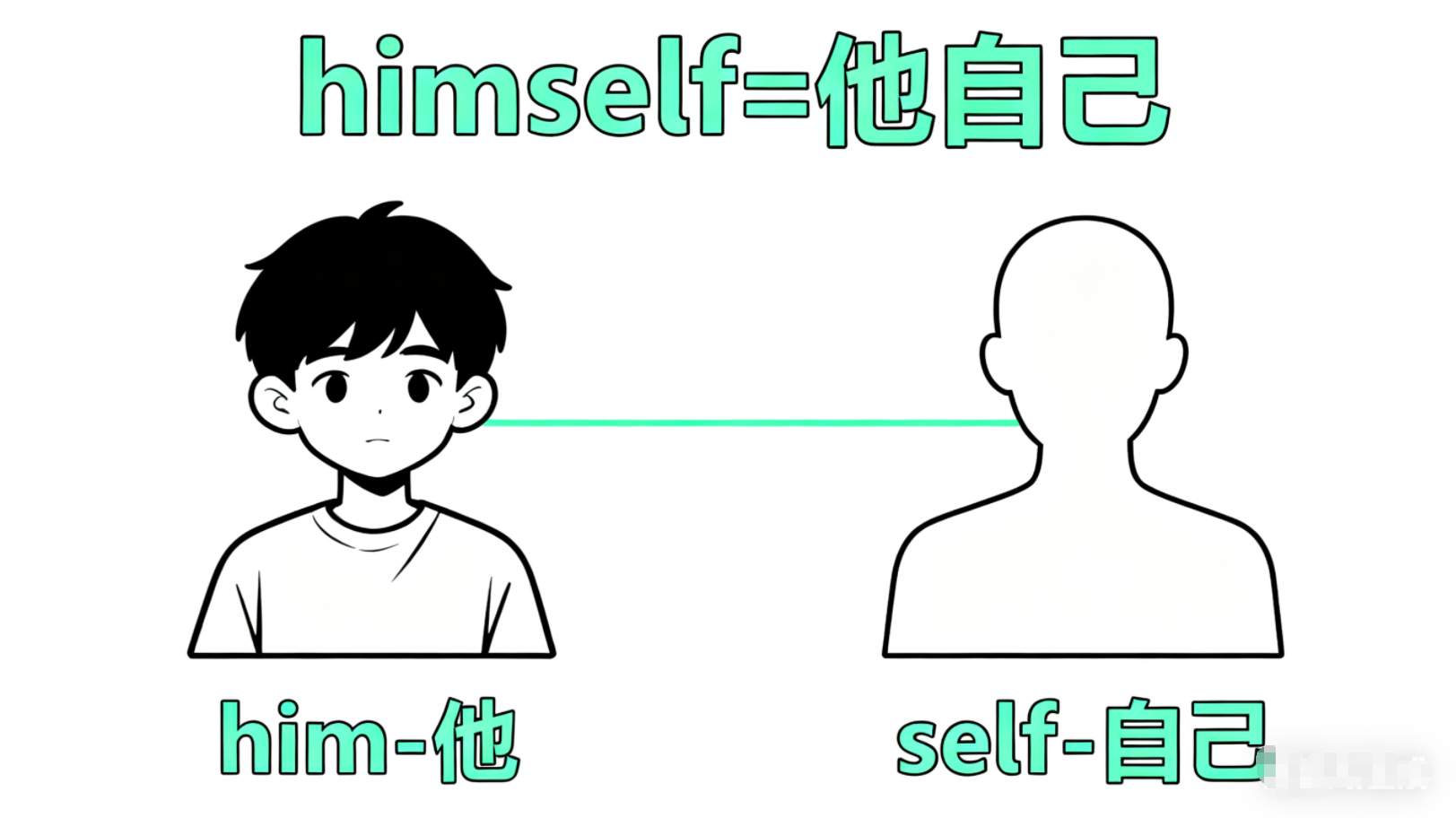
1. himself:反身代词 “他自己”(如 by himself;hurt himself);
2. he:主格 “他”(如 he works);
3. his:形容词性 / 名词性物主代词 “他的”(如 his book;this is his);
4. him:宾格 “他”(如 help him)。
常用短语
by himself 由他独力地
all by himself 独自地
精选例句
1、 He can dress himself in the morning.
他早上能自己穿衣服。(himself是反身代词,意为“他自己”,易错点是混淆反身代词himself与宾格him,不清楚反身代词的用法场景)
来源:【小学难度例句及核心知识点】秒词邦官方编辑
2、 He hurt himself when he was playing basketball yesterday afternoon.
昨天下午他打篮球时伤到了自己。(考点是反身代词himself作宾语,与主语he保持一致,以及when引导的时间状语从句中过去进行时的用法)
来源:【初中难度例句及核心知识点】秒词邦官方编辑
1、 After he steadied himself, he shook Glenn's mother's hand, and the inspection continued as though nothing had happened.
他稳住自己后,握了握格伦母亲的手,继续检查,就像什么都没发生过一样。
来源:【高中难度例句】2015年高考英语湖南卷 阅读理解 阅读C 原文
1、 Marconi needed to achieve the goal that was set in his mind as an adolescent; by the time he reached adulthood, he understood, intuitively, that in order to have an impact he had to both develop an independent economic base and align himself with political power.
马可尼需要实现他在青少年时期设定的目标;成年后,他凭直觉明白,为了产生影响力,他必须建立一个独立的经济基础,并与政治权力结盟。
来源:2021年6月六级第1套题句子搭配题
1、 On the other hand, Tronick himself is concerned that the worries about kids’ use of screens are born out of an “oppressive ideology that demands that parents should always be interacting” with their children: “It’s based on a somewhat fantasised, very white, very upper-middle-class ideology that says if you’re failing to expose your child to 30,000 words you are neglecting them.
另一方面,特罗尼克自己也担心,对孩子使用屏幕的担忧源于一种“压迫性的意识形态,这种意识形态要求父母总是与孩子互动”:“它基于一种有点幻想的、非常白人的、非常中上层阶级的意识形态,这种意识形态认为,如果你没能让孩子接触到3万个单词,你就是在忽视他们。”
来源:2017 年全国硕士研究生招生考试英语(二)Text 2
**【点此进秒词邦小程序】查看更多真题例句
 文
文