知识扩展
相关变形拓展
原形:will (将要)→同义情态动词:should (应该)→相关词:would like (想要);would rather (宁愿)
易混词辨析
will、used to、could、would like
1. would:情态动词 “会(过去将来);愿意;过去习惯”(He said he would come;Would you help?;He would walk to school);
2. will:“将要(现在将来)”(I will come),与 would 时态不同;
3. used to:“过去常做(现在不做)”(He used to walk to school,现可能骑车),与 would 区别:would 表 “过去习惯,可无现在对比”,used to 强调 “过去与现在不同”;
4. could:“能(过去能力);委婉请求”(He could swim;Could you help?),与 would 区别:could 表 “能力”,would 表 “意愿 / 习惯”;
5. would like:“想要”(would like a book;would like to go),易误写为 would likes(would 后接动词原形)。
单词解说1
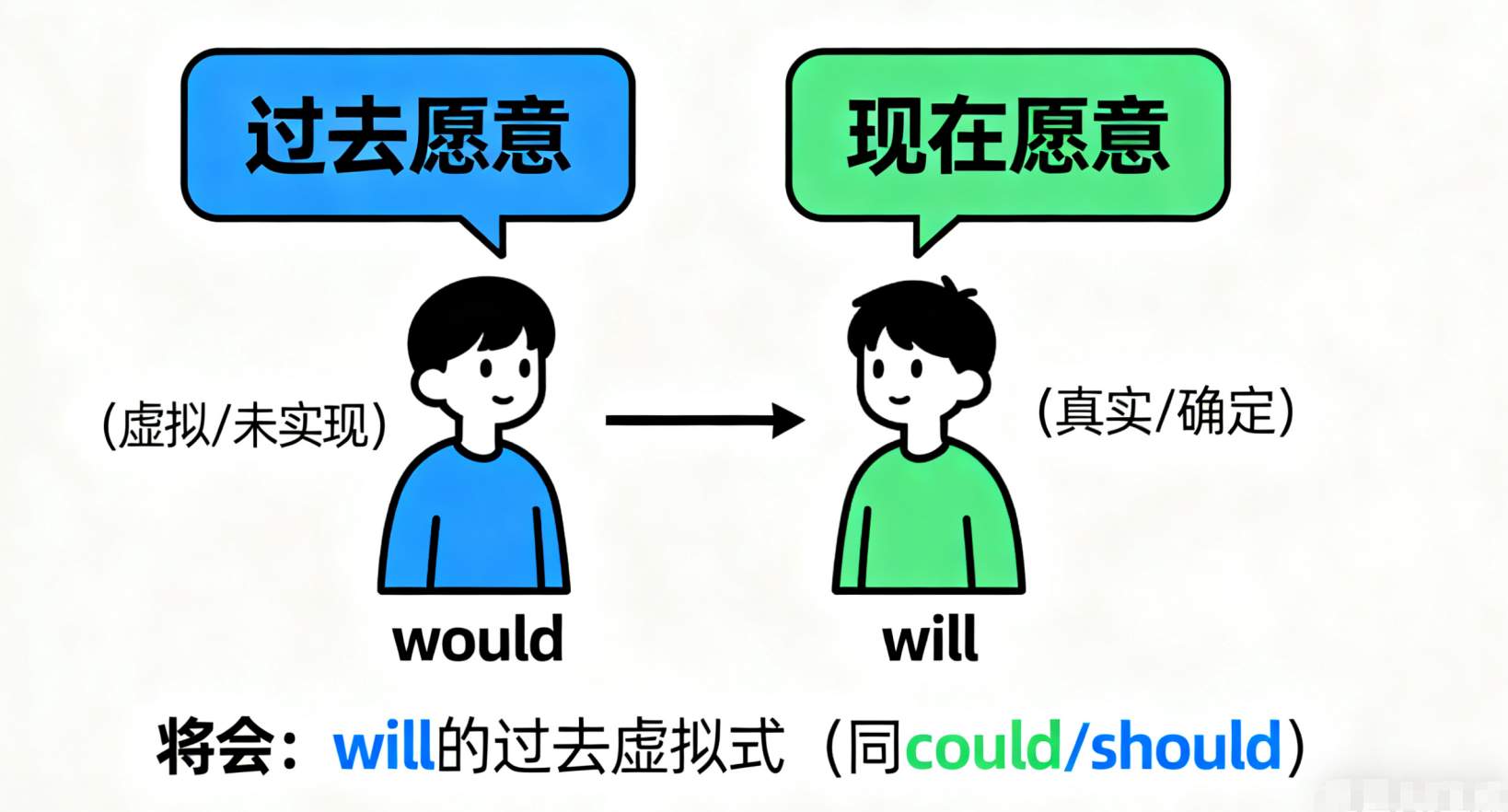
would可用作助动词will的过去式,主要用于第二、第三人称,有时也用于第一人称(详见will)。
用于陈述语气时可构成过去将来式、过去将来完成式、过去将来进行式。
用于虚拟语气时,在“would+动词不定式的一般式(完成式〕”结构中与should单词用法相同(详见should,但would主要用于第二、第三人称)。
would还可构成一种委婉、温和、谨慎的语气
①“would like(desire,wish等表示意志的动词〕”表示愿望、意向、选择等意义,用于各种人称,like后接动词不定式一般式(完成式〕作宾语,也可接名词或代词作宾语。
②“It would seem(appear〕”,“主语+would think(imagine,say〕”等结构表示或然性,常用于第二、第三人称,这时would可看作助动词,也可看作情态动(参见will)。
③would还可和其他动词自由搭配,构成委婉语气。
精选例句
1、 I would sit helplessly and wait for the noise to go away.
我只能无助地坐着,等着噪音消失。
来源:2015全国卷II阅读A篇
2、 In fact, Royte writes, “if food waste were a country, it would be the third largest producer of greenhouse gases in the world.
事实上,罗伊特写道,“如果食物浪费是一个国家,它将是世界上第三大温室气体排放国。
来源:2022年普通高等学校招生全国统一考试(新高考I卷)
1、 This requires a fundamental rethinking of what organizations expect from employees and what companies would look for in a model employee in a remote work context.
这需要从根本上重新思考组织对员工的期望,以及公司在远程工作环境中对模范员工的期望。
来源:2022年9月四级第1套[阅读选择题]
1、 Sleeping on a crammed plane,adjusting to different time zones and finding food to eat (Wardian is a vegetarian)would make it an exhausting trip over a month, let alone a week.
在拥挤的飞机上睡觉,适应不同的时区,找吃的(沃德安是素食主义者),这将是一个月的劳累之旅,更不用说一周了。
来源:2022年12月六级第1套题句子搭配题
1、 About 72% of “unretiree” respondents said that they would return to work once retired to keep mentally fit while 59% said it would be tied to making ends meet.
约72%的“未退休”受访者表示,他们退休后会继续工作以保持精神健康,59%的人表示这与收支平衡有关。
来源:2022年全国硕士研究生招生考试英语(二)试题阅读选择题Text 2
**【点此进秒词邦小程序】查看更多真题例句

 文
文