
江苏最后一块“高铁洼地”,终于迎来腾飞机遇。
近日,泰州首座高铁站正式开工,这是国家沿江主通道——北沿江高铁,和江苏中轴大通道——盐宜高铁的交叉点,也是泰州首个高铁站综合交通枢纽。
预计2027年,泰州南站将与北沿江高铁同步通车运营,届时泰州将正式迈入“高铁时代”,到上海的通行时间将缩短至1小时左右。这也是今年上半年,泰州一举拿下上海大都市圈“入场券”的交通基础。
-01-
高铁洼地
泰州是怎么变成江苏“高铁洼地”的?这要从它的诞生开始说起。
泰州是江苏最年轻的地级市。1996年“扬泰分家”,县级泰州市从扬州划出,组建地级泰州市,下辖海陵区、靖江市、泰兴市、姜堰市和兴化市。如此一来,泰州成了江苏的地理中心,但区位上属于“四不靠”,即“不靠南京、不靠上海、不靠大海、不靠铁路大动脉”,导致干线铁路在规划时常常与泰州擦肩而过。
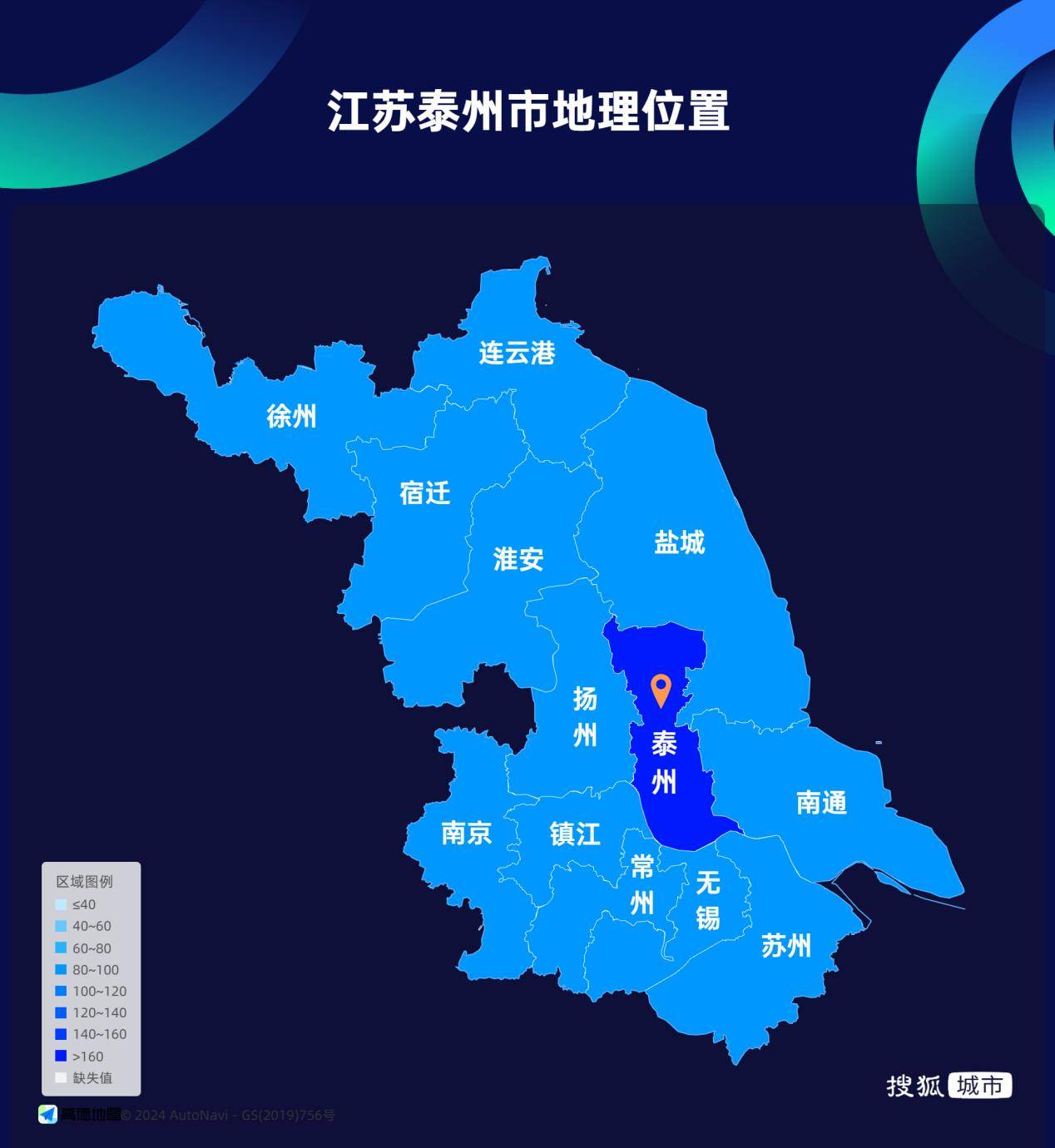
早在2010年,沪宁城际建成通车,南京、镇江、常州、无锡、苏州便一举迈入“高铁时代”;2011年京沪高铁开通,徐州成为苏北地区首个开行高铁的城市;2019年,徐宿淮盐铁路和连淮铁路开通,连云港、淮安、盐城、宿迁齐齐跨入“高铁时代”;2020年连淮扬镇铁路淮镇段、盐通高铁通车,扬州、南通也跨入“高铁时代”。
时至如今,“四不靠”的泰州只有一条经过电气化改造的宁启铁路,可以开行动车组列车,最高时速200千米/小时。周围7座地市遍布10余座高铁站,将泰州团团围住。网络调侃其为“环泰州高铁圈”,说泰州是“加强版的县城”“苏中的苏北”。
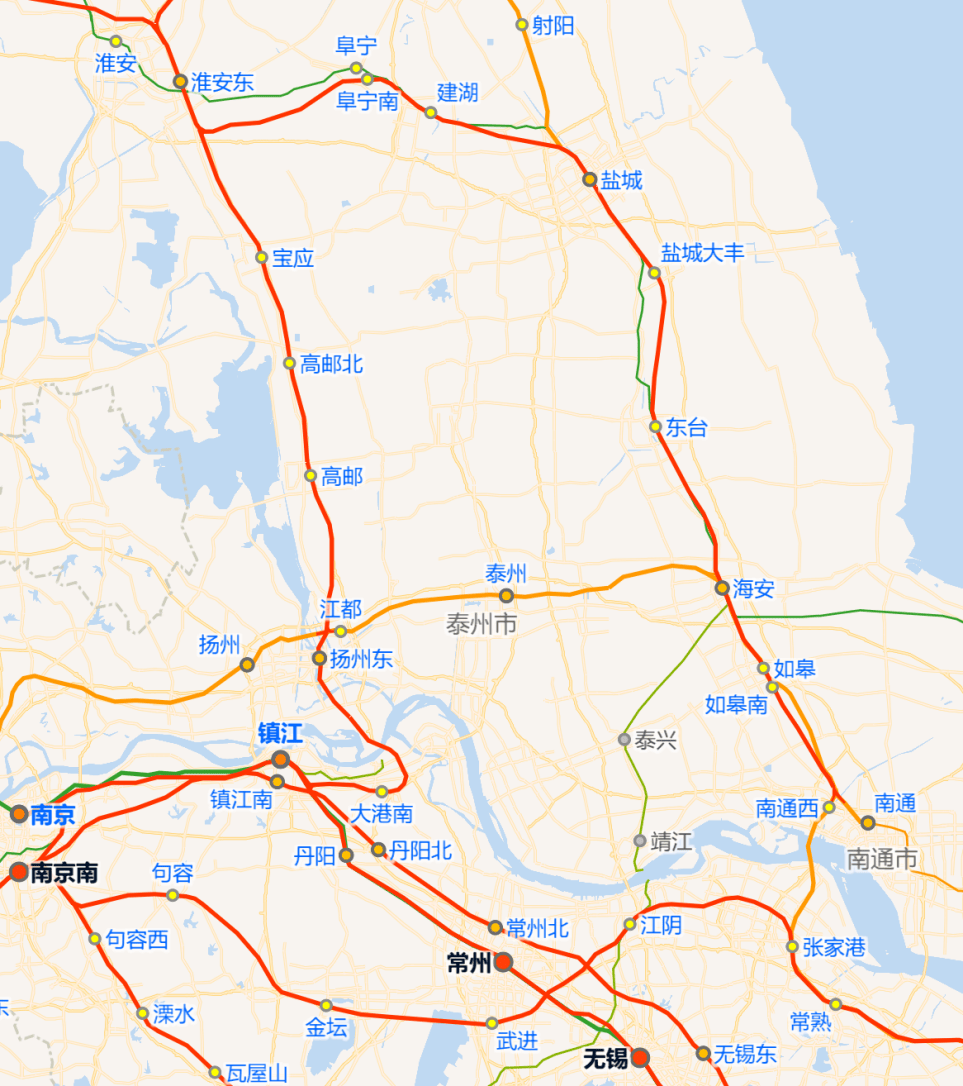 “环泰州高铁圈”,红色线路为高铁线路。图/中国铁路地图
泰州也不是没有高铁规划。早在2013年,途径泰州的北沿江高铁便被纳入《长江经济带综合立体交通走廊规划(2014-2020年)》,2016年又纳入国家《中长期铁路网规划》。
彼时泰州人喜大普奔,还与南通人在线路走向上打了好几年“口水仗”。北沿江高铁从泰州至南通一段,有“南北两线”之争:南线沿长江而行,途径泰州经济最强县泰兴和靖江;北线与宁启铁路线大体一致,连接南通两大千亿县海安和如皋。
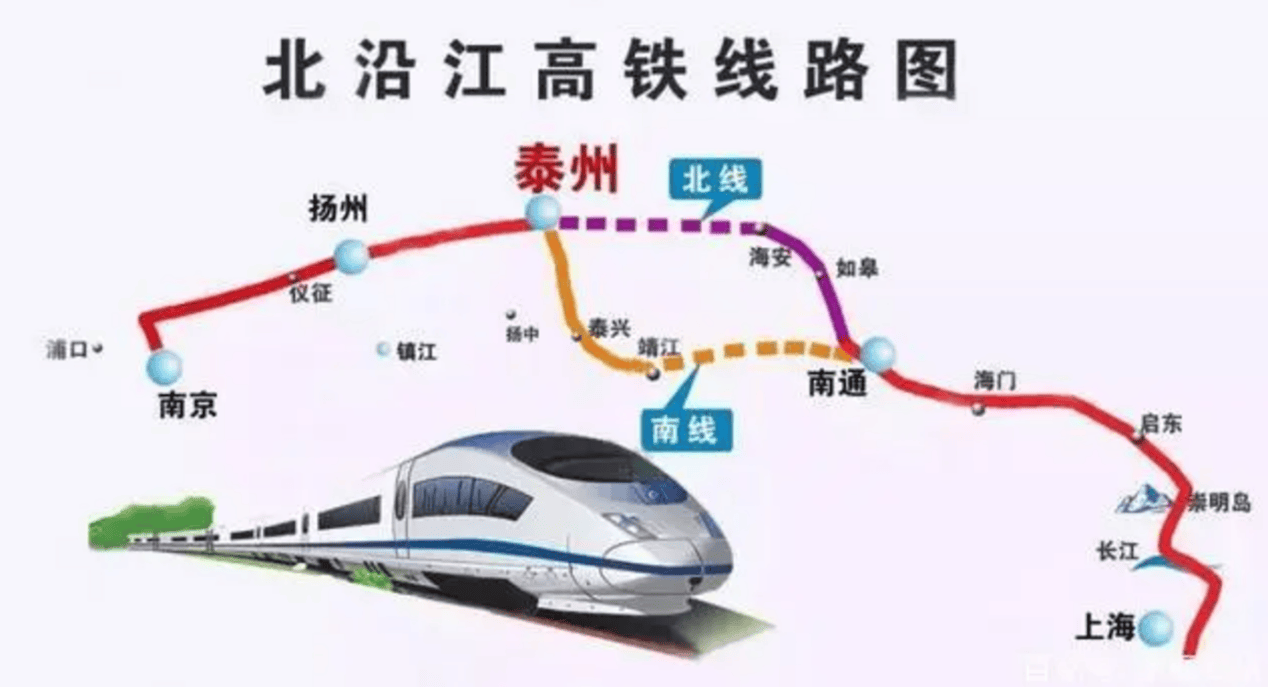 北沿江高铁泰州至南通段“南北两线”线路图。图/网络
不过最终,北沿江高铁泰州至南通一段选择了“中线方案”,弃弯取直,在泰州设泰州南、黄桥两站,再经如皋西到达南通。泰州人的高铁梦将随着2027年北沿江高铁的开通而实现,届时泰州到南京的通行时间将缩短至1小时以内,到上海也仅需1小时左右。
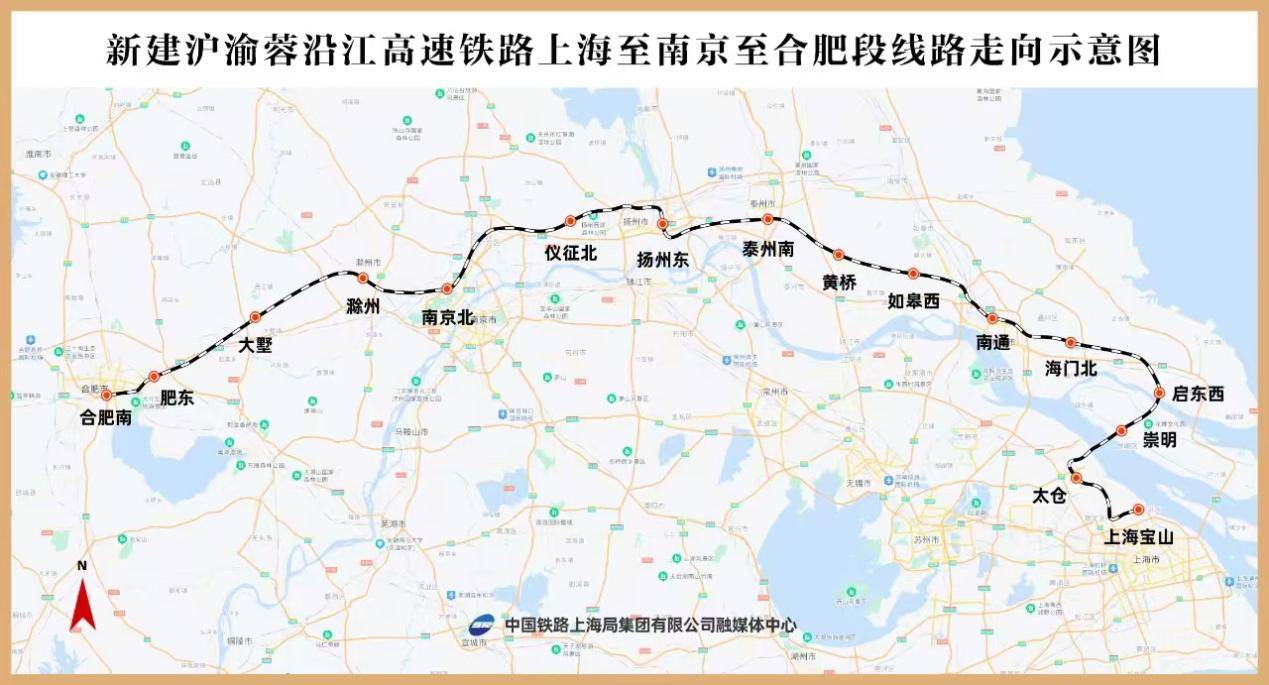 北沿江高铁上海至南京至合肥段线路图。图/铁路建设规划
只是南北两端的经济强县靖江和兴化,未免有些失落。这一遗憾,要等2030年盐宜高铁建成才能弥补了。盐宜高铁纵贯泰州,在泰州共设兴化东、泰州南、泰兴东、靖江4座车站,预计明年正式开建。盐宜高铁与北沿江高铁将在泰州南站交汇,届时泰州将成为江苏中部十字高铁枢纽,彻底摆脱“环泰州高铁圈”的尴尬。
 新建盐城经泰州无锡常州至宜兴铁路线路平纵断面示意图。图/铁路建设规划
-02-
工贸港城
虽然没有高铁开通,但从扬州分家出来的泰州,这些年发展也还不错。
1996年,刚刚立市的泰州GDP总量284亿,排在全省第10;2011年超越镇江晋级第9,并一直持续到如今。2000-2023年,泰州GDP总量从399亿增加至6732亿,增幅高达1587%,位居全省第4。疫情下的2020-2022年,泰州GDP年平均增长6.0%,更是高居全省之首。
泰州有两张“王牌”,一是工业,二是港口。2023年,泰州三次产业结构为5.1:48.4:46.5,二产占比居全省第2。医药和船舶是泰州的强项,泰连锡生物医药、通泰扬海工装备和高技术船舶两大集群入选国家先进制造业集群,数量占全省的1/7。
而且,泰州这两大产业都站上了全国地级市顶端。医药产业产值居全国地级市之首,拥有全国最大的医药工业企业——扬子江药业集团,建成了全国最大的中成药生产基地,疫苗产业集聚度全国最高。
船舶产业同样是王者级别。泰州是国家级船舶出口基地、全国最大民营造船基地,拥有扬子江船业、新时代造船等全球领军企业,造船完工量居全国地级市之首,占到全球的1/10、全国的1/4、江苏的1/2。
泰州的工业效益数据十分惊艳。以2022年为例,泰州规上工业企业3676 家,规上工业营收7424.88亿,利润总额535.43亿,分别位居全省第7、第6和第5位,都高于其GDP排名。
除了工业,泰州还拥有港口优势。坐拥97.8公里长江干流岸线、单边岸线占全省1/4的泰州港,已成长为江苏第二大港。2011年,泰州港货物吞吐量突破1亿吨,位居江苏第7。2023年,泰州港货物吞吐量已高达3.96亿吨,高居全省第2、全国第11,可以说是火箭般蹿升。
不过,受制于“四不靠”的地理区位和“环泰州高铁圈”的现状,泰州也有不少苦恼,比如“出不了圈”。去年淄博烧烤火爆出圈,泰州海陵区政府课题组撰文向淄博取经,以改善自身文旅成绩全省垫底、城市知名度不高的现状。
再比如“入不了圈”。在此前的长三角城市群规划中,泰州既不在南京都市圈,也不在上海都市圈,又不在苏锡常都市圈,显得尤为孤独。好在,这样的情况正在随着高铁建设稳步推进而得以改善。
-03-
拥抱上海
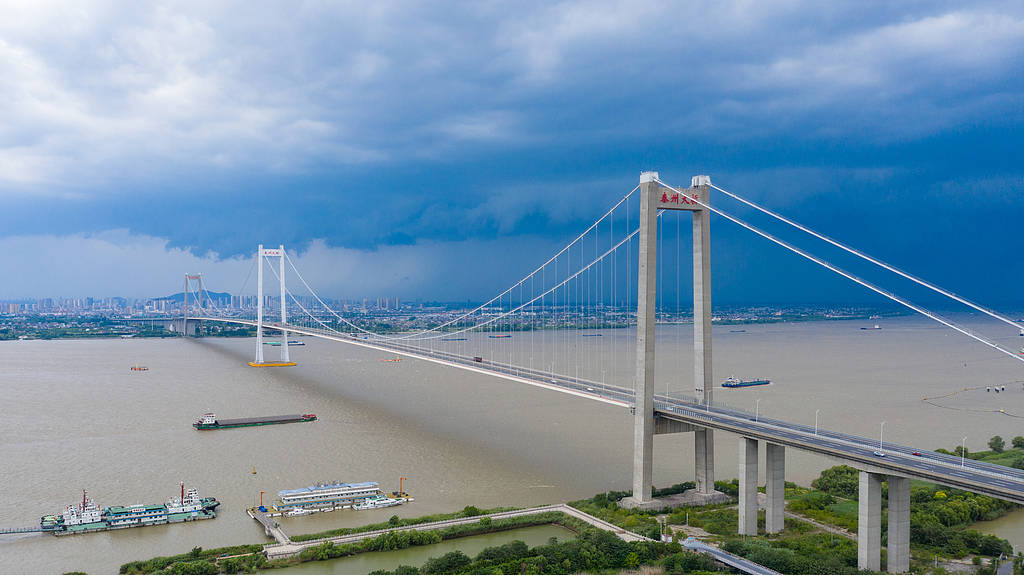
今年上半年,泰州一举拿下了中国最大都市圈的“入场券”。
据《解放日报》6月报道,长三角14市的规划系统负责人齐聚上海,会商上海大都市圈国土空间总体规划。上海大都市圈由此前的“1+8”扩容为“1+13”,新增浙江杭州、绍兴,江苏泰州、盐城和安徽宣城5市,涉及人口1.1亿,去年的GDP合计达18.28万亿。
这轮扩容早有端倪。早在去年9月,上海市规划资源局总工程师就曾带领工作组到泰州,共商上海大都市圈国土空间总体规划编制工作。2022年北沿江高铁的开工,泰州与上海之间的时空距离将缩短到1小时左右,正是泰州被上海拉入“群聊”的交通基础。
能与上海双向奔赴,泰州也自有合作基础和产业实力。2018,时任泰州市委书记韩立明就说起过两地渊源:泰州有六成以上企业与上海建立合作关系,七成以上进出口货物通过上海口岸。同时,上海有一大批企业落户泰州,累计投资超过140亿元。泰州也有110多家企业在上海建立生产基地或设立办事处,30多家企业在上海设立研发机构。
泰州市自规局长方捷在接受媒体采访时表示,加入上海大都市圈后,泰州将链接上海人才、科创等高端要素资源,接受辐射带动,放大大健康产业的先发优势,提升锡常泰跨江融合发展水平。同时,顺应大都市圈的产业分工趋势,在主导产业上深度参与产业链协作,推动建设医药健康产业创新中心和先进制造业基地。
可以说,泰州的两大王牌产业——医药和船舶,都是能深度参与上海产业链协作的。上海是中国医药产业第一城,生物医药相关企业数量占全国近15%,产业规模接近万亿。上海也是内地唯一海洋生产总值过万亿的城市,未来剑指全球海洋中心。
近年来,泰州与上海已经在医药和船舶产业上开展合作。复旦张江、迈博太科、泰康生物等一大批沪字号药企在泰州发展,复旦大学、上海交大等院校与泰州共建研究院、实验室。泰州头部船舶企业——新扬子造船,也在上海布局了多家设计公司。
走出“高铁洼地”,小城泰州的腾飞机遇终于来了。
Jiangsu's' high-speed rail depression 'embraces the Shanghai metropolitan area
The last 'high-speed rail depression' in Jiangsu has finally ushered in an opportunity for takeoff.
Recently, the first high-speed railway station in Taizhou has officially started construction. This is the intersection of the national main channel along the Yangtze River - the North Yangtze River high-speed railway, and the Jiangsu central axis channel - the Yanyi high-speed railway. It is also the first comprehensive transportation hub of Taizhou's high-speed railway station.
It is expected that in 2027, Taizhou South Station will be opened and operated synchronously with the North Yangtze River High speed Railway, and Taizhou will officially enter the "high-speed railway era", reducing the travel time to Shanghai to about 1 hour.
This is also the transportation foundation for Taizhou to win the "entry ticket" to the Shanghai metropolitan area in the first half of this year.
-01-
High speed rail depression
How did Taizhou become a "high-speed rail depression" in Jiangsu?
This starts from its birth.
Taizhou is the youngest prefecture level city in Jiangsu province.
In 1996, the "Yangtai Separation" was established, and the county-level Taizhou City was separated from Yangzhou to form a prefecture level Taizhou City, which includes Hailing District, Jingjiang City, Taixing City, Jiangyan City, and Xinghua City.
In this way, Taizhou has become the geographical center of Jiangsu, but its location belongs to the "four no's", namely "not close to Nanjing, not close to Shanghai, not close to the sea, and not close to the railway artery", which often leads to mainline railways passing by Taizhou in planning.
As early as 2010, the Shanghai Nanjing intercity railway was completed and opened to traffic, ushering Nanjing, Zhenjiang, Changzhou, Wuxi, and Suzhou into the era of high-speed rail;
In 2011, the Beijing Shanghai high-speed railway was opened, and Xuzhou became the first city in northern Jiangsu to operate a high-speed railway;
In 2019, the Xu Su Huai Salt Railway and the Lian Huai Railway were opened, ushering Lianyungang, Huai'an, Yancheng, and Suqian into the "high-speed rail era";
In 2020, the Huaizhen section of the Huaiyang Town Railway and the Yantong High speed Railway were opened, and Yangzhou and Nantong also entered the "high-speed rail era".
Until now, there is only one electrified Ningqi Railway in Taizhou, known for its "four no's" policy, which can operate high-speed trains with a maximum speed of 200 kilometers per hour.
There are over 10 high-speed railway stations scattered across 7 cities surrounding Taizhou.
The internet jokingly refers to it as the "Taizhou high-speed railway circle", saying that Taizhou is a "strengthened version of the county town" and "the northern part of central Jiangsu".
The red line in the "Taizhou High speed Railway Circle" represents the high-speed railway line.
Map/China Railway Map
Taizhou also has plans for high-speed rail.
As early as 2013, the North Yangtze River High speed Railway passing through Taizhou was included in the "Comprehensive Three dimensional Transportation Corridor Plan of the Yangtze River economic Belt (2014-2020)", and in 2016 it was included in the national "Medium and Long term Railway Network Plan".
At that time, the people of Taizhou were fond of traveling extensively, and they even engaged in several years of "verbal battles" with the people of Nantong on the route.
The section of the North Yangtze River high-speed railway from Taizhou to Nantong has a dispute over the "North South Two Lines": the southern line runs along the Yangtze River, passing through Taixing, the strongest economic county in Taizhou, and Jingjiang;
The North Line is roughly the same as the Ningqi Railway Line, connecting the two billion dollar counties of Hai'an and Rugao in Nantong.
The "North South Two Lines" route map of the Taizhou Nantong section of the North Yangtze River high-speed railway.
Image/Network
However, in the end, the section of the North Yangtze River high-speed railway from Taizhou to Nantong chose the "midline plan", abandoning the bend and taking a straight route, setting up Taizhou South and Huangqiao stations in Taizhou, and then passing through Rugao West to reach Nantong.
The high-speed rail dream of Taizhou people will be realized with the opening of the North Yangtze River high-speed rail in 2027. At that time, the travel time from Taizhou to Nanjing will be shortened to less than 1 hour, and it will only take about 1 hour to reach Shanghai.
The route map of the North Yangtze River high-speed railway from Shanghai to Nanjing to Hefei.
Map/Railway construction Planning
Just the economically strong counties of Jingjiang and Xinghua at the north and south ends may feel a bit disappointed.
This regret can only be compensated for by the completion of the Yanyi high-speed railway in 2030.
The Yanyi high-speed railway runs through Taizhou, with four stations located in Xinghua East, Taizhou South, Taixing East, and Jingjiang. It is expected to officially start construction next year.
The Yanyi High speed Railway and the North Yangtze River High speed Railway will intersect at Taizhou South Station, making Taizhou a cross shaped high-speed railway hub in central Jiangsu, completely breaking free from the embarrassment of the "Taizhou high-speed railway circle".
Schematic diagram of the horizontal and vertical sections of the newly-built Yancheng Taizhou Wuxi Changzhou Yixing railway line.
Map/Railway Construction Planning
-02-
Gongmao Port City
Although there is no high-speed rail opening, Taizhou, which separated from Yangzhou, has also developed well in recent years.
In 1996, the newly established Taizhou had a total GDP of 28.4 billion, ranking 10th in the province;
In 2011, it surpassed Zhenjiang to advance to 9th place and has continued to do so until now.
From 2000 to 2023, the total GDP of Taizhou increased from 39.9 billion to 673.2 billion, with a growth rate of up to 1587%, ranking fourth in the province.
During the period of 2020-2022 under the epidemic, Taizhou's GDP grew at an average annual rate of 6.0%, ranking first in the province.
Taizhou has two "trump cards", one is industry and the other is port.
In 2023, the tertiary industry structure in Taizhou will be 5.1:48.4:46.5, with the proportion of secondary industry ranking second in the province.
Medicine and shipbuilding are the strengths of Taizhou. The two major clusters of Tailianxi Biopharmaceuticals, Tongtaiyang Marine Equipment, and High tech Ships have been selected as national advanced manufacturing clusters, accounting for 1/7 of the province's total.
Moreover, both industries in Taizhou have reached the top of the national prefecture level cities.
The output value of the pharmaceutical industry ranks first among prefecture level cities in China. It has the largest pharmaceutical industrial enterprise in China - Yangzijiang Pharmaceutical Group, has built the largest traditional Chinese patent medicines and simple preparations production base in China, and has the highest concentration of the vaccine industry in China.
The shipbuilding industry is also at the level of a king.
Taizhou is a national level ship export base and the largest private shipbuilding base in China. It has global leading enterprises such as Yangtze River Shipbuilding and New Era Shipbuilding. Its shipbuilding completion volume ranks first among prefecture level cities in China, accounting for 1/10 of the world, 1/4 of the country, and 1/2 of Jiangsu.
The industrial efficiency data of Taizhou is very impressive.
Taking 2022 as an example, Taizhou has 3676 industrial enterprises above designated size, with a revenue of 742.488 billion yuan and a total profit of 53.543 billion yuan, ranking 7th, 6th, and 5th in the province respectively, all higher than its GDP ranking.
In addition to industry, Taizhou also has port advantages.
Taizhou Port, which has 97.8 kilometers of coastline along the main stream of the Yangtze River and a unilateral coastline accounting for 1/4 of the province, has grown into the second largest port in Jiangsu.
In 2011, the cargo throughput of Taizhou Port exceeded 100 million tons, ranking seventh in Jiangsu.
In 2023, the cargo throughput of Taizhou Port has reached 396 million tons, ranking second in the province and 11th in the country, which can be said to have skyrocketed like a rocket.
However, constrained by the geographical location of "four no's" and the current situation of the "Taizhou high-speed rail circle", Taizhou also has many troubles, such as "unable to leave the circle".
Last year, Zibo barbecue became popular, and the research group of Hailing district government in Taizhou wrote an article to learn from Zibo to improve its cultural and tourism performance, which was at the bottom of the province and had low city visibility.
For example, 'unable to enter the circle'.
In the previous planning of the Yangtze River Delta urban agglomeration, Taizhou was neither in the Nanjing metropolitan area, nor in the Shanghai metropolitan area, nor in the Suzhou Wuxi Changzhou metropolitan area, making it particularly lonely.
Fortunately, this situation is being improved with the steady progress of high-speed rail construction.
-03-
Embrace Shanghai
In the first half of this year, Taizhou won the "entry ticket" to China's largest metropolitan area in one fell swoop.
According to a report by Liberation Daily in June, the heads of planning systems from 14 cities in the Yangtze River Delta gathered in Shanghai to discuss the overall national spatial planning of the Shanghai metropolitan area.
The Shanghai metropolitan area has expanded from the previous "1+8" to "1+13", adding five new cities: Hangzhou and Shaoxing in Zhejiang, Taizhou and Yancheng in Jiangsu, and Xuancheng in Anhui, involving a population of 110 million and a total GDP of 18.28 trillion yuan last year.
This round of expansion has already shown signs.
As early as September last year, the Chief engineer of Shanghai Planning and Resources Bureau led a working group to Taizhou to discuss the preparation of the overall national spatial planning for the Shanghai metropolitan area.
The construction of the North Yangtze River high-speed railway in 2022 will shorten the time and space distance between Taizhou and Shanghai to about one hour, which is the transportation foundation for Taizhou to be pulled into the "group chat" by Shanghai.
Being able to travel in both directions with Shanghai, Taizhou also has its own cooperation foundation and industrial strength.
In 2018, Han Liming, then Secretary of the Taizhou Municipal Party Committee, mentioned the origin of the two places: more than 60% of enterprises in Taizhou have established cooperative relationships with Shanghai, and more than 70% of import and export goods pass through the Shanghai port.
Meanwhile, a large number of enterprises in Shanghai have settled in Taizhou, with a cumulative investment of over 14 billion yuan.
More than 110 companies in Taizhou have established production bases or offices in Shanghai, and over 30 companies have set up research and development institutions in Shanghai.
During a media interview, Fang Jie, director of the Self Planning Bureau of Taizhou City, stated that after joining the Shanghai metropolitan area, Taizhou will connect with high-end resources such as talent and science and technology innovation in Shanghai, receive radiation and drive, amplify the first mover advantage of the big health industry, and enhance the level of cross river integration development between Xichang and Taizhou.
At the same time, in line with the trend of industrial division of labor in metropolitan areas, we will deeply participate in industrial chain cooperation in leading industries, promote the construction of innovation centers and advanced manufacturing bases in the pharmaceutical and health industry.
It can be said that Taizhou's two flagship industries - pharmaceuticals and shipbuilding - can deeply participate in Shanghai's industrial chain cooperation.
Shanghai is the first city in China's pharmaceutical industry, with nearly 15% of the country's biopharmaceutical related enterprises and an industry scale of nearly one trillion yuan.
Shanghai is also the only city in mainland China with a total ocean production value exceeding one trillion yuan, and its future is aimed at the global ocean center.
In recent years, Taizhou and Shanghai have cooperated in the pharmaceutical and shipbuilding industries.
A large number of Shanghai listed pharmaceutical companies, such as Fudan Zhangjiang, Maibo Taike, and Taikang Biotechnology, have developed in Taizhou. Fudan University, Shanghai Jiao Tong University, and other universities have jointly established research institutes and laboratories with Taizhou.
New Yangtze Shipbuilding, a leading shipbuilding enterprise in Taizhou, has also established multiple design companies in Shanghai.
Stepping out of the 'high-speed rail depression', the opportunity for the small city of Taizhou to take off has finally arrived.
1.It is expected that in 2027, Taizhou South Station will be opened and operated synchronously with the North Yangtze River High speed Railway, and Taizhou will officially enter the "high-speed railway era", reducing the travel time to Shanghai to about 1 hour.
句子成分分析:
(提示: 读句时出现中断。(原因))
It is expected | that [in 2027],
Taizhou South Station will be opened and operated [synchronously] [with the North Yangtze River High speed Railway],
and Taizhou will [officially] enter the"
high-speed railway era"
, reducing the travel time to Shanghai [to about 1 hour].
句子语法结构详解:
* it 为先行主语,代表后移的主语从句。
* expected 为谓语,采用一般现在时和被动语态。
* opened 为谓语,采用一般将来时和被动语态。
* operated 为谓语,采用一般将来时和被动语态。
* enter 为谓语,采用一般将来时。
* reducing 为现在分词。
* will 为情态动词。is, be 为助动词。the 为定冠词。
句子相关词汇解释:
Phrase:
| the Yangtze River | 长江 |
Vocabulary:
| expect [iks'pekt] | vt. | 1) 期待,盼望,等待 2) 预料,预期,预计 |
| Taizhou | n. | 1) [中国省市] 台州 2) [中国省市] 泰州 |
| south [sauθ] | a. | 1) 南方的,向南的,南部的 2) 南风的,南方吹来的 |
| station ['steiʃәn] | n. | 1) 车站 2) 站,局,所 3) 广播电台,电视台 |
| open ['әupәn] | vt. | 1) 打开,开启, 开 2) 开通, 开辟 |
| and [ænd] | conj. | 1) 和, 与, 同, 并 2) 然后,接着 |
| operate ['ɔpәreit] | vt. | 1) 使用, 使运转 2) 操作,控制,使运行 |
| north [nɔ:θ] | a. | 1) 北方的,向北的,北部的 2) 北风的,北方吹来的 |
| high [hai] | a. | 1) 高的 2) 有某高度的 |
| speed [spi:d] | n. | 1) 速度 2) 进度 |
| railway ['reilwei] | n. | 1) 铁路,铁道 2) 铁路公司,铁道部门,铁路系统 |
| officially [ә'fiʃәli] | ad. | 1) 正式地,官方地,公开地 2) 依据法律等 |
| enter ['entә] | vt. | 1) 进入,进来,进去 2) 成为……的一员,加入,开始从事 |
| high-speed | a. | 高速的,高效率的,迅速的 |
| era ['iәrә] | n. | 年代,时代 |
| reduce [ri'dju:s] | vt. | 1) 减少,缩小(尺寸、数量、价格等) 2) 使蒸发 |
| travel ['trævl] | n. | 1) 旅行,旅游,游历 2) (travels)(出国)旅游,旅行 |
| time [taim] | n. | 1) 时间 2) 时候 3) 时期,时代 |
| Shanghai | n. | [中国省市] 上海 |
| about [ә'baut] | ad. | 1) 大约, 差不多 2) 将近, 几乎 |
| hour [auә] | n. | 1) 小时 2) (某个)时间,时段 |
句子相关学习点:
 in 和 after 后接时间的区别 现在分词作状语和不定式作状语的区别
2.In 1996, the "Yangtai Separation" was established, and the county-level Taizhou City was separated from Yangzhou to form a prefecture level Taizhou City, which includes Hailing District, Jingjiang City, Taixing City, Jiangyan City, and Xinghua City.
句子成分分析:
[In 1996], the "Yangtai Separation" was established, || and the county-level Taizhou City was separated from Yangzhou to form a prefecture level Taizhou City, (which includes Hailing District, Jingjiang City, Taixing City, Jiangyan City, and Xinghua City).
句子语法结构详解:
* established 为谓语,采用一般过去时和被动语态。
* 第1个 and 为并列连词,连接并列句。
* separated 为谓语,采用一般过去时和被动语态。
* to form 为不定式,作状语。
* which 为关系代词,引导非限制性定语从句。
* includes 为谓语,采用一般现在时。动词采用第三人称单数形式。
* Hailing 为动名词,作宾语。
* was 为助动词。the 为定冠词。a 为不定冠词。
句子相关词汇解释:
Vocabulary:
| separation [,sepә'reiʃәn] | n. | 1) 分隔,分离 2) 离别 |
| establish [i'stæbliʃ] | vt. | 1) 建立,创立,设立 2) 建立(尤指正式关系) |
| separate ['sepәreit] | vt. | 1) 使分离,分散 2) 隔开,阻隔 |
| Yangzhou | n. | [中国省市] 扬州 |
| form [fɔ:m] | vt. | 1) 形成 2) 成立,建立,创立 |
| prefecture ['pri:fek,tjuә] | n. | (法、意、日等国的)地方行政区域;省;县 |
| level ['levl] | n. | 1) 水平,级别,层次 2) 水平高度 |
| include [in'klu:d] | vt. | 1) 包括,包含 2) 使成为……的一部分 |
| hail [heil] | vt. | 1) 打招呼,喊 2) 赞扬(或称颂)……为(尤用于报纸等) |
| district ['distrikt] | n. | 1) 区,地区,区域 2) 行政区,管辖区 |
| and [ænd] | conj. | 1) 和, 与, 同, 并 2) 然后,接着 |
句子相关学习点:
in 和 after 后接时间的区别 try to do sth 和 try doing sth 的区别
3.The internet jokingly refers to it as the "Taizhou high-speed railway circle", saying that Taizhou is a "strengthened version of the county town" and "the northern part of central Jiangsu".
句子成分分析:
The internet jokingly refers to it [as the "Taizhou high-speed railway circle", saying | that Taizhou is a "strengthened version (of the county town") and "the northern part (of central Jiangsu)]
句子语法结构详解:
* refers 为谓语,采用一般现在时。动词采用第三人称单数形式。
* saying 为动名词。
* that 为连词,引导宾语从句。
* is 为系动词作谓语,采用一般现在时。
* strengthened 为过去分词作定语
* the 为定冠词。a 为不定冠词。
句子相关词汇解释:
Phrase:
| refer to...as... | 称...为..., 将...说成是... |
| county town | 郡(或县)首府;郡(或县)城 |
Vocabulary:
| Internet | n. | 互联网,因特网 |
| jokingly ['dʒәukiŋli] | ad. | 开玩笑地;闹着玩滴;戏谑的 |
| Taizhou | n. | 1) [中国省市] 台州 2) [中国省市] 泰州 |
| high-speed | a. | 高速的,高效率的,迅速的 |
| railway ['reilwei] | n. | 1) 铁路,铁道 2) 铁路公司,铁道部门,铁路系统 |
| circle ['sә:kl] | n. | 1) 圈子,界 2) 圆形物; 环; 圈 |
| say [sei] | vt. | 1) 说,讲,告诉 2) 比方说,假设 |
| strengthen ['streŋθәn] | vt. | 加强,增强,巩固 |
| version ['vә:ʒәn] | n. | 1) 版本,改写本 2) 变体 |
| and [ænd] | conj. | 1) 和, 与, 同, 并 2) 然后,接着 |
| northern ['nɔ:ðәn] | a. | 北方的,北部的 |
| part [pɑ:t] | n. | 1) 部分 2) 部件,零件 3) 角色,台词 |
| central ['sentrәl] | a. | 1) 中心的,中央的 2) 最重要的,首要的,主要的 |
| Jiangsu | n. | [中国省市] 江苏 |
句子相关学习点:
4.This regret can only be compensated for by the completion of the Yanyi high-speed railway in 2030. The Yanyi high-speed railway runs through Taizhou, with four stations located in Xinghua East, Taizhou South, Taixing East, and Jingjiang.
句子成分分析:
This regret can only be compensated for [by the completion (of the Yanyi high-speed railway)] [in 2030].
The Yanyi high-speed railway runs through Taizhou, with four stations (located in Xinghua East), Taizhou South, Taixing East, and Jingjiang.
句子语法结构详解:
* compensated 为谓语,采用被动语态。
* runs 为谓语,采用一般现在时。动词采用第三人称单数形式。
* located in Xinghua East 为后置定语。
* can 为情态动词。be 为助动词。the 为定冠词。
句子相关词汇解释:
Phrase:
| compensate for... | 补偿, 赔偿 |
| run through... | 1) 快速地穿过, 快速传遍 2) 快速阅读, 匆匆讨论 3) 遍布于, 贯穿于 |
Vocabulary:
| this [θis] | a. | 1) 这(个) 2) 今,本 |
| regret [ri'gret] | n. | 痛惜,懊悔,遗憾,失望 |
| only ['әunli] | ad. | 只; 仅; 仅仅 |
| completion [kәm'pli:ʃәn] | n. | 1) 完成动作 2) 正式完成(指合同或契约) |
| high-speed | a. | 高速的,高效率的,迅速的 |
| railway ['reilwei] | n. | 1) 铁路,铁道 2) 铁路公司,铁道部门,铁路系统 |
| Taizhou | n. | 1) [中国省市] 台州 2) [中国省市] 泰州 |
| four [fɔ:] | num | 四 |
| station ['steiʃәn] | n. | 1) 车站 2) 站,局,所 3) 广播电台,电视台 |
| located | a. | 位于,座落在 |
| Xinghua | n. | [中国省市] 兴化 |
| east [i:st] | n. | 1) 东部 2) 东,东面,东边 |
| and [ænd] | conj. | 1) 和, 与, 同, 并 2) 然后,接着 |
| Jingjiang | n. | [中国省市] 靖江 |
句子相关学习点: