1亿美元1架!中国一口气买24架,不到三年却退居二线,为何?
当年花24亿美元买苏-35,如今,中国已有底气拒绝进口
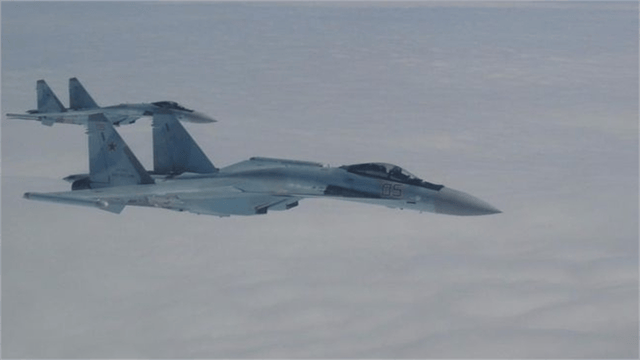
珠海航展临近,6架苏-35也已经成功落地中国。外界普遍认为,俄罗斯此举旨在扩大出口量,用苏-35取代苏-30,继续抢占航空市场。
但其实,自从2015年中国以24亿美元的价格购买了24架苏-35后,该战机就订单就变得寥寥无几。
要知道,该价格相当于1架飞机1亿美元,而国产歼-20战斗机单价也不过1.2亿美元。这难免让不少人心生疑惑:买这批苏-35,究竟值不值?
1、“终极侧卫”苏-35,硬核特性不容忽视

不可否认的是,苏-35这一“终极侧卫”的名号不是白给的。
展开来说,苏-35是一款在苏-27基础上深度改进的单座双发、超机动性多用途战斗机,属于世界第四代战斗机的“王者”。
它的作战半径可达1600公里,这意味着在不进行空中加油的情况下,也可以携带充足的武器,执行长距离任务。
苏-35配备了“雪豹-E”雷达,能够同时跟踪30个目标,并引导多枚导弹进行攻击。这样的能力使它在对空、对地的多任务执行中表现出色。此外,苏-35还应用了推力矢量技术,这让它在机动性和飞控系统上都有了很大提升。
因此,凭借这些“硬核”特性,苏-35一直享有“近距格斗之王”的美誉。
也正因看中这些优势,中国才会在已有强劲战机的情况下,还决定引进这批苏-35。当然,这背后其实有着更深层次的战略考量。
2、为何中国大手笔采购,亏不亏?
首先,在2015年,南海局势复杂。彼时,美国在该地区的影响力不容小觑,经常通过航母编队支持邻近国家,并对中国施压。
在这样的背景下,一款具备多任务能力的战斗机显得尤为重要。相比之前装备的歼-11,苏-35不仅能执行制空任务,还可以进行反舰和对地攻击,成为保卫南海的重要力量。
尽管苏-35在俄罗斯出售给中国的版本可能经过“阉割”,但中国迅速对其进行了改进,使其性能更胜俄国本土版本。
例如,中国版苏-35使用的是有源相控阵雷达,使其在超视距作战中占据优势。这些努力不仅提升了苏-35的战斗力,也为日后的研发积累了经验。
其次,引进苏-35的另一个重要目的,就是为接下来的国产战机装备做一个过渡和铺垫。中国空军亟需在装备歼-16和歼-20的大规模列装前,摸索现代化空战的有效方式。苏-35无疑承担了这样的角色。
3、不到两三年,苏-35退居二线

就拿著名的“南霸天”空2师来说,其作为中国空军的训练样板部队,通过苏-35开展夜间空中加油等现代化训练项目,为整个空军部队的战术设计和装备操作提供了宝贵的经验。
与苏-35一起引进的,其实还有相关的战术理念和使用方式。这对中国空军的整体实力提升,起到了承上启下的关键作用。
只不过,随着时间推移,中国的航空技术不断进步,从追随苏联以来的苏式布局,也逐渐迈向自主创新的道路。
像落选的五代机“雪鸮”设计方案,便是一个重要分水岭,标志着中国航空工业从模仿走向自主创新。此后,歼-20、歼-16等雄鹰展翅,逐渐成为中国军事航空的中坚力量。
换言之,在这些变化的背后,苏-35扮演了“老师”的角色,其先进的飞控技术和战术经验,为中国空军的独立自主发展奠定了重要基础。
所以,即便该战机从引进到退居二线,不过是两三年的光景,但这并不影响它在中国空军发展历程中的地位,它仍是那个连接过去与未来的桥梁,让新一代战机在它的肩膀上腾飞。
$100 million per aircraft! Why did China buy 24 planes at once, but in less than three years, it retreated to the second tier?
Back then, China spent $2.4 billion to buy the Su-35, but now it has the confidence to refuse imports
The Zhuhai Airshow is approaching, and six Su-35s have successfully landed in China. It is widely believed that Russia's move aims to expand its export volume, replace the Su-30 with the Su-35, and continue to seize the aviation market.
But in fact, since China purchased 24 Su-35s for $2.4 billion in 2015, orders for this fighter jet have become scarce.
You should know that the price is equivalent to $100 million per aircraft, while the unit price of domestically produced J-20 fighter jets is only $120 million. This inevitably raises doubts among many people: is it worth buying this batch of Su-35?
1. The ultimate sideguard Su-35, with its hardcore characteristics that cannot be ignored
It cannot be denied that the title of "ultimate sideguard" for the Su-35 was not given for nothing.
To elaborate, the Su-35 is a single seat twin engine, super maneuverable multi-purpose fighter jet that has been deeply improved on the basis of the Su-27, and belongs to the "king" of the world's fourth generation fighter jets.
Its combat radius can reach 1600 kilometers, which means it can carry sufficient weapons and perform long-distance missions without aerial refueling.
The Su-35 is equipped with the "Snow Leopard E" radar, which can simultaneously track 30 targets and guide multiple missiles for attack. This ability enables it to perform excellently in multitasking in both air and ground. In addition, the Su-35 also applies thrust vectoring technology, which greatly improves its maneuverability and flight control system.
Therefore, with these "hardcore" features, the Su-35 has always been known as the "king of close combat".
It is precisely because of these advantages that China has decided to introduce this batch of Su-35s despite already having strong fighter jets. Of course, there are deeper strategic considerations behind this.
2. Why does China make big purchases and not lose money?
Firstly, in 2015, the situation in the South China Sea was complex. At that time, the influence of the United States in the region should not be underestimated, often supporting neighboring countries through aircraft carrier fleets and putting pressure on China.
In this context, a fighter jet with multi mission capabilities is particularly important. Compared to the previously equipped J-11, the Su-35 can not only perform air superiority missions, but also carry out anti-ship and ground attacks, becoming an important force in defending the South China Sea.
Although the version of the Su-35 sold to China in Russia may have undergone "castration", China quickly improved it to make its performance better than the Russian domestic version.
For example, the Chinese version of the Su-35 uses an active phased array radar, giving it an advantage in beyond visual range operations. These efforts not only enhanced the combat effectiveness of the Su-35, but also accumulated experience for future research and development.
Secondly, another important purpose of introducing the Su-35 is to serve as a transition and preparation for the upcoming domestic fighter equipment. The Chinese Air Force urgently needs to explore effective modern air combat methods before the large-scale deployment of the J-16 and J-20 fighter jets. The Su-35 undoubtedly took on such a role.
3. In less than two or three years, the Su-35 retreated to the second tier
Take the famous "Nanba Tian" Air Force 2nd Division as an example. As a training model unit of the Chinese Air Force, it carried out modern training projects such as night air refueling through the Su-35, providing valuable experience for the tactical design and equipment operation of the entire Air Force unit.
Introduced together with the Su-35, there are also related tactical concepts and usage methods. This has played a crucial role in enhancing the overall strength of the Chinese Air Force, serving as a bridge between the past and the future.
However, with the passage of time, China's aviation technology has continuously improved, and from following the Soviet style layout since then, it has gradually moved towards the path of independent innovation.
The design scheme of the fifth generation aircraft "Snow Owl" that was not selected is an important watershed, marking the transition of China's aviation industry from imitation to independent innovation. Afterwards, the J-20, J-16 and other eagles spread their wings and gradually became the backbone of China's military aviation.
In other words, behind these changes, the Su-35 played the role of a "teacher", with its advanced flight control technology and tactical experience laying an important foundation for the independent development of the Chinese Air Force.
So, even though it has only been two or three years since the introduction of this fighter jet, it does not affect its position in the development of the Chinese Air Force. It is still the bridge connecting the past and the future, allowing the new generation of fighter jets to take off on its shoulders.
1. It is widely believed that Russia's move aims to expand its export volume, replace the Su-30 with the Su-35, and continue to seize the aviation market.
句子成分分析:
It is [widely] believed | that Russia's move aims to expand its export volume, replace the Su-30 with the Su-35, and continue to seize the aviation market.
句子语法结构详解:
* it 为先行主语,代表后移的主语从句。
* believed 为谓语,采用一般现在时和被动语态。
* that 引导主语从句。
* aims 为谓语,采用一般现在时。动词采用第三人称单数形式。
* to expand 为不定式,作宾语。
* replace 为不带 to 的不定式。
* continue 为不带 to 的不定式。
* to seize 为不定式,作宾语。
* its 为物主代词。is 为助动词。Russia's 为名词所有格。the 为定冠词。
句子相关词汇解释:
Phrase:
| replace...with... | 把...更换成..., 把...替换成... |
Vocabulary:
| widely ['waidli] | ad. | 1) 普遍地,广泛地,范围广地 2) 大大地,很大程度上地 |
| believe [bi'li:v] | vt. | 1) 相信,认为真实 2) 认为(……有可能), 把(某事)当真 |
| Russia ['rʌʃә] | n. | 俄罗斯 |
| move [mu:v] | n. | 1) 移动,活动 2) 行动 |
| aim [eim] | vt. | 1) 瞄准,对准 2) (be aimed at)目的是,旨在 |
| expand [ik'spænd] | vt. | 1) 扩展,发展(业务) 2) 扩大,增加,增强(尺码、数量或重要性) |
2. At that time, the influence of the United States in the region should not be underestimated, often supporting neighboring countries through aircraft carrier fleets and putting pressure on China.
句子成分分析:
[At that time], the influence (of the United States (in the region)) should not be underestimated, often supporting neighboring countries [through aircraft carrier fleets] and putting pressure on China.
句子语法结构详解:
* underestimated 为谓语,采用被动语态。
* often supporting 为现在分词,作状语。
* putting 为现在分词。
* should 为情态动词。be 为助动词。the 为定冠词。
句子相关词汇解释:
Phrase:
| at that time | 那时, 在当时 |
| the United States | 美国 |
| aircraft carrier | 航空母舰 |
| put...on... | 1) 把...放在...上 2) 在...上加(税或金额) |
Vocabulary:
| influence ['influәns] | n. | 1) 影响,作用 2) 支配力,控制力,影响力 |
| region ['ri:dʒәn] | n. | 1) (通常界限不明的)地区,区域,地方 2) 行政区 |
| underestimate [,ʌndәr'estimeit] | vt. | 1) 低估,对……估计不足 2) 对……认识不足(或重视不够),低估,轻视 |
| often ['ɔ:fn] | ad. | 常常; 经常; 时常 |
| support [sә'pɔ:t] | vt. | 1) 支持,拥护 2) 帮助,援助 |
| neighboring ['neibәriŋ] | a. | 附近的, 邻近的, 邻接的 |
| country ['kʌntri] | n. | 1) 国家 2) 乡村 |
| through [θru:] | prep. | 1) 借助,凭借,通过,经由 2) 从某物的一端到另一端, 穿透, 通过 |
| fleet [fli:t] | n. | 1) 舰队 2) 海军 |
| and [ænd] | conj. | 1) 和, 与, 同, 并 2) 然后,接着 |
| pressure ['preʃә] | n. | 1) 压力,挤压 2) 压力,压强 |
| China ['tʃainә] | n. | 中国 |
句子相关学习点:
 现在分词作状语和不定式作状语的区别
3. The Chinese Air Force urgently needs to explore effective modern air combat methods before the large-scale deployment of the J-16 and J-20 fighter jets. The Su-35 undoubtedly took on such a role.
句子成分分析:
The Chinese Air Force urgently needs to explore effective modern air combat methods [before the large-scale deployment (of the J-16 and J-20 fighter jets)].
The Su-35 undoubtedly took on such a role.
句子语法结构详解:
(took 为 take 的过去式。)
* needs 为谓语,采用一般现在时。动词采用第三人称单数形式。
* to explore 为不定式,作宾语。
* took 为谓语,采用一般过去时。
* the 为定冠词。a 为不定冠词。
句子相关词汇解释:
Phrase:
| air force | 空军 |
| take...on | 1) 呈现, 具有(某特征) 2) 聘用, 雇用 3) 承担, 负责 4) 装载(乘客等) |
| such a... | 1) 这种 2) 如此, 这么 |
Vocabulary:
| Chinese [tʃai'ni:z] | a. | 1) 中国的 2) 中国人的 |
| need [ni:d] | vt. | 需要,必需 |
| explore [ik'splɔ:] | vt. | 1) 探索,勘探,探险 2) 探究,探讨 |
| effective [i'fektiv] | a. | 1) 有效的,产生预期效果的 2) (法律和规则)生效的,起作用的 |
| modern ['mɔdәn] | a. | 1) 现代的,当代的,近代的 2) (艺术、音乐、时装等的风格)新式的,有别于传统的 |
| air [єә] | n. | 1) 空气 2) (the air)空中,天空 |
| combat ['kɔmbæt] | n. | 战斗,争斗,搏斗 |
| method ['meθәd] | n. | 1) 方法,办法,措施 2) 条理,有条不紊 |
| before [bi'fɔ:] | prep. | 1) (时间或顺序)在...之前 2) (位置)在...前面 |
| large-scale | a. | 1) 大规模的;大批的;大范围的 2) 按大比例绘制(或制作)的;大比例尺的 |
| deployment | n. | 部署,调度 |
| and [ænd] | conj. | 1) 和, 与, 同, 并 2) 然后,接着 |
| fighter ['faitә] | n. | 1) 战士,战斗士 2) 斗士,奋斗者 |
| jet [dʒet] | n. | 1) 喷气式飞机 2) 喷射流,喷射口,喷嘴 |
| undoubtedly | ad. | 无疑, 必定, 确实地 |
| role [rәul] | n. | 1) 职能,地位,角色 2) (演员的)角色 |
句子相关学习点:
American, Chinese, Japanese 等词之前冠词的用法
cost, spend, take 的区别
4. However, with the passage of time, China's aviation technology has continuously improved, and from following the Soviet style layout since then, it has gradually moved towards the path of independent innovation.
句子成分分析:
[However], [with the passage (of time)], China's aviation technology has [continuously] improved, || and [from following the Soviet style layout [since then]], it has [gradually] moved [towards the path (of independent innovation)].
句子语法结构详解:
* improved 为谓语,采用现在完成时。
* and 为并列连词,连接并列句。
* following 为动名词,作介词宾语。
* moved 为谓语,采用现在完成时。
* has 为助动词。China's 为名词所有格。the 为定冠词。
句子相关词汇解释:
Phrase:
Vocabulary:
| however [hau'evә] | ad. | 1) 然而, 仍然 2) 无论如何,不管怎样, 究竟怎样 3) (与形容词和副词连用) 不管多么 |
| passage ['pæsidʒ] | n. | 1) 通道, 走廊 2) 段落,章节 |
| time [taim] | n. | 1) 时间 2) 时候 3) 时期,时代 |
| China ['tʃainә] | n. | 中国 |
| aviation [,eivi'eiʃәn] | n. | 航空制造业,航空,飞行 |
| technology [tek'nɔlәdʒi] | n. | 1) 技术,科技,工艺,工程技术,技术学,工艺学 2) 技术性机器(或设备) |
| continuously [kәn'tinjuәsli] | ad. | 连续不断地 |
以上是秒词邦为您整理编写的文章《1亿美元1架!中国一口气买24架,不到三年却退居二线,为何?》的全部内容。秒词邦是国内权威分题型分考点背诵中高考/四六级考研/专升本/出国单词的专业单词软件。扫描如下小程序码,进入秒词邦官方小程序获取更多英语相关资料!
【关键词:高考单词;高考英语;高中单词;高中英语;单词app;单词软件;记单词app;记单词软件;背单词软件;背单词app;英语单词;四六级单词;四六级英语;四六级单词app;四六级单词软件;考研单词app;考研单词软件;核心单词;高考冲刺复习;高考英语教材;高考英语真题;四六级真题;四六级试题;考研真题;考研英语单词;考研英语真题】