民生宏观吴彬:股债未动,汇率先行? 当前汇率为何升值?后市怎么走?
近期人民币汇率不仅升值,而且在外汇市场“领跑”。8月28日以来,美元兑人民币从7.13下行至7.08,人民币升值0.36%。更值得注意的是,近三个交易日,美元指数同期上行了0.82%,这意味着当前人民币升值“含金量”更高。
面对强势的汇率,股票反应积极、债券波动不大、黑色系商品却“逆势”下跌。8月28日以来,沪深300指数上涨0.49%,恒生指数上涨0.40%,螺纹钢(3487, -54.00, -1.52%)下跌0.07%,铁矿(805, -22.00, -2.66%)石下跌1.07%,10年期国债上涨0.03%。
当前汇率为何升值?交易因素驱动,企业“补偿性”结汇或是主因。
2023年以来,货物贸易维持高顺差的背景下,企业结汇率却持续下降。相对企业收汇时,当前人民币已经大幅升值,若按当前水平结汇,企业手上仍留有的外汇可能面临“汇兑亏损“,为避免亏损扩大,企业会倾向于增加结汇,进而形成了汇率升值与结汇行为的正向循环,加速汇率升值。
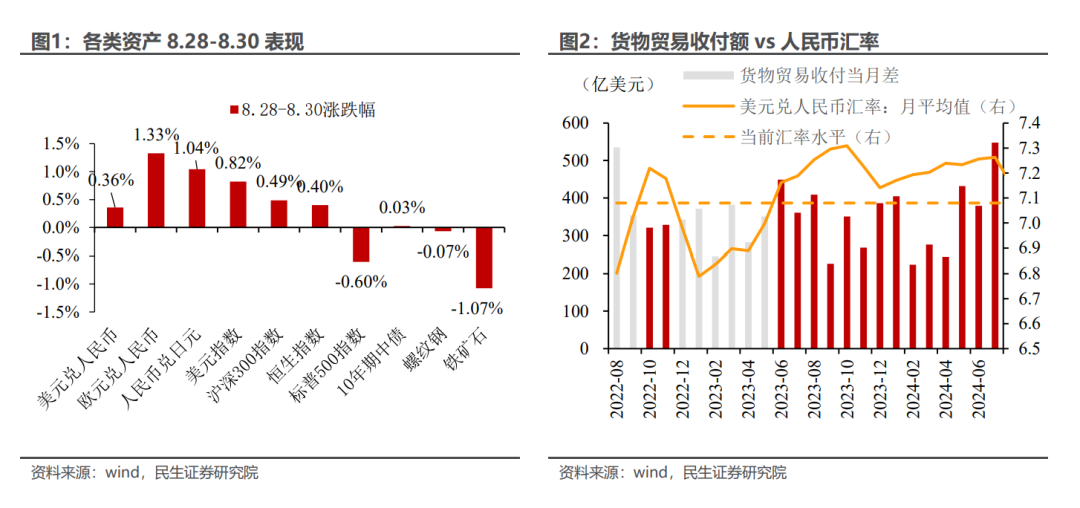
“补偿性”结汇的规模有多少大?出口企业可能有约1066亿美元。
我们观察到,从2023年二季度开始,企业结汇率开始趋势性走低。我们假设2023年以来的出口平均结汇率回归至2017-2023Q1期间的平均水平,那么意味着当前企业可能还需要结汇1066亿美元。考虑到境内外汇市场即期成交每个交易日成交规模在300-400亿美元,出口企业“补偿性“结汇的确会推动汇率升值,但持续的时间或有限。
当然,除出口企业外,还有其他类型的外汇资金存在“补偿性”结汇诉求,但其体量规模难以准确匡算。可以确定是,补偿性结汇的资金具有一定的共性——羊群效应强,一旦结汇需求“脉冲式”释放完毕后,很难再度主导汇率的走势。
近期人民币升值,对于股票市场有何影响?汇率升值利好风险偏好改善,但上涨仍需其他因素配合。
首先,近期汇率升值是交易因素驱动,与国内经济基本面关系变化不大,这意味股票市场分子端的预期并不会因汇率升值而大幅改善。
其次,企业结汇增加的确可能拉动消费和投资,但传导路径较长,短期很难显著提振股市。私人部门结汇增加可以近似理解为私人部门“宽信用”,若最终资金流向实体经济当中,对私人部门的消费和投资有一定的拉动作用,但这一传导路径太长。
最后,从资金流向上看,补偿性结汇并不一定伴随着外资大幅买入人民币资产,近期汇率走强也不等同于股市有增量资金入场。
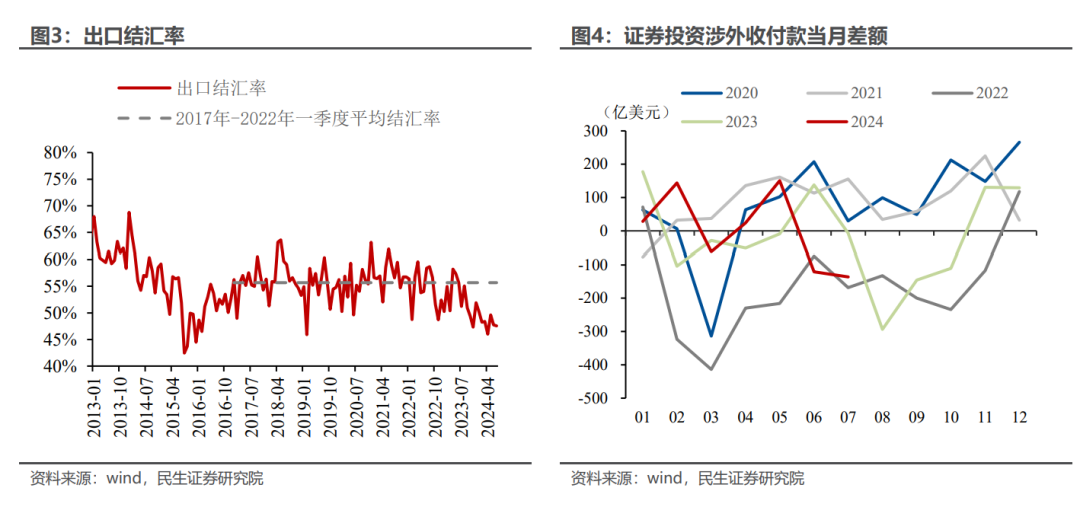
人民币升值是否导致外资抛债,对于债市构成利空?外资抛售中债概率不大,未来净买入规模或缩小,但并不对债市形成利空。
其一,对于持有美元的外资机构来说,即期汇率的波动并不影响存量头寸的收益。2023年下半年以来,外资通过外汇掉期锁汇+购买中债的交易活跃度显著提升,而这一头寸,并不存在汇率相关风险敞口,汇率的涨跌并不影响其收益。
其二,外汇掉期价格的波动主要影响增量的购债需求。若外汇掉期+中债与美债的利差收窄,外资未来购债的力度可能下降。
最后,当前中债对外资的吸引力在于外汇掉期包含的“美元溢价”,这一溢价短期内会降低,但很难完全消失。之所以外汇掉期会出现美元溢价,本质上在于国内美元流动性偏紧,在美国经济走弱、全球出口降速的情况下,境内美元流动性短期内易紧难松。
总之,在汇率压力减小的背景下,货币政策空间打开才是债市定价的主线,外资购债行为的波动并不影响大逻辑方向。
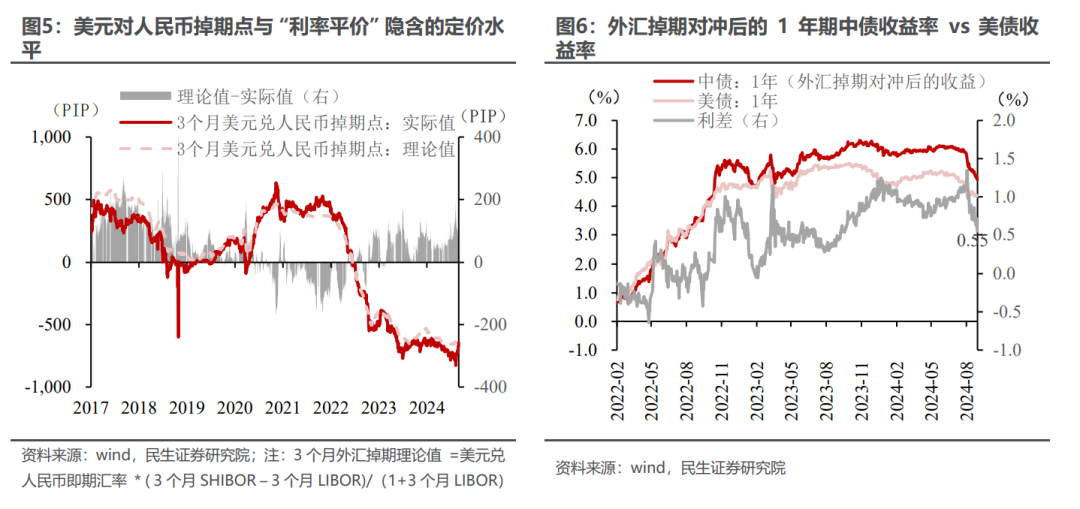
人民币汇率维持窄幅震荡,或是当前宏观环境下的“最优解”。
一方面,美联储降息即将落地,汇率贬值压力的确不大。中美利差缩窄的确有利于减缓人民币汇率贬值压力,但当前美债短端隐含降息2-3次降息预期,下行空间或已不大,对人民币汇率的提振有限;
另一方面,出口动能面临走弱风险,汇率升值的必要性也不强。国内基本面维持出口强、消费淡,但年内还将面临地缘政治、关税摩擦的风险,强汇率对于出口商而言,并不是一个好消息。
综上而言,我们认为即使美联储年内降息落地,人民币汇率年内或仍维持在窄幅区间内波动。
人民币汇率升值领跑外汇市场,股市积极反应,债市波动不大
近期,人民币汇率不仅显著升值,而且在外汇市场上表现突出。自8月28日以来,美元兑人民币汇率从7.13下降至7.08,人民币升值了0.36%。值得注意的是,尽管同期美元指数上行了0.82%,人民币仍然保持了升值的态势,显示出其“含金量”的提升。
面对强势的汇率,股票市场反应积极,沪深300指数和恒生指数均有所上涨,而黑色系商品则出现下跌。债券市场则相对平稳,10年期国债收益率略有上升。
此轮汇率升值的主要驱动力来自于企业的“补偿性”结汇行为。在货物贸易维持高顺差的背景下,企业结汇率却持续下降。由于当前人民币已经大幅升值,企业为避免外汇资产进一步缩水,倾向于增加结汇,从而形成了汇率升值与结汇行为的正向循环。
据估算,出口企业可能还有约1066亿美元的外汇需要结汇。考虑到境内外汇市场的日成交规模,出口企业的“补偿性”结汇行为确实会推动汇率升值,但其持续时间可能有限。此外,还有其他类型的外汇资金存在结汇诉求,但其规模难以准确估算。
对于股票市场而言,汇率升值有利于改善风险偏好,但股市的上涨仍需其他因素的配合。汇率升值与国内经济基本面的关系变化不大,因此股票市场的预期并不会因汇率升值而大幅改善。同时,企业结汇增加虽然可能拉动消费和投资,但传导路径较长,短期难以显著提振股市。
至于债券市场,汇率升值并不一定会导致外资抛售中债。对于持有美元的外资机构来说,即期汇率的波动并不影响其存量头寸的收益。未来外资购债的力度可能因外汇掉期价格的波动而下降,但并不会对债市形成利空。
综上所述,在当前的宏观环境下,人民币汇率维持窄幅震荡可能是“最优解”。一方面,美联储降息即将落地,汇率贬值压力不大;另一方面,出口动能面临走弱风险,汇率升值的必要性也不强。因此,即使美联储年内降息落地,人民币汇率年内或仍维持在窄幅区间内波动。
RMB Appreciates and Leads Forex Market, Stock Market Responds Positively, Bond Market Remains Stable
Recently, the RMB exchange rate has not only appreciated significantly but also outperformed in the forex market. Since August 28th, the USD/RMB rate has declined from 7.13 to 7.08, with the RMB appreciating by 0.36%. Notably, despite the US Dollar Index rising by 0.82% during the same period, the RMB maintained its appreciation trend, demonstrating its enhanced "value content."
In response to the strong exchange rate, the stock market reacted positively, with both the CSI 300 Index and the Hang Seng Index experiencing gains, while black commodity prices declined. The bond market remained relatively stable, with a slight increase in the yield of 10-year government bonds.
The primary driver of this round of exchange rate appreciation is the "compensatory" foreign exchange settlement behavior of enterprises. Despite the sustained high trade surplus, the settlement rate of enterprises has been declining. As the RMB has already appreciated significantly, enterprises are inclined to increase foreign exchange settlement to avoid further depreciation of their foreign exchange assets, thereby forming a positive feedback loop between exchange rate appreciation and settlement behavior.
It is estimated that export enterprises may still need to settle approximately $106.6 billion in foreign exchange. Considering the daily transaction volume of the domestic forex market, the "compensatory" foreign exchange settlement behavior of export enterprises will indeed drive exchange rate appreciation, but its duration may be limited. Additionally, there are other types of foreign exchange funds with settlement demands, but their scale is difficult to accurately estimate.
For the stock market, exchange rate appreciation is beneficial for improving risk appetite, but the stock market's rise still requires the cooperation of other factors. The appreciation of the exchange rate has little relation to changes in the domestic economic fundamentals, so the expectations of the stock market are unlikely to improve significantly due to exchange rate appreciation. Meanwhile, although the increase in enterprise settlement may stimulate consumption and investment, the transmission path is too long to significantly boost the stock market in the short term.
Regarding the bond market, exchange rate appreciation does not necessarily lead to foreign capital selling off Chinese bonds. For foreign institutions holding US dollars, spot exchange rate volatility does not affect the returns on their existing positions. The activity of foreign capital purchasing Chinese bonds through forex swaps and locking in exchange rates has increased significantly since the latter half of 2023. This position does not have exchange rate-related risk exposure, and the rise or fall of the exchange rate does not affect its returns.
In summary, under the current macroeconomic environment, maintaining a narrow range of fluctuations in the RMB exchange rate may be the "optimal solution." On one hand, the Federal Reserve's interest rate cut is imminent, reducing the pressure on the exchange rate to depreciate. On the other hand, export momentum faces the risk of weakening, and there is no strong necessity for the exchange rate to appreciate. Therefore, even if the Federal Reserve cuts interest rates within the year, the RMB exchange rate may still remain within a narrow range of fluctuations.
第一部分:初高中核心单词
| 序号 | 单词 | 音标 | 词性(缩写) | 中文词义 | 例句(英文) | 例句(中文) |
|---|---|---|---|---|---|---|
| 1 | development | /dɪ'vɛləpmənt/ | n. | 发展 | The city has seen rapid development. | 这个城市已经经历了快速的发展。 |
| 2 | environment | /ɪn'vaɪrənmənt/ | n. | 环境 | We must protect our environment. | 我们必须保护我们的环境。 |
| 3 | technology | /tɛk'nɑlədʒi/ | n. | 技术 | New technology is changing our lives. | 新技术正在改变我们的生活。 |
| 4 | challenge | /'tʃælɪndʒ/ | n./v. | 挑战 | She accepted the challenge. | 她接受了挑战。 |
| 5 | opportunity | /ɑpɚ'tunəti/ | n. | 机会 | He seized the opportunity. | 他抓住了机会。 |
| 6 | innovation | /ɪnə'veɪʃn/ | n. | 创新 | Innovation drives progress. | 创新推动进步。 |
| 7 | resource | /rɪ'sɔrs/ | n. | 资源 | Water is a valuable resource. | 水是一种宝贵的资源。 |
| 8 | sustainable | /sə'steɪnəbl/ | adj. | 可持续的 | Sustainable development is important. | 可持续发展很重要。 |
| 9 | impact | /'ɪmpækt/ | n./v. | 影响 | The policy had a significant impact. | 这项政策产生了重大影响。 |
| 10 | global | /'ɡləʊbl/ | adj. | 全球的 | Global warming is a serious issue. | 全球变暖是一个严重的问题。 |
| 11 | strategy | /'strætədʒi/ | n. | 策略 | They developed a new marketing strategy. |