为什么现在很少提“克隆”了?

原文:
看看克隆羊多莉的一生,也许你就会明白。
在1996年,世界上第一只成功克隆的哺乳动物——多莉诞生了,它让人们看到了克隆技术的可能性和潜力。
但是,多莉的一生,也让人们看到了克隆技术的局限和风险。多莉的故事,是一个关于生命、科学和伦理的故事,它值得我们深入了解和思考。
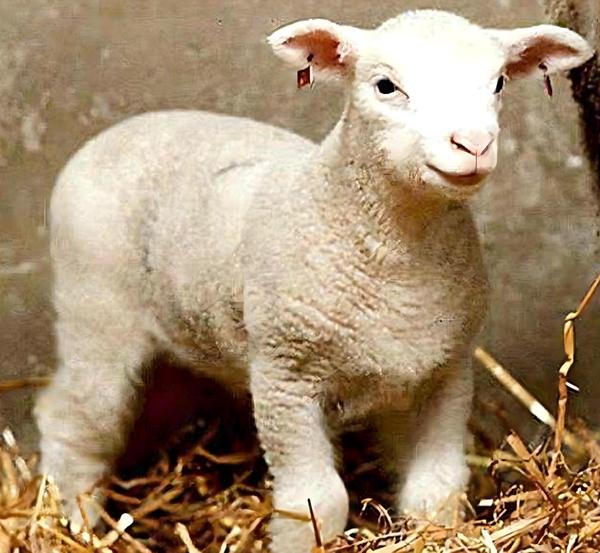
多莉的诞生
多莉的诞生,就像一场充满奇迹和冒险的科学故事。这个故事的主角是一群来自苏格兰爱丁堡大学的科学家,他们有一个大胆的想法:通过使用一只成年羊的细胞,来克隆出一只完全相同的羊。
听起来或许简单,但实际上却充满了挑战。这些细胞已经分化成了特定的功能,比如乳腺细胞,它们不像胚胎细胞那样可以发育成任何类型的细胞。
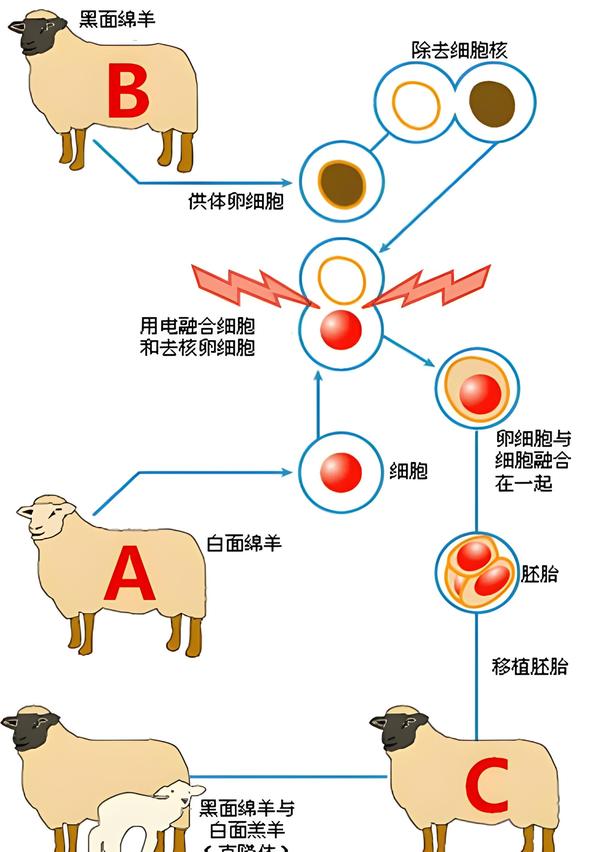
要让这些分化的细胞重新回到可以生成一个新生命的状态,就需要一种特殊的技术,这就是细胞核移植。这个技术就像是进行一场细胞的"基因搬家"游戏。
首先,科学家们会取出一个细胞的核,这个核包含了细胞的全部DNA信息。接着,他们把这个核放到另一个细胞的空壳里,就好像在一个新的家园里搬进去一样。
然后,通过电刺激,就像给新家通上电一样,让这个新的细胞开始分裂,逐渐形成一个胚胎。
这个胚胎拥有原始细胞核的所有基因,这也是克隆的目标所在。
接下来,这个充满了特殊基因信息的胚胎需要被放入一只母羊的子宫中,就像是一个种子被种在土壤里一样。在母羊的子宫中,这个胚胎会发育成一个小羊,完成了整个克隆的过程。
科学家们经过了多次的尝试,终于在1996年7月5日,成功地克隆出了一只小羊,它就是多莉。
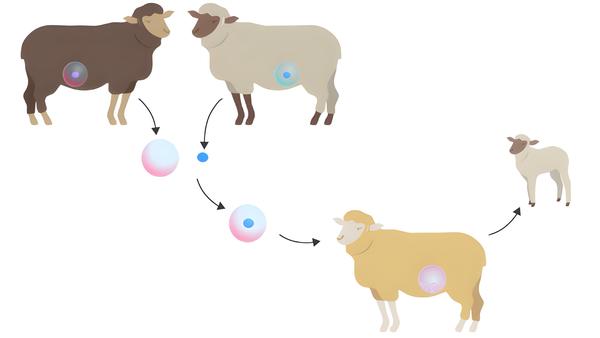
多莉有三个母亲:一个提供了DNA的白面芬多斯母羊,一个提供了卵子的苏格兰黑面母羊,一个提供了子宫的另一只苏格兰黑面母羊。
多莉的名字,是根据美国乡村歌手多莉·帕顿的名字命名的,因为她的乳房异常丰满,和提供DNA的那只母羊一样。
多莉的成长
多莉出生后,踏入了罗斯林研究所,这里既是它的家,也是一个科学实验室。科学家们对多莉进行了精心的照顾和观察,想要了解它是否与普通羊没有什么不同。
多莉的生理信息被详细地检测和记录,科学家们使用各种仪器和方法对多莉的状态进行持续分析和评估。
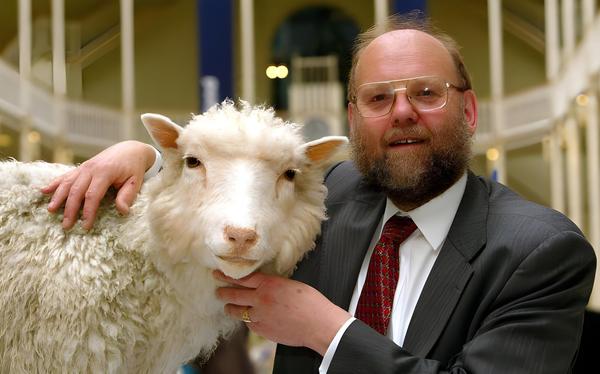
尽管多莉是一只克隆羊,但它并不知道自己的身份。它过着普通羊的生活,有着羊的本能和需求。多莉喜欢吃草,热爱玩耍,享受与其他羊儿的相处,也喜欢与科学家们互动,沐浴在阳光和清新的空气中,向往自由和快乐。
在一岁半的时候,多莉迈入了性成熟期,并成功与一只公羊交配怀孕。这给科学家们带来了欣喜,因为这意味着多莉的生殖系统是正常的,能够自然繁衍后代。
1998年4月,多莉诞下了它的第一个孩子,一个叫邦妮的小羊。接下来的几年里,多莉又陆续生下了五个孩子,分别是塞斯和罗西的双胞胎,杰姆和杰妮的双胞胎,以及单胞胎达里尔。
多莉的六个孩子都是健康的小羊,它们过上了普通羊的生活,成为了多莉家庭的一部分,与多莉一同分享着生活的欢乐。
多莉的结局
虽然多莉是重要的科学成果,受到了科学家的精心照顾,但是它的结局依然算不上美满。从三岁开始,多莉就经历了快速的衰老过程,五岁时甚至出现了老年绵羊才会有的关节炎。科学家怀疑,多莉自从一出生就可能带有老化的基因,因为提供DNA的母羊在当时已经六岁。
到了2003年的2月14日,多莉因肺炎而受尽折磨,为了让它摆脱痛苦,制造它的科学家们不得不采取人道方式结束了它的生命。这标志着世界上第一只克隆羊的生命在短短的时间里就划上了终点。
多莉的尸体经过处理后,被制成标本,如今安放在苏格兰国家博物馆,成为科学研究和回顾的一部分。虽然多莉的生命短暂而结束得并不幸福,但它的故事成为科学探索道路上的重要一章,让人们更深刻地思考克隆技术的伦理和影响。
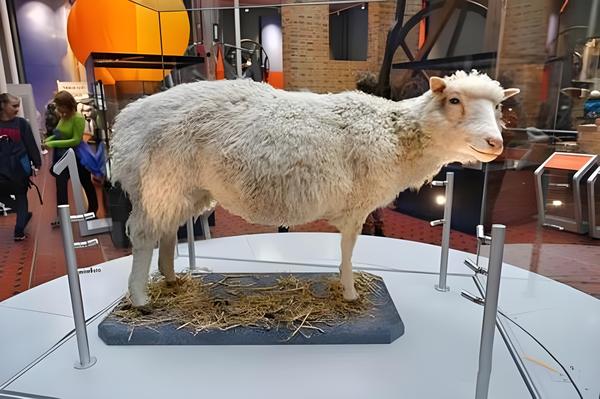
多莉的早逝可能是由于细胞年龄所致的早衰。克隆技术的不完善也是一个可能的原因。多年的研究已经揭示出克隆动物存在许多不正常的症状,例如胎儿死于腹中、流产、死产、个体过大、体弱多病,或在出生后几天内死亡等。
维尔穆特表示,他们将对多莉的尸体进行仔细的检查,以进一步确定其死因。同时,他呼吁科学家们对所有克隆动物在整个生命周期内的健康状况进行持续观察。这表明克隆技术仍然面临一系列挑战,且在某些情况下,可能导致动物健康问题。
因此,克隆技术的不成熟可能是导致多莉早逝的原因之一。应用克隆技术时必须极为慎重,同时需要进一步研究和改进技术,以解决克隆过程中可能出现的问题,确保克隆动物的健康和寿命。
多莉的早逝问题需要被认真对待,以便更好地理解和克服克隆技术的挑战。
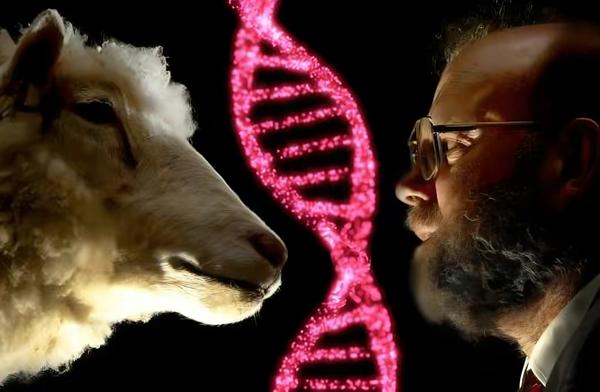
多莉的结局,也是一个充满了警示和教训的故事。多莉的诞生,虽然是一个历史性的突破,但也是一个伦理性的挑战,它引发了人们对克隆技术的热情和争议。
克隆技术不仅涉及到生物学和医学的问题,还涉及到伦理和社会的问题。克隆技术需要更多的科学证据和社会共识,才能得到合理和安全的应用。克隆技术不是一种玩具,而是一种责任。
译文:
Looking at the life of Dolly the cloned sheep, perhaps you will understand. In 1996, the world's first successfully cloned mammal, Dolly, was born, which showed people the possibility and potential of cloning technology. However, Dolly's life also showed people the limitations and risks of cloning technology. Dolly's story is about life, science, and ethics, and it is worth our in-depth understanding and reflection.
Dolly's birth is like a scientific story full of miracles and adventures. The protagonist of this story is a group of scientists from the University of Edinburgh in Scotland, who have a bold idea: to clone an identical sheep by using the cells of an adult sheep. It may sound simple, but in reality, it is full of challenges. These cells have differentiated into specific functions, such as breast cells, which cannot develop into any type of cell like embryonic cells. To bring these differentiated cells back into a state where they can generate a new life, a special technique is needed, which is nuclear transfer. This technology is like playing a cellular "gene relocation" game.
Firstly, scientists will extract the nucleus of a cell, which contains all the DNA information of the cell. Then, they put the nucleus into the empty shell of another cell, as if moving it into a new home. Then, through electrical stimulation, like applying electricity to a new home, the new cell begins to divide and gradually forms an embryo. This embryo possesses all the genes of the primitive nucleus, which is also the goal of cloning. Next, the embryo filled with special genetic information needs to be placed in the uterus of a ewe, just like a seed being planted in the soil. In the uterus of a ewe, this embryo will develop into a lamb, completing the entire cloning process. After multiple attempts, scientists finally cloned a lamb on July 5, 1996, which was Dolly.
Dolly has three mothers: a white faced Fendos ewe that provides DNA, a Scottish black faced ewe that provides eggs, and another Scottish black faced ewe that provides a uterus. Dolly's name is named after American country singer Dolly Parton because her breasts are unusually full, just like the ewe that provided DNA. Dolly's growth After Dolly was born, she stepped into the Roslin Institute, which is both her home and a scientific laboratory. Scientists have carefully taken care of and observed Dolly to see if it is no different from an ordinary sheep. Dolly's physiological information is carefully detected and recorded, and scientists use various instruments and methods to continuously analyze and evaluate Dolly's condition. Although Dolly is a cloned sheep, she does not know her identity. It lives the life of an ordinary sheep, with the instincts and needs of a sheep. Dolly likes to eat grass, loves to play, enjoys interacting with other sheep, and also enjoys interacting with scientists. She basks in the sunshine and fresh air, yearning for freedom and happiness.
At the age of one and a half, Dolly entered sexual maturity and successfully mated with a ram to conceive. This brings joy to scientists, as it means that Dolly's reproductive system is normal and can naturally reproduce offspring. In April 1998, Dolly gave birth to her first child, a little lamb named Bonnie. In the following years, Dolly gave birth to five more children, namely the twins of Seth and Rossi, the twins of Jem and Jenny, and the singleton Daryl. Dolly's six children are all healthy lambs, living the life of an ordinary sheep and becoming a part of Dolly's family, sharing the joy of life with Dolly.
Although Dolly's ending is an important scientific achievement and has been carefully taken care of by scientists, its ending is still not considered satisfactory. Starting from the age of three, Dolly experienced a rapid aging process, and even developed arthritis that is only common in elderly sheep at the age of five. Scientists suspect that Dolly may have had aging genes since birth, as the ewe providing DNA was already six years old at the time. On February 14, 2003, Dolly suffered greatly from pneumonia. In order to free her from the pain, the scientists who made her had to take a humane approach to end her life. This marks the end of the life of the world's first cloned sheep in a short amount of time. Dolly's body has been processed and made into a specimen, which is now housed in the National Museum of Scotland as part of scientific research and review.
Although Dolly's life was brief and did not end happily, its story became an important chapter on the path of scientific exploration, prompting people to think more deeply about the ethics and impact of cloning technology. Dolly's premature death may be due to premature aging caused by cell age. The imperfect cloning technology is also a possible reason. Years of research have revealed that cloned animals exhibit many abnormal symptoms, such as fetal death in the womb, miscarriage, stillbirth, oversized individuals, weak and sickly bodies, or death within a few days after birth. Wilmut stated that they will conduct a thorough examination of Dolly's body to further determine the cause of her death. At the same time, he called on scientists to continuously observe the health status of all cloned animals throughout their entire life cycle. This indicates that cloning technology still faces a series of challenges and, in some cases, may lead to animal health issues.
Therefore, the immaturity of cloning technology may be one of the reasons for Dolly's premature death. When applying cloning technology, extreme caution must be exercised, and further research and improvement are needed to address potential issues that may arise during the cloning process, ensuring the health and longevity of cloned animals.
The issue of Dolly's premature death needs to be taken seriously in order to better understand and overcome the challenges of cloning technology. Dolly's ending is also a story full of warnings and lessons. The birth of Dolly, although a historic breakthrough, is also an ethical challenge that has sparked enthusiasm and controversy for cloning technology. Cloning technology not only involves biological and medical issues, but also ethical and social issues. Cloning technology requires more scientific evidence and social consensus in order to be applied reasonably and safely. Cloning technology is not a toy, but a responsibility.
句子分析1:
However, Dolly's life also showed people the limitations and risks of cloning technology. Dolly's story is about life, science, and ethics, and it is worth our in-depth understanding and reflection.
句子成分分析:
[However], Dolly's life also showed people the limitations and risks (of cloning technology).
Dolly's story is about life, science, and ethics, || and it is worth our in-depth understanding and reflection.
句子语法结构详解:
* showed 为双宾动词作谓语,采用一般过去时。people 为间接宾语,limitations 为直接宾语。
* cloning 为动名词。
* 第1个 is 为系动词作谓语,采用一般现在时。
* 第3个 and 为并列连词,连接并列句。
* 第2个 is 为系动词作谓语,采用一般现在时。
* our 为形容词型物主代词。Dolly's 为名词所有格。the 为定冠词。
相关语法知识:
 双宾动词
双宾动词
时态
并列连词
动名词
系动词
名词所有格 | 物主代词
句子相关词汇解释:
Phrase:
| be worth... | 值... |
Vocabulary:
| however [hau'evә] | ad. | 1) 然而, 仍然 2) 无论如何,不管怎样, 究竟怎样 3) (与形容词和副词连用) 不管多么 |
| dolly ['dɔli] | n. | 1) (儿语)娃娃,洋娃娃 2) (搬运重物的)台车,滑动台架 |
| life [laif] | n. | 1) 生活,生活经历 2) 生命,性命 3) 一生,终生 |
| also ['ɔ:lsәu] | ad. | 而且;此外;也;同样 |
| show [ʃәu] | vt. | 1) 指给某人看,指出 2) 表明,显示, 证明 |
| people ['pi:pl] | n. | 1) 人,人们,大家 2) 国民,人民,臣民,群众 |
| limitation [,limi'teiʃәn] | n. | 1) 限制,控制 2) (起限制作用的)规定,规制 |
| and [ænd] | conj. | 1) 和, 与, 同, 并 2) 然后,接着 |
| risk [risk] | n. | 1) 危险,风险 2) 危险人物,会带来风险的事物 |
| clone [klәun] | vt. | 克隆, 以无性繁殖技术复制 |
| technology [tek'nɔlәdʒi] | n. | 1) 技术,科技,工艺,工程技术,技术学,工艺学 2) 技术性机器(或设备) |
| story ['stɔ:ri] | n. | 1) (虚构的)故事,小说等 2) (真实情况或对往事的)口述,叙述、新闻报道 3) [美](=storey)楼层 |
| about [ә'baut] | prep. | 1) 关于, 有关(...的) 2) 在...附近 3) 在...各处 |
| science ['saiәns] | n. | 1) 科学 2) 理科 |
| ethics ['eθiks] | n. | 伦理学 |
| in-depth | a. | 彻底的;深入详尽的 |
| understanding [,ʌndә'stændiŋ] | n. | 1) 理解,了解 2) 协议 |
| reflection [ri'flekʃәn] | n. | 1) 反映,显示,表达 2) 映像,映照出的影像 |
句子语法错误检查:
(未发现错误)
句子分析2:
This marks the end of the life of the world's first cloned sheep in a short amount of time.
句子成分分析:
This marks the end (of the life (of the world's first cloned sheep)) [in a short amount (of time)].
句子语法结构详解:
* marks 为谓语,采用一般现在时。动词采用第三人称单数形式。
* cloned 为过去分词作定语
* this 为指示代词。world's 为名词所有格。the 为定冠词。a 为不定冠词。
相关语法知识:
时态
动词的第三人称单数形式
过去分词
指示代词 | 名词所有格
句子相关词汇解释:
Vocabulary:
| this [θis] | pron | 这(个) |
| mark [mɑ:k] | vt. | 1) 标明方位,标示 2) 做记号,做标记 |
| end [end] | n. | 1) (事物的)末端 2) (时间,事件等的)结尾,终结 |
| life [laif] | n. | 1) 生活,生活经历 2) 生命,性命 3) 一生,终生 |
| world [wә:ld] | n. | 1) 世界,人类社会 2) 地球,天下 |
| first [fә:st] | ad. | 1) 首先,第一,最初 2) (列举时)首先, 第一 |
| clone [klәun] | vt. | 克隆, 以无性繁殖技术复制 |
| sheep [ʃi:p] | n. | 羊,绵羊 |
| short [ʃɔ:t] | a. | 1) 短的 2) 个子矮的 |
| amount [ә'maunt] | n. | 1) 数量,数额(尤与不可数名词连用) 2) 金额 |
| time [taim] | n. | 1) 时间 2) 时候 3) 时期,时代 |
句子语法错误检查:
(未发现错误)
以上是秒词邦为您整理编写的文章《为什么现在很少提“克隆”了?》的全部内容。秒词邦是国内权威分题型分考点背诵中高考/四六级考研/专升本/出国单词的专业单词软件。扫描如下小程序码,进入秒词邦官方小程序获取更多英语相关资料! 【关键词:高考单词;高考英语;高中单词;高中英语;单词app;单词软件;记单词app;记单词软件;背单词软件;背单词app;英语单词;四六级单词;四六级英语;四六级单词app;四六级单词软件;考研单词app;考研单词软件;核心单词;高考冲刺复习;高考英语教材;高考英语真题;四六级真题;四六级试题;考研真题;考研英语单词;考研英语真题】