油电大战下的北京车展:比亚迪从角落到C位,这些车企已隐退 ——秒词邦背单词app

今日,2024北京国际车展正式开幕,迎来首个媒体日。距离上一届北京车展举办,已有四年之久,期间整个汽车行业、包括行业参与者的生存环境,已发生了翻天覆地的变化。
这四年时间,新能源汽车销量从136.7万辆飙升到949.5万辆,大增6倍;车企“江湖地位”也大不同,新能源车销量“一哥”从4年前的北京车展角落到C位,此次车展更有近20个新能源品牌首次参展亮相。另一边,部分车企销量已掉出前十,日系“老大”换人,还有部分车企已“隐退”缺席车展。
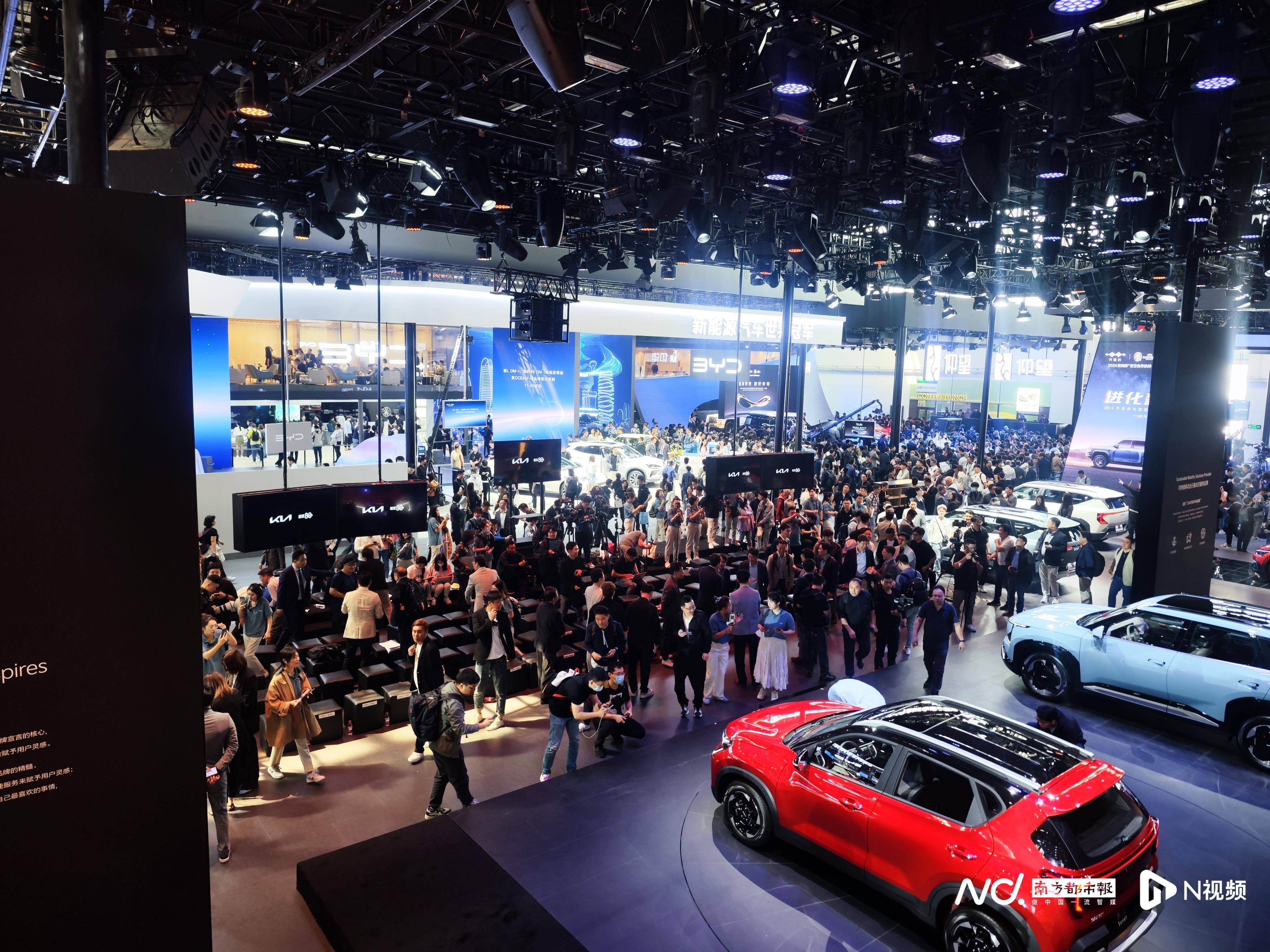
以“新时代·新汽车”为主题的2024年北京车展,让人感受到由里到外全方位的“内卷”。
数据对比
4年后车展“重逢”
新能源车产销量增了6倍!
4年前的北京车展,共展示新车785台、全球首发新车82台(其中跨国公司全球首发车14台)、概念车36台。
4年过后,本届北京车展全球首发车达到117台,其中跨国公司全球首发车为30台,比上次增加了一倍以上,概念车也增至41台,新能源车型为278款。而上次北京车展新能源车为160台,其中中国车企新能源车就有147台。
可想而知,当时中国车企已经整体发力新能源的时候,跨国车企们依然过着燃油车“大卖”的好日子。而在那一年,我国汽车产销量分别为2522.5万辆和2531.1万辆,同比下降2%和1.9%。实际上,与2019年相比,已经分别收窄5.5个百分点和6.3个百分点了。2020年新能源汽车年产销量分别为136.6万辆和136.7万辆,同比分别增长7.5%和10.9%。
而在过去的一年里面,我国汽车产销量已经分别完成3016.1万辆和3009.4万辆,同比分别增长11.6%和12%。其中,新能源产销分别完成958.7万辆和949.5万辆,同比分别增长35.8%和37.9%,市场占有率达到31.6%。
也说是说,两届北京车展相隔这四年,新能源车的产销量已经大增了6倍!今年一季度国内乘用车累计销量为483.2万辆,新能源车一季度销量就达到了177.2万辆,占比达到36.67%。
如果再对比下车企上次来北京车展的时候,彼此的“江湖地位”也截然不同。
乘联会统计数据显示,2020年车企销量排名前三位的一汽大众、上汽大众和上汽通用几乎雷打不动。自主品牌表现最好的吉利汽车,仅次于上述三位。TOP15的榜单中,还找不到比亚迪的名字。东风日产、东风本田和广汽本田则是TOP10中销量最火的三大日系品牌。
重新来到顺义展馆的比亚迪,已经放弃燃油车,持续两年居行业销量龙头宝座之后,2024年一季度将领先优势进一步扩大,市场份额达到12.1%。一汽大众不仅反超无望,偶尔还会被吉利汽车与长安汽车挤到身后。曾经的头部“三驾马车”中的另外两位,上汽大众更多的时候,只能在五六名徘徊,上汽通用在今年一季度更是掉出了前十,日系阵营也已经由广汽丰田成为老大。
虽说“三十年河东,三十河西”,但从北京车展这几年之间的变化足以说明,新能源已成大势所趋。
车企变化
这些车企已退隐缺席
新能源子品牌强势登场
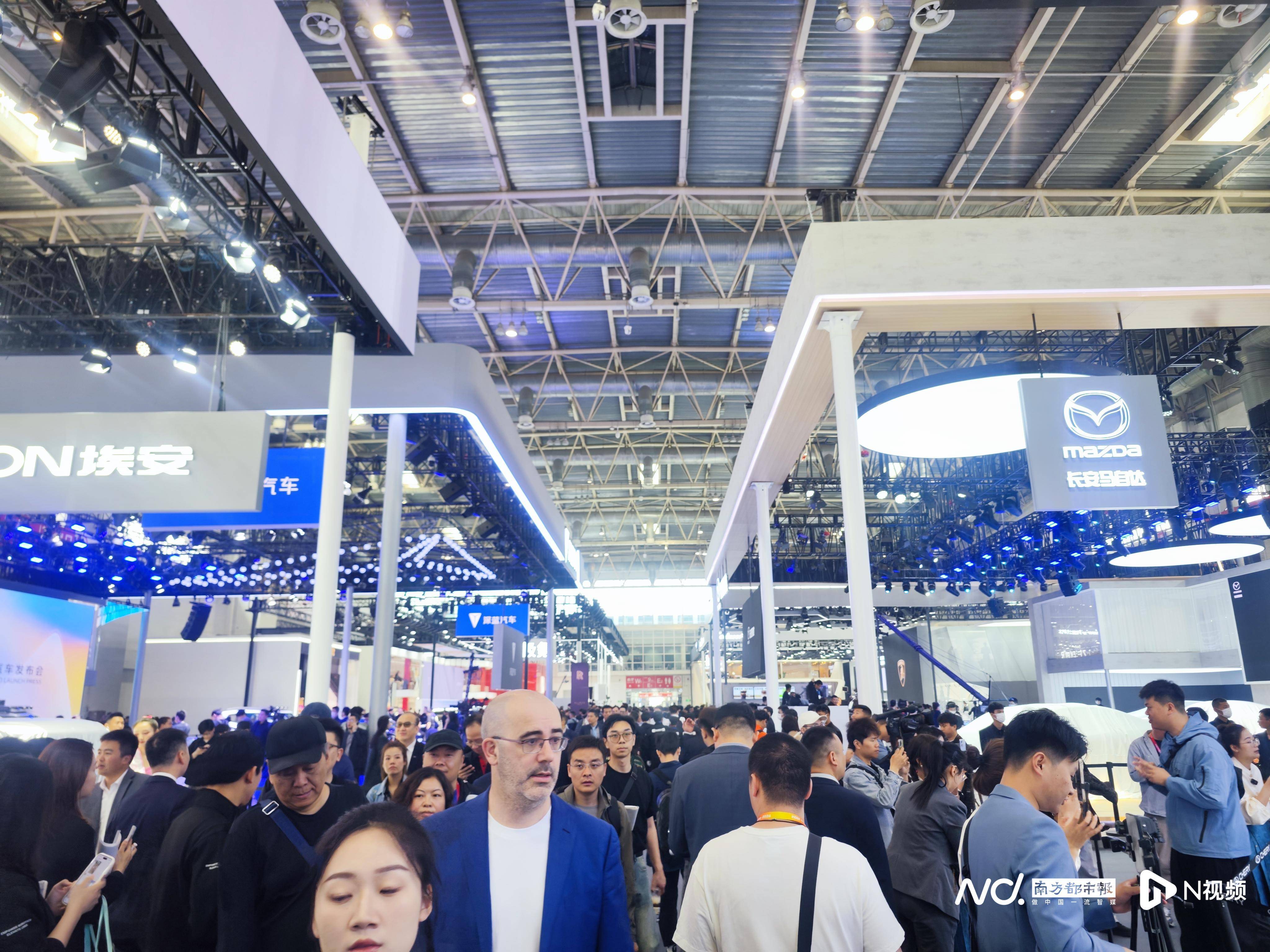
对比了一下2020年的北京车展展位图,高合、观致、威马、东风雪铁龙、东风标致、广汽三菱、广汽讴歌、天际、长安欧尚都已经在本次北京车展的参展商中换不到名字。此外,东风悦达起亚现在只剩下起亚参展,马自达也剩下长安马自达。
而在消失的这一些名字中,有的已经退出中国市场,有的也被边缘化,濒临“死亡”;有的已经宣布破产停工,有的则被品牌内部整合了。
至于依然成为行业风向标的特斯拉,是近年大型车展的一个另类缺席者。自从在上海车展被车主闹事后,特斯拉就已经谨慎对待国内的大型车展。因此,某种意义上来说,无论是规模多大的国内车展,参不参展,完全看他们的心情。
相比之下,理想、鸿蒙智行、小米、阿维塔、深蓝汽车、智己汽车、昊铂、iCAR、极氪、极越、零跑、飞凡汽车、远航汽车、极石汽车、创维、路特斯、方程豹、仰望等品牌首次亮相北京车展。这些新增的参展面孔里面,有些是子品牌壮大,开始在车展上为所属集团独自撑起一片天;有些则是上一次北京车展还没有入局,其中既有背靠大型车企的新能源品牌、新晋造车新势力、也有跨界造车者。
展位布局
新能源品牌遍布各个展馆
传统车企展位被新势力“夹攻”
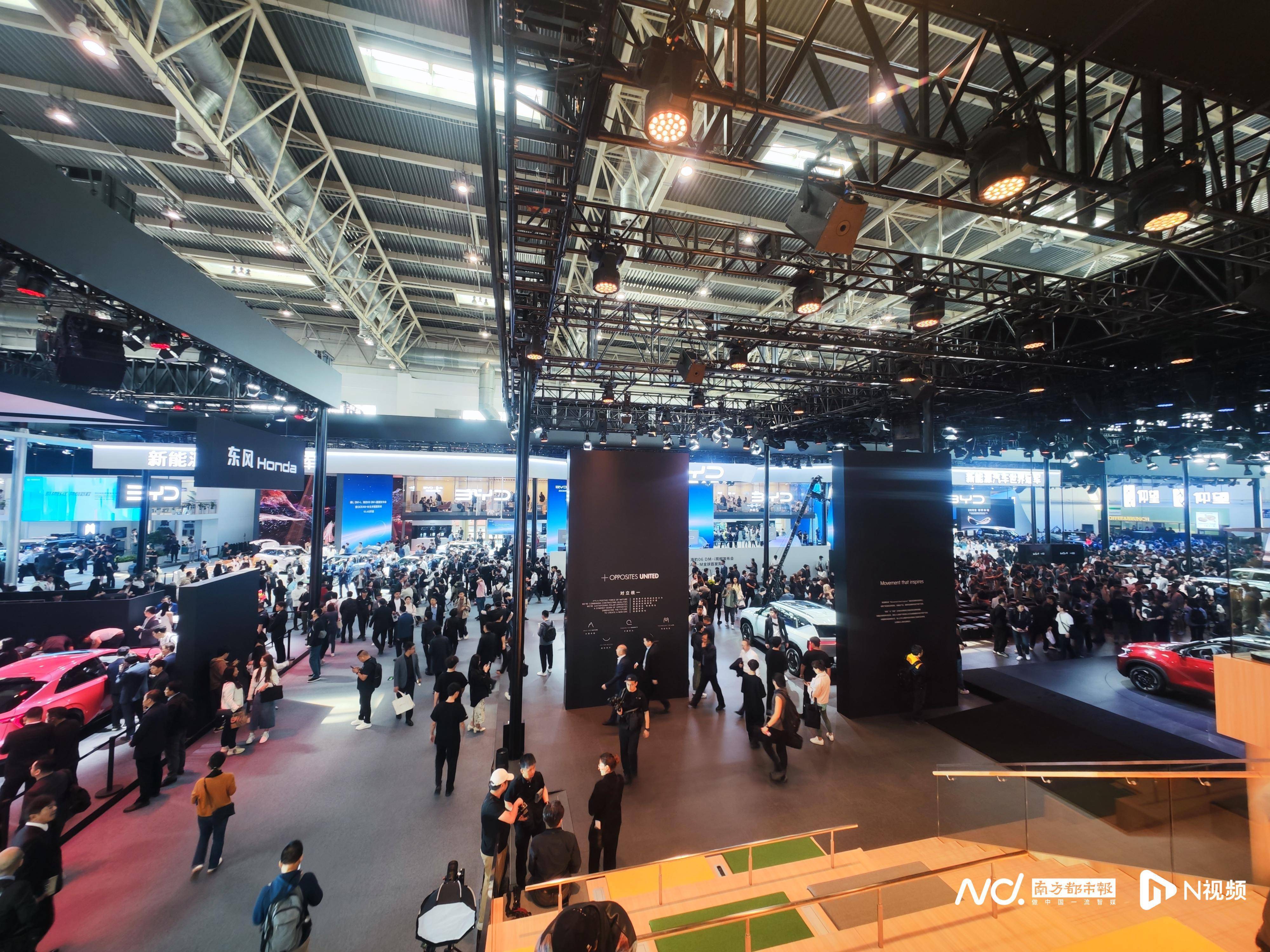
2020年的北京车展上,比亚迪还只是待在E3馆一隅,和红旗为邻。当时他们的燃油车年销量比不上现在一个月,而他们的新能源车产品,全年销量不足20万辆,还比不上自家的燃油车卖得多,但已经连续8年夺得国内新能源车销冠。四年前比亚迪待的那个角落,如今变成了红旗金葵花。现在,比亚迪已经和旗下的冲高子品牌仰望、方程豹,在新的展馆里面为自己搭建了更大的舞台。南都·湾财社记者在现场可见,比亚迪展台人潮汹涌,展车前被围得水泄不通。
近期汽车圈,除了车坛头号盛事——北京车展成为万众焦点,最热门的话题,莫过于新能源车的渗透率首超50%。日前,中国汽车流通协会数据显示,2024年4月上半月,中国乘用车市场零售51.6万辆,其中新能源车市场零售26万辆。这意味着中国新能源汽车市场渗透率首次突破50%,市场占比首次超过燃油车。就在上一次北京车展举办的2020年,我国制订了到2035年新能源汽车渗透率超过50%的目标,而四年后的上半年没到,这一目标就已经实现,提前了11年。
如果说,2020年北京车展专门设置的两个新能源展区,还让人感觉挺新鲜。从展馆分布图可见,四年后的顺义展馆,每个展馆都有不止一家新能源品牌入驻,直接和众多传统车企“对着干”。像大众、宝马,就要面对小鹏、腾势、阿维塔及飞凡,日产要被小米、极越、智己、别克新能源“围殴”,奔驰被理想、哪吒、路特斯、极狐形成夹攻之势,本田和起亚旁边都是比亚迪、仰望、方程豹和东风岚图、iCAR这些新能源品牌。
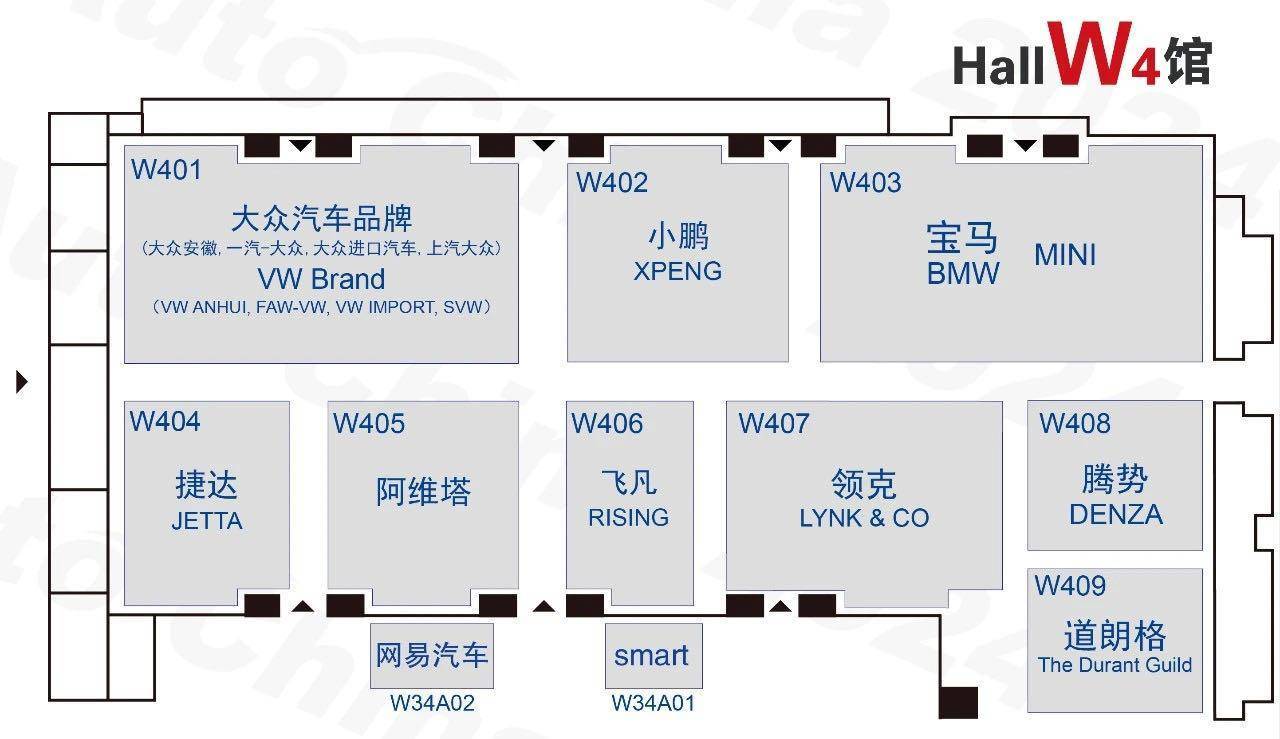
如果说,往年那种豪华品牌、合资品牌相对独立的方式,还可以彼此井水不犯河水。再来看看今年2024年北京车展参展品牌的分布图,就觉得挺有意思的。届时公众日看看谁的人气最旺,答案似乎已可猜想得到。
采写:南都·湾财社记者 梁罗喆
新闻译文:
Today, the 2024 Beijing International Auto Show officially opened, marking the first media day. It has been four years since the last Beijing Auto Show was held, during which the entire automotive industry, including the living environment of industry participants, has undergone earth shaking changes.
Over the past four years, the sales of new energy vehicles have surged from 1.367 million to 9.495 million, a significant increase of six times; The status of automotive companies in the market is also very different. The sales leader of new energy vehicles has moved from a corner of the Beijing Auto Show four years ago to a C-position. This auto show also saw nearly 20 new energy brands make their debut at the exhibition. On the other hand, some car companies have already dropped out of the top ten in sales, with Japanese "bosses" replaced and some car companies having "retired" and absent from the auto show.
The 2024 Beijing Auto Show, with the theme of "New Era, New Cars", makes people feel a comprehensive "involution" from the inside out.
Data comparison
Four years later, the auto show "reunites"
The production and sales of new energy vehicles have increased by six times!
Four years ago, at the Beijing Auto Show, a total of 785 new cars were showcased, 82 new cars were released globally (including 14 global debut cars by multinational companies), and 36 concept cars were showcased.
Four years later, the global debut of this year's Beijing Auto Show reached 117 vehicles, including 30 global debut vehicles from multinational companies, more than double the previous time. The number of concept vehicles also increased to 41, with 278 new energy models. Last time at the Beijing Auto Show, there were 160 new energy vehicles, including 147 new energy vehicles from Chinese automakers.
It can be imagined that at that time, when Chinese car companies had already made overall efforts in new energy, multinational car companies were still living a good life of selling gasoline cars. In that year, the production and sales of automobiles in China were 25.225 million and 25.311 million respectively, a year-on-year decrease of 2% and 1.9%. In fact, compared to 2019, it has narrowed by 5.5 percentage points and 6.3 percentage points respectively. In 2020, the annual production and sales of new energy vehicles were 1.366 million and 1.367 million, respectively, with a year-on-year increase of 7.5% and 10.9%.
In the past year, China's automobile production and sales have reached 30.161 million and 30.094 million respectively, with year-on-year growth of 11.6% and 12%. Among them, the production and sales of new energy vehicles reached 9.587 million and 9.495 million, respectively, with a year-on-year increase of 35.8% and 37.9%, and a market share of 31.6%.
That is to say, four years after the two Beijing Auto Show, the production and sales of new energy vehicles have increased sixfold! The cumulative sales of domestic passenger cars in the first quarter of this year were 4.832 million units, and the sales of new energy vehicles in the first quarter reached 1.772 million units, accounting for 36.67%.
If we compare the last time the car companies came to the Beijing Auto Show, their "status in the world" is completely different from each other.
According to statistics from the China association of Automobile Manufacturers, FAW Volkswagen, SAIC Volkswagen, and SAIC general Motors, which ranked among the top three car companies in sales in 2020, remained almost unchanged. Geely Automobile, the best performing domestic brand, ranks second only to the above three. On the top 15 list, BYD's name cannot be found yet. Dongfeng Nissan, Dongfeng Honda, and GAC Honda are the three best-selling Japanese brands in the top 10.
BYD, which has returned to the Shunyi exhibition Hall, has abandoned gasoline vehicles and has been the industry's sales leader for two years. In the first quarter of 2024, its leading advantage will further expand, with a market share of 12.1%. FAW Volkswagen not only has no hope of overtaking, but occasionally is pushed behind by Geely Automobile and Changan Automobile. The other two of the former top "three carriages", SAIC Volkswagen, often hovered between the fifth and sixth places. SAIC GM fell out of the top ten in the first quarter of this year, and the Japanese camp has also shifted from GAC Toyota to the top.
Although it can be said that "30 years in the east and 30 years in the west", the changes during the Beijing Auto Show in recent years are enough to demonstrate that new energy has become the trend.
Changes in automotive companies
These car companies have retired and are absent
Strong debut of new energy sub brands
Compared with the booth map of Beijing Auto Show in 2020, Gaohe, Guanzhi, Weima, Dongfeng Citroen, Dongfeng Peugeot, GAC Mitsubishi, GAC Acura, Tianji and Chang'an Oushang have not changed their names among the exhibitors of this Beijing Auto Show. In addition, Dongfeng Yueda Kia currently only has Kia participating, while Mazda also has Chang'an Mazda remaining.
Among these disappearing names, some have already withdrawn from the Chinese market, while others have been marginalized and on the brink of death; Some have announced bankruptcy and shutdown, while others have been integrated within the brand.
As for Tesla, which still remains a benchmark in the industry, it is an alternative absentee from major auto shows in recent years. Since being caused trouble by car owners at the Shanghai Auto Show, Tesla has been cautious about large domestic auto shows. Therefore, in a sense, whether it is a large-scale domestic auto show or not, it all depends on their mood.
In contrast, brands such as Ideal, Hongmeng Zhixing, Xiaomi, Avita, Shenlan Automobile, Zhiji Automobile, Haobo, iCAR, Jike, Jiyue, Zero Run, Feifan Automobile, Yuanhang Automobile, Jishi Automobile, Skyworth, Lotus, Equation Leopard, and Yangwang made their debut at the Beijing Auto Show. Among these newly added exhibition faces, some are sub brands that have grown and started to support their respective groups at auto shows alone; Some of them have not yet entered the last Beijing Auto Show, including new energy brands backed by large car companies, emerging car making forces, and cross-border car makers.
Booth layout
New energy brands spread throughout various exhibition halls
Traditional car company booths are being attacked by new forces
At the 2020 Beijing Auto Show, BYD only stayed in a corner of E3 Pavilion, adjacent to Red Flag. At that time, their annual sales of fuel vehicles could not match the current one month, and their new energy vehicle products sold less than 200000 units throughout the year, which was not as high as their own fuel vehicles. However, they had already won the domestic new energy vehicle sales championship for 8 consecutive years. The corner where BYD stayed four years ago has now become Red Flag Golden Sunflower. Now, BYD has set up a larger stage for itself in the new exhibition hall, along with its subsidiary brands, Yangwang and Eq. Leopard. A reporter from Nandu Bay Finance Society was present at the scene and saw that the BYD booth was crowded with people, and the cars in front of the exhibition were crowded.
Recently, in the automotive industry, besides the top event in the automotive industry - the Beijing Auto Show - which has become the focus of attention, the most popular topic is undoubtedly the penetration rate of new energy vehicles, which has exceeded 50% for the first time. Recently, according to data from the China Association of Automobile Manufacturers, in the first half of April 2024, the retail sales of China's passenger car market reached 516000 units, including 260000 units in the new energy vehicle market. This means that the penetration rate of China's new energy vehicle market has exceeded 50% for the first time, and the market share has surpassed that of gasoline vehicles for the first time. In 2020, when the last Beijing Auto Show was held, China set a goal of exceeding 50% penetration rate of new energy vehicles by 2035. However, four years later, before the first half of the year, this goal had already been achieved, 11 years earlier.
If we say that the two new energy exhibition areas specifically set up at the 2020 Beijing Auto Show are still quite fresh. From the distribution map of the exhibition halls, it can be seen that four years later, the Shunyi Exhibition Hall will have more than one new energy brand stationed in each exhibition hall, directly competing with many traditional car companies. Like Volkswagen and BMW, they have to face Xiaopeng, Tengshi, Avita, and Feifan. Nissan will be surrounded by new energy brands such as Xiaomi, Geely, Zhiji, and Buick, while Mercedes Benz will be attacked by Ideal, Nezha, Lotus, and Jihu. Beside Honda and Kia are new energy brands such as BYD, Yangwang, Fangchengbao, Dongfeng Lantu, and iCAR.
If we say that in previous years, luxury brands and joint venture brands were relatively independent, and they could still avoid each other's troubles. Looking at the distribution map of participating brands at this year's 2024 Beijing Auto Show, I find it quite interesting. At that time, it seems possible to guess who is the most popular on Public Day.
Reporter Liang Luozhe from Nandu Bay Finance Society
重点词汇
车展 auto show ; motor show ; Car Show ; IAA ; Show girls
汽车行业 Automobile industry ; motor-dom
生存环境 living environment ; survival environment ; habitat ; natural habitats
翻天覆地 earthshaking ; a tremendous change ; turn the world upside down ; epoch-making
新能源 new energy resources
江湖 rivers and lakes ; all corners of the country ; itinerant entertainer and quack ; itinerant entertainers,quacks,etc. ; live in seclusion ; itinerant entertainers, quacks, etc
参展 take part in an exhibition ; take part in a performance (for cultural organs)
老大 old ; in old age ; the eldest child (brother,sister) ; the chief crewman of a wooden boat ; boatman ; greatly ; very ; anna
换人 substitution ; change of players
隐退 retreat ; reclusion ; resign ; privatization ; retire from office ; go and live in seclusion ; va
句子成分分析:
[Recently], [according to data (from the China Association(of Automobile Manufacturers))],[in the first half(of April
2024)],the retail sales (of China's passenger car market) reached 516000 units, including 260000 units (in the new
energy vehicle market).
句子语法结构详解:
* reached 为谓语,采用一般过去时。
* China's 为名词所有格。the 为定冠词。
句子相关词汇解释:
Phrase:
| according to | 根据,据(某人)所述 |
Vocabulary:
| recently ['ri:sntli] | ad. | 不久前;最近 |
| data ['deitә] | n. | 数据;资料,材料 |
| China ['tʃainә] | n. | 中国 |
| association [ә,sәuʃә'eiʃәn] | n. | 1) 联合,合伙,关联,交往 2) 协会,社团,联盟 |
| automobile ['ɔ:tәmәbi:l] | n. | 汽车 |
| manufacturer [,mænju'fæktʃәrә] | n. | (the manufactures)生产者,制造者,生产商 |
| first [fә:st] | a. | 1) 第一的 2) 最初的; 最先的 |
| half [hɑ:f] | n. | 1) 一半 2) 半场 |
| retail ['ri:teil] | n. | 零售 |
| sale [seil] | n. | 1) 销售,出售 2) 销售量 |
| passenger ['pæsindʒә] | n. | 1) 乘客,旅客 2) 白吃饭的人,闲散人员 |
| car [kɑ:] | n. | 1) (小)汽车 2) 火车车厢 |
| market ['mɑ:kit] | n. | 1) 市场,集市,商场 2) 交易,买卖,交易量 |
| reach [ri:tʃ] | vt. | 1) 达到,提升到,进入(新水平/阶段) 2) 到达, 抵达(某地,某点位) |
| unit ['ju:nit] | n. | 1) 单独的事物,单位,单元 2) [商]一件商品 |
| including | prep. | 包括…在内 |
| new [nju:] | a. | 1) 新的,刚出现的,新近推出的 2) (the new)新东西,新事物 |
| energy ['enәdʒi] | n. | 1) 能量 2) 干劲,精力 |
| vehicle ['vi:ikl] | n. | 1) 交通工具,车辆 2) (赖以表达思想,感情或达到目的的)手段,工具 |
句子成分分析:
If we say | that [in previous years], luxury brands and joint venture brands were relatively independent, || and they
could still avoid each other's troubles.
句子语法结构详解:
* if 为连词,引导条件状语从句。
* say 为谓语,采用一般现在时。
* that 为连词,引导宾语从句。
* were 为系动词作谓语,采用一般过去时。
* independent 为形容词作表语。
* 第2个 and 为并列连词,连接并列句。
* avoid 为谓语。
* can 为情态动词。we, they 为人称代词主格。each 为相互代词。other's 为名词所有格。
句子相关词汇解释:
Phrase:
| joint venture | 合资企业 |
| each other | 相互 |
Vocabulary:
| if [if] | conj. | 1) 如果, 倘若 2) 是否 |
| say [sei] | vt. | 1) 说,讲,告诉 2) 比方说,假设 |
| previous ['pri:viәs] | a. | 1) 先前的,以往的 2) (时间上)稍前的 |
| year [jiә] | n. | 1) 年 2) 一年时间 |
| luxury ['lʌkʃәri] | n. | 1) 奢侈的享受,奢华 2) 奢侈品 |
| brand [brænd] | n. | 1) 品牌 2) 类型 |
| and [ænd] | conj. | 1) 和, 与, 同, 并 2) 然后,接着 |
| relatively | ad. | 相当程度上,相当地, 相对地 |
| independent [,indi'pendәnt] | a. | 1) 独立的,自主的,自治的 2) 不相干的人所做的(或提供的),公正的,无偏见的 |
| still [stil] | ad. | 1) 仍然, 还是,还 2) (加强比较级)还要,还有,更 |
| avoid [ә'vɔid] | vt. | 1) 避免,防止 2) 回避,避开,躲避 |
| trouble ['trʌbl] | n. | 1) 问题,困难,苦恼 2) 疾病,病痛 |
以上是秒词邦为您整理编写的文章《油电大战下的北京车展:比亚迪从角落到C位,这些车企已隐退 ——秒词邦背单词app》的全部内容。秒词邦是国内权威分题型分考点背诵中高考/四六级考研/专升本/出国单词的专业单词软件。扫描如下小程序码,进入秒词邦官方小程序获取更多英语相关资料! 【关键词:高考单词;高考英语;高中单词;高中英语;单词app;单词软件;记单词app;记单词软件;背单词软件;背单词app;英语单词;四六级单词;四六级英语;四六级单词app;四六级单词软件;考研单词app;考研单词软件;核心单词;高考冲刺复习;高考英语教材;高考英语真题;四六级真题;四六级试题;考研真题;考研英语单词;考研英语真题】