今年清明为何是4月4日15时02分?探秘中国人独有的节气测算——秒词邦背单词app
本文转自【央视新闻客户端】;
天文学上,节气指的是一个具体时刻。今年清明节是今天(4日)15时02分,据测算,2025年的清明节时刻是4月4日20时49分,2026年的清明节时刻是4月5日2时40分。那么这些具体到分钟的节气是怎么测算出来的?为什么每年清明节的时刻略有不同?跟随总台央视记者去探寻其中奥秘。
总台央视记者 赵晶:清明、谷雨、立夏、小满等等二十四节气,其实都可以精确到每年几月几日的具体时刻,而这都是由紫金山天文台发布的。紫金山天文台是中国人自建的第一座现代天文台,也是我国唯一的历书编算机构。
紫金山天文台:
我国唯一历书编算机构
历书编算,就是计算准确的天体位置和天象数据。从1950年起,紫金山天文台每年编算《中国天文年历》。
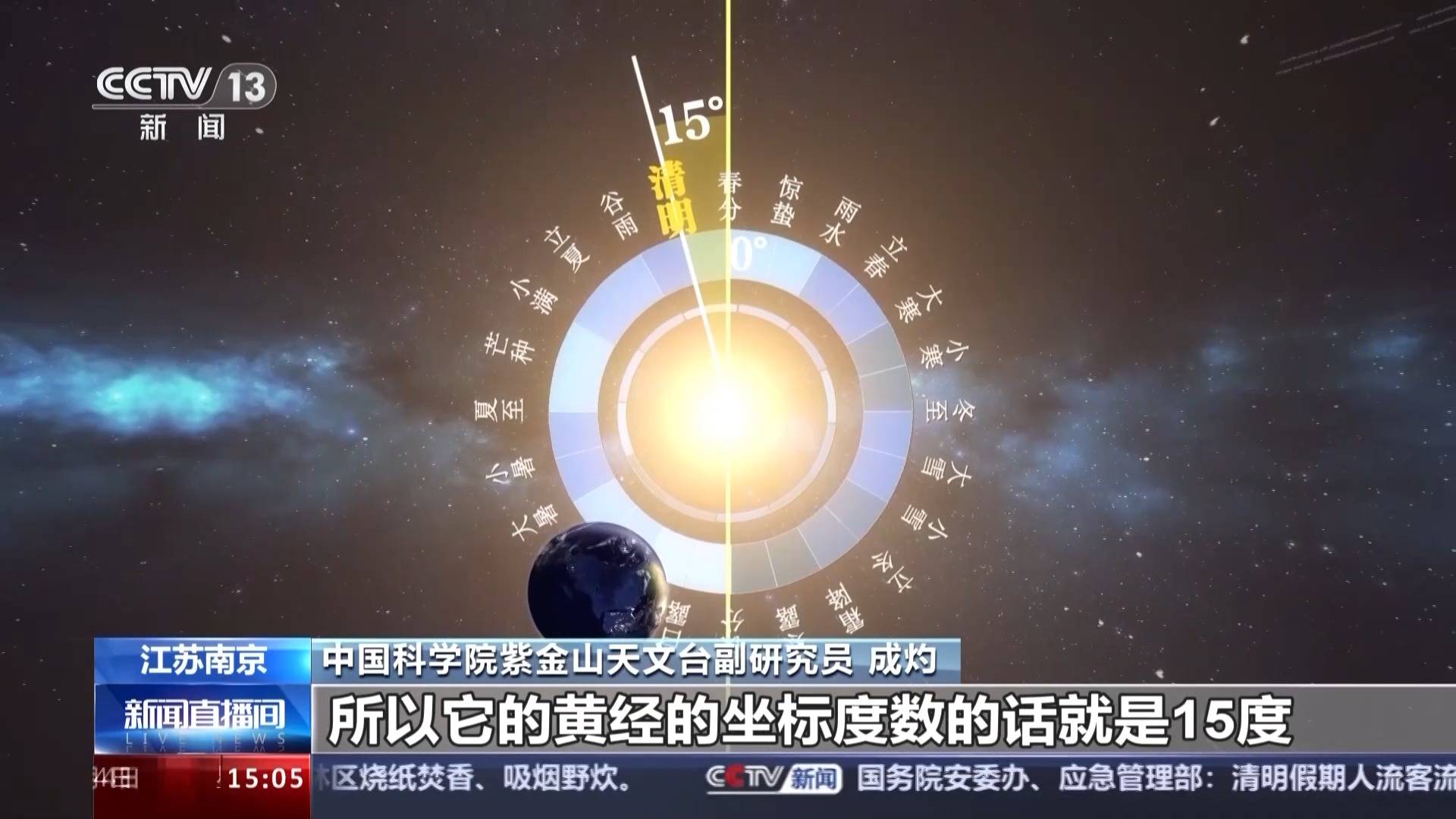
中国科学院紫金山天文台副研究员 成灼:在我们的《中国天文年历》里面都发布有农历和二十四节气。古人已经发现太阳的周年运行和四季变化以及农作物生长之间有密切的关系,因此他们把太阳在黄道上运行的周期划分为24等份。太阳在黄道上运行的坐标,我们在天文学上用黄经来度量。春分点作为零度的起点,那么从春分点开始,每15度就是一个节气。清明就是春分之后的第一个节气,所以它的黄经的坐标度数的话就是15度。
紫金山天文台每年
编算《中国天文年历》
黄道,可以看作是从地球上看太阳一年“走”过的路线,对清明时刻的计算,可以转化成这样一个天文问题——太阳什么时候“走”到黄经15度。
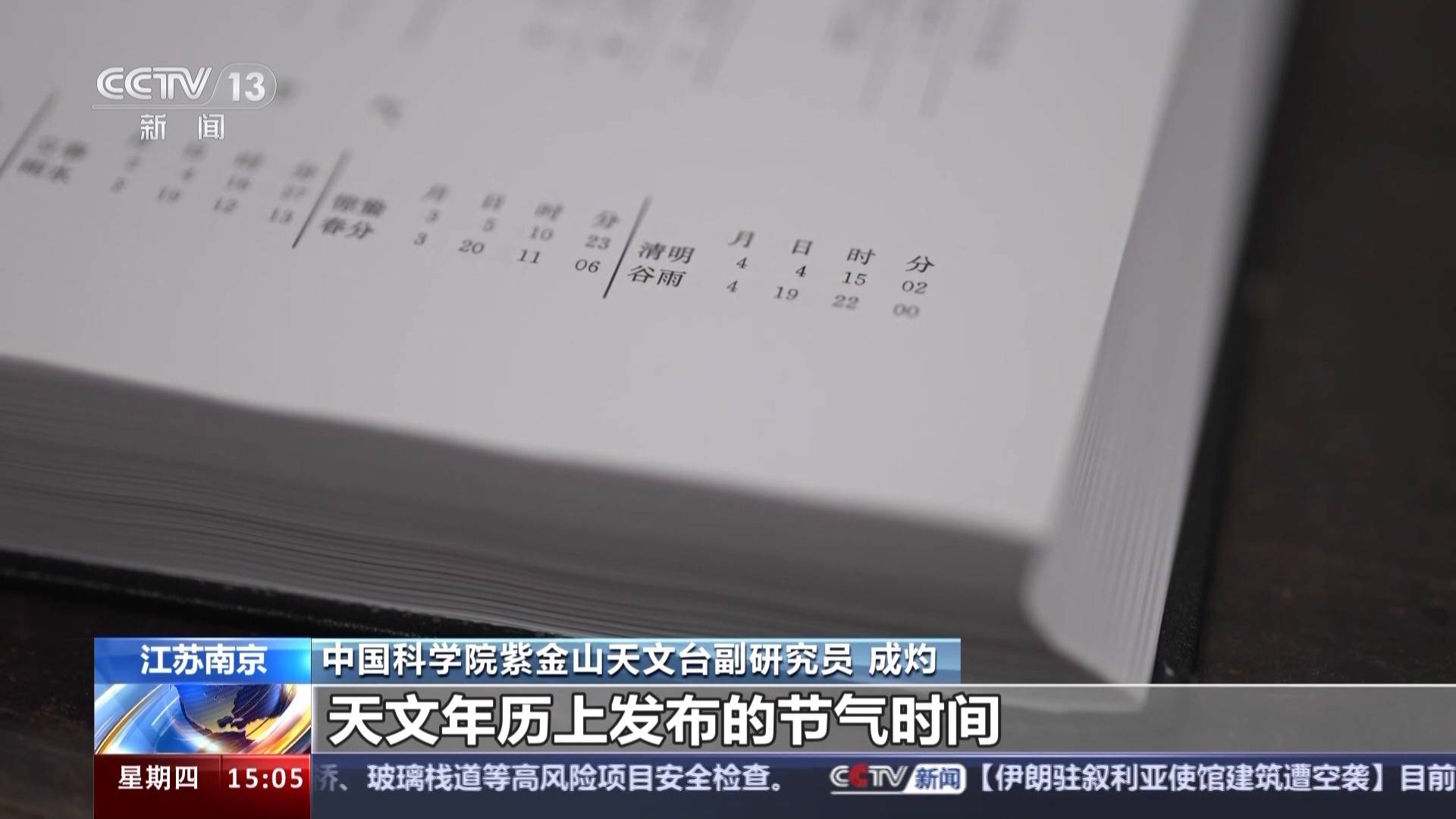
中国科学院紫金山天文台副研究员 成灼:我们建立了太阳的高精度位置计算模型,我们就可以从太阳的位置,得到它所对应的时间。天文年历上发布的节气时间通常也是精确到几时几分。
古代先民用独特方法测量季节脚步
在没有现代观测和计算设备的古代,先民们用独特的方法测量着季节的脚步,发明了许多如今看来依然非常精美的观测仪器。
用来测量节气
明代铸造清代重修
现存于紫金山天文台的圭表,明代铸造、清代重修。古人正是用圭表测量节气。
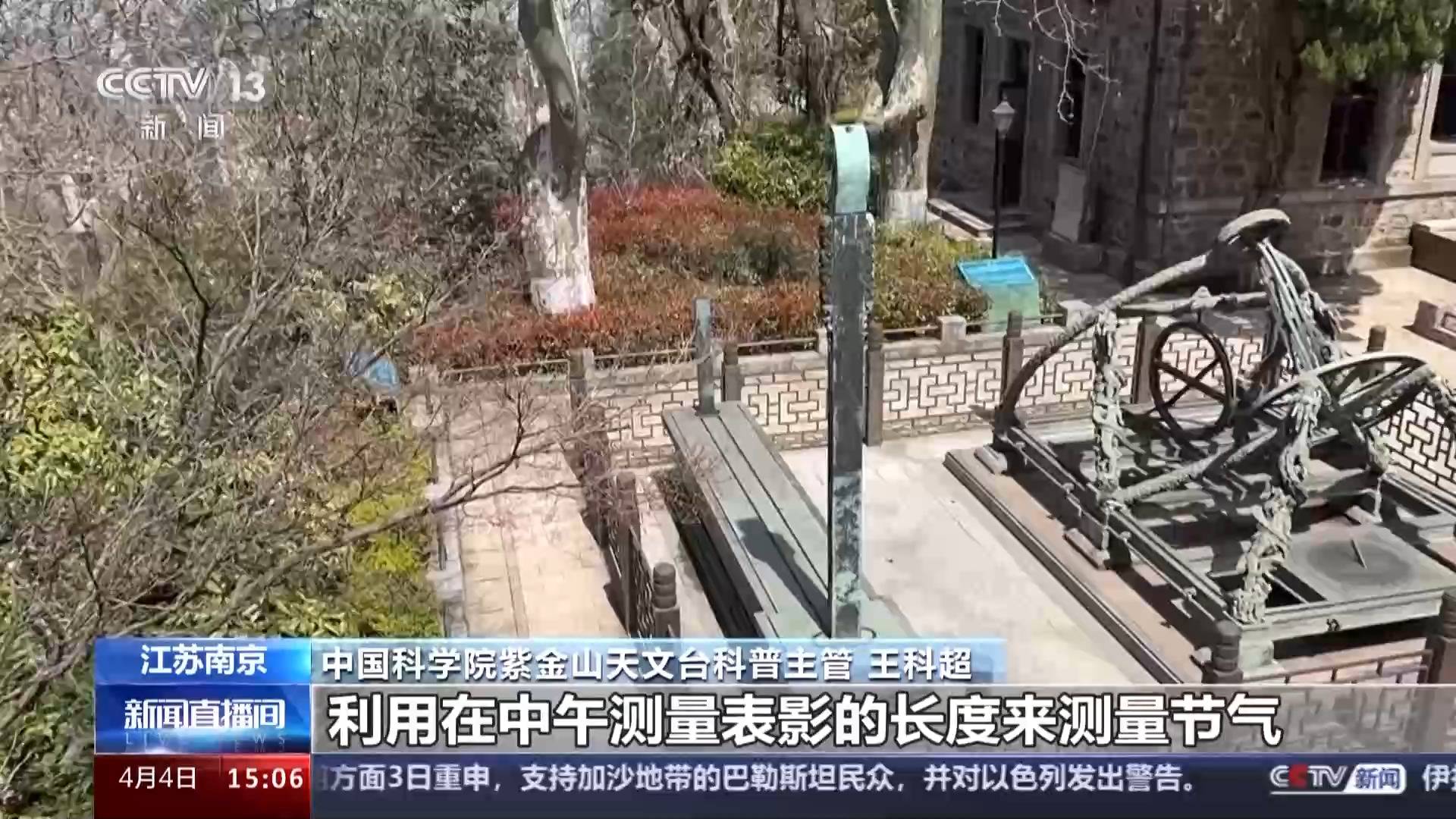
中国科学院紫金山天文台科普主管 王科超:圭表它是由南端竖直的一个表,以及南北水平放置的圭面所构成。古人利用立竿见影的一个现象,利用在中午测量表影的长度来测量节气。我们会注意到一年四季随着太阳在天空当中的运行,表影的长度是在发生着变化,夏至的时候最短,冬至的时候最长,每一个节气表影都有特定的长度。在古代尤其是农业社会,天文历法对人们的生产生活非常重要,在我国的典籍《尚书·尧典》当中就有“钦若昊天,历象日月星辰,敬授人时”的记载,描述的正是中国先民安排了专人来进行天文观测、制定天文历法的情形。
首次将二十四节气
订入历法
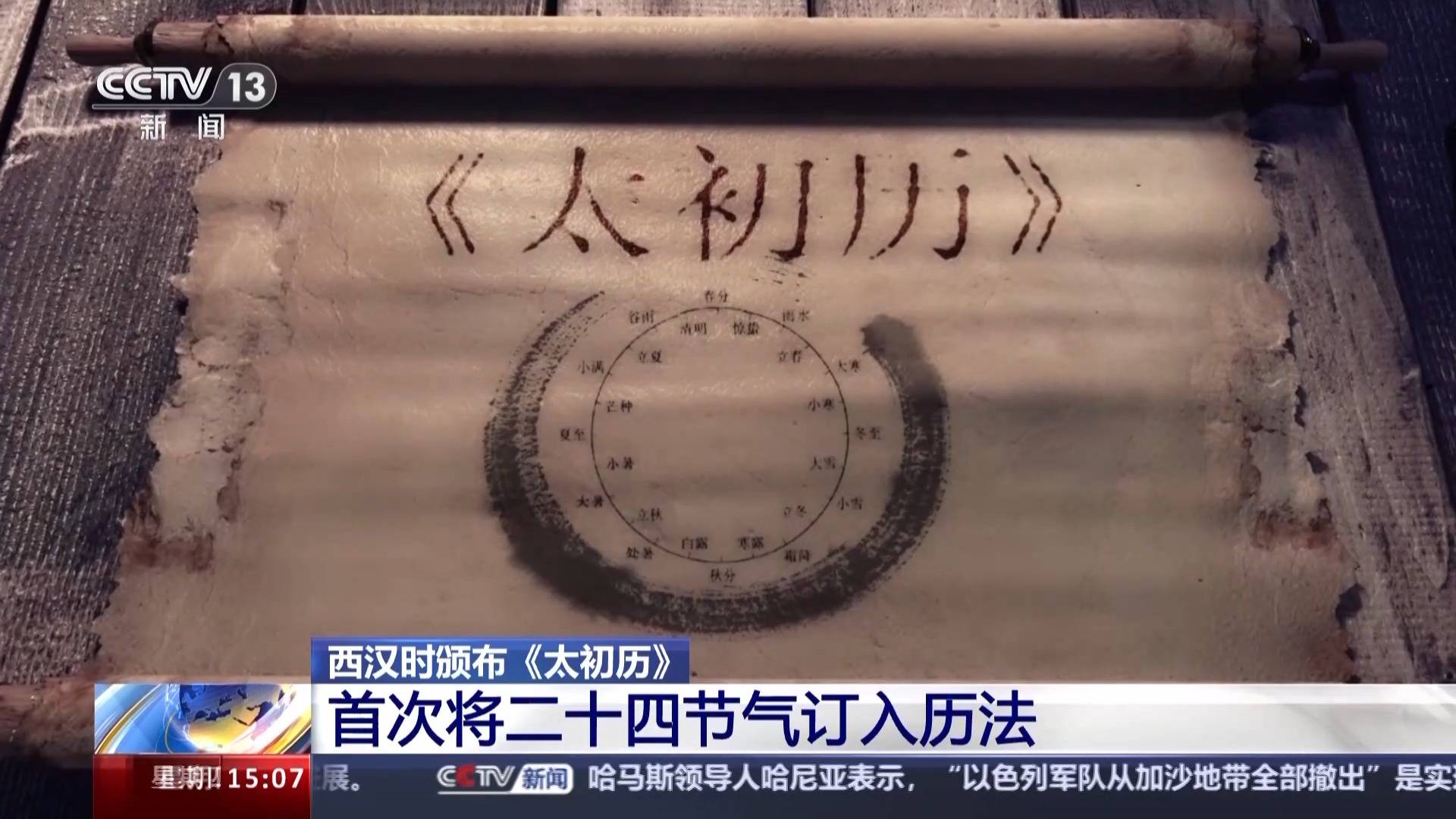
中国传统历法密合天行,与中国古代天文学相生相伴,有着辉煌灿烂的发展史。西汉时颁布的《太初历》首次将二十四节气订入历法,两千多年来,中国人对二十四节气的测算从未间断过。
目前二十四节气精准时刻
可提前数年计算
我们在紫金山天文台偶遇了一群来自澳门的中学生,他们到祖国内地展开科普参访之旅,被古人智慧深深打动。
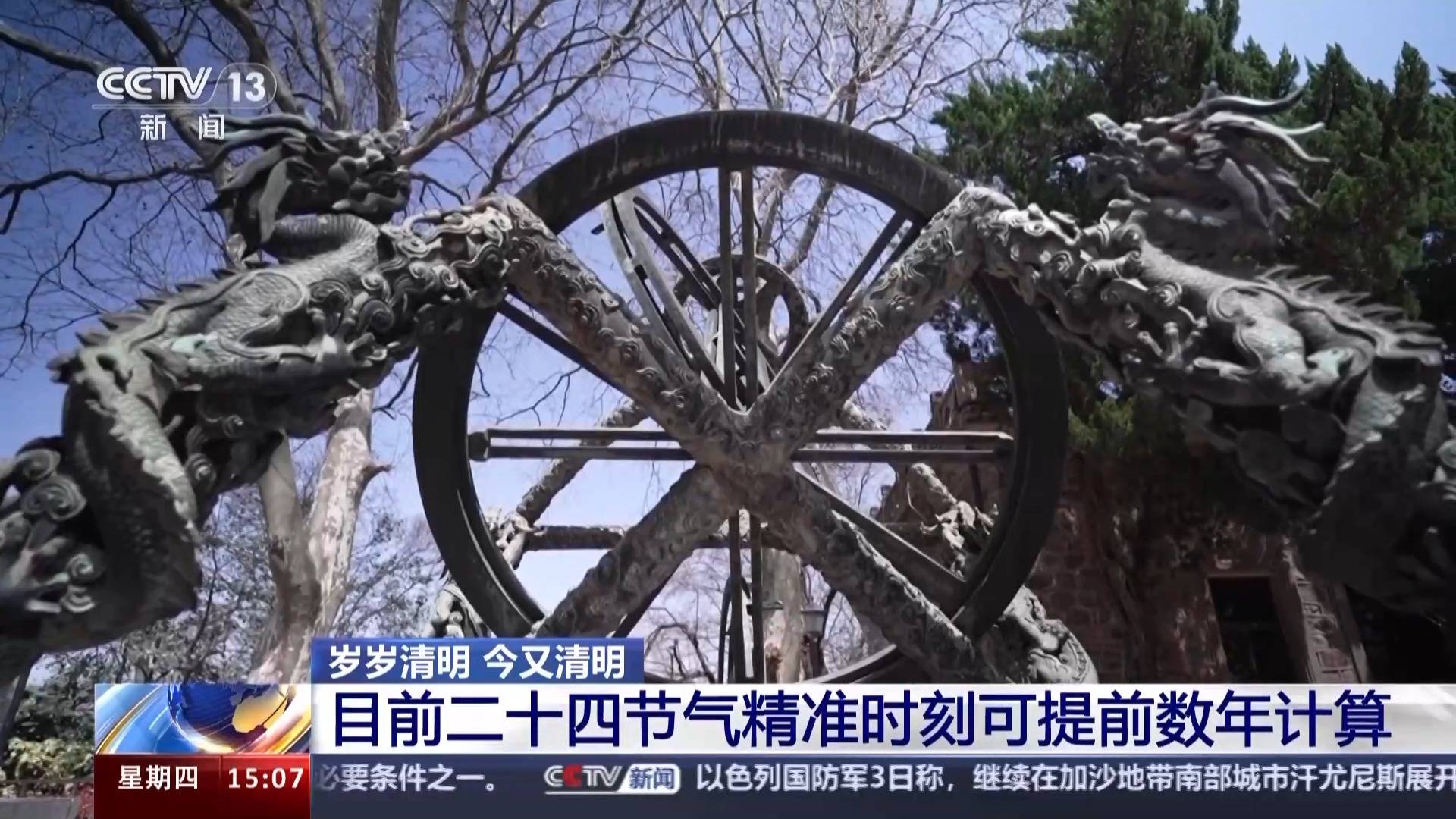
斗转星移、四时变化,一代代中国人仰望天空,探索宇宙的奥秘。今天的中国科学家们能完成许多古人想做而做不到的事。随着观测技术不断进步,计算模型日益成熟,精准的二十四节气时刻已经可以提前数年计算出来。如果您想知道从今年起到2033年十年间的二十四节气时刻,都可以从紫金山天文台发布的十年月历中找到答案。
新闻译文:
In astronomy, the solar term refers to a specific moment. This year's Qingming festival falls at 15:02 today (4th). according to calculations, the Qingming Festival in 2025 will take place at 20:49 on April 4th, and the Qingming Festival in 2026 will take place at 2:40 on April 5th. So how are these specific solar terms measured to the minute? Why is the timing of Qingming Festival slightly different every year? Follow the camera of CCTV reporters from the headquarters to explore the mysteries behind it.
CCTV reporter Zhao Jing: The twenty-four solar terms, including Qingming, Guyu, Lixia, Xiaoman, and so on, can actually be precise to the specific time of each month and day, and these are all released by the Purple Mountain Observatory. The Purple Mountain Observatory is the first modern observatory built by the Chinese people, and also the only calendar compilation and calculation institution in China.
Purple Mountain Observatory:
The only calendar compilation and calculation institution in China
Calendar compilation is the process of calculating accurate celestial body positions and astronomical data. Since 1950, the Purple Mountain Observatory has been compiling the Chinese Astronomical Calendar every year.
Cheng Zhuo, associate researcher of the Zijinshan Observatory of the Chinese Academy of Sciences, said that in our Chinese Astronomical Yearbook, the lunar calendar and the 24 solar terms are published. The ancients have discovered a close relationship between the annual movement of the sun, seasonal changes, and crop growth. Therefore, they divided the cycle of the sun's movement on the ecliptic into 24 equal parts. The coordinates of the sun's movement on the ecliptic are measured by the ecliptic in astronomy. Since the vernal equinox is the starting point of zero degrees, every 15 degrees is a solar term. Qingming is the first solar term after the Spring Equinox, so the coordinate degree of its Huangjing is 15 degrees.
Every year at the Purple Mountain Observatory
Compile the Chinese Astronomical Calendar
The ecliptic can be seen as the path taken by the sun in a year when viewed from Earth. The calculation of the Qingming Festival can be transformed into an astronomical question - when will the sun "walk" to the longitude of 15 degrees.
Cheng Zhuo, associate researcher of the Zijinshan Observatory of the Chinese Academy of Sciences: We have established a high-precision position calculation model of the sun, so that we can get the corresponding time from the sun's position. The solar terms published on the astronomical calendar are usually accurate to a few hours and minutes.
The unique method used by ancient prehistoric people to measure seasonal footsteps
In ancient times without modern observation and calculation equipment, our ancestors used unique methods to measure the footsteps of the seasons and invented many observation instruments that still seem very exquisite today.
Used to measure solar terms
Ming Dynasty Foundry and Qing Dynasty Renovation
The existing Guibiao at the Purple Mountain Observatory was cast in the Ming Dynasty and renovated in the Qing Dynasty. The ancients used a gnomon to measure the solar terms.
Wang Kechao, director of science popularization at the Zijinshan Observatory of the Chinese Academy of Sciences, said: The Gui Biao is composed of a vertical watch at the south end and a horizontal Gui Mian placed in the north and south. The ancients used the phenomenon of instant reflection to measure the solar term by measuring the length of the shadow at noon. We will notice that the length of the solar shadow changes throughout the year as the sun moves in the sky, with the shortest at the summer solstice and the longest at the winter solstice. Each solar term shadow has a specific length. In ancient times, especially in agricultural societies, astronomy and calendar were very important for people's production and life. In the Chinese classic "Yao Dian" in the Book of Documents, there is a record of "Qin Ruo Hao Tian, calendar like the sun, moon, and stars, and respect for people's time", which describes the situation where Chinese ancestors arranged special personnel to observe the sky and formulate astronomical calendars.
Introducing the 24 solar terms for the first time
Booking in the calendar
The traditional Chinese calendar is closely intertwined with the celestial movement, and is closely related to ancient Chinese astronomy, with a brilliant and splendid history of development. The Tai Chu Calendar, promulgated during the Western Han Dynasty, first included the 24 solar terms in the calendar. For over two thousand years, Chinese people have continuously calculated the 24 solar terms.
At present, the precise timing of the 24 solar terms
Can be calculated several years in advance
We encountered a group of high school students from Macau at the Purple Mountain Observatory. They embarked on a science popularization and visiting trip to the mainland of China and were deeply moved by the wisdom of ancient people.
As the stars move and the seasons change, generations of Chinese people look up at the sky and explore the mysteries of the universe. Today's Chinese scientists are able to accomplish many things that ancient people wanted to do but could not. With the continuous advancement of observation technology and the increasing maturity of computational models, the precise timing of the 24 solar terms can be calculated several years in advance. If you want to know the 24 solar terms from this year to 2033, you can find the answer in the ten-year lunar calendar released by the Purple Mountain Observatory.
重点词汇
天文学上 astronomically
指的是 mean ; refer to… ; Nobody ; social order
清明节 Tomb Sweeping Day
算出来 work out
谷雨 Grain Rain
立夏 Beginning of Summer
二十四节气 the 24 solar terms ; the twenty-four solar terms
紫金山天文台 Purple Mountain Observatory
紫金山 Purple Mountain (in Nanking)
中国人 Chinese ; Sino- ; celestial
句子成分分析:
As the stars move || and the seasons change, || generations (of Chinese people) look up [at the sky] and explore the
mysteries (of the universe).
句子语法结构详解:
* as 为连词,引导状语从句。
* move 为谓语,采用一般现在时。
* 第1个 and 为并列连词,连接并列句。
* change 为谓语,采用一般现在时。
* generations 开头为陈述句。
* look 为谓语,采用一般现在时。
* explore 为谓语。
* the 为定冠词。
句子相关词汇解释:
Phrase:
look up at... 抬头看..., 仰望...
Vocabulary:
as [æz] conj. 1) 由于, 因为 2) 当...时, 在...期间, 随着...
star [stɑ:] n. 1) 星,恒星 2) 星状物,星号
move [mu:v] vi. 1) 改变位置,移动 2) 改变,转变
and [ænd] conj. 1) 和, 与, 同, 并 2) 然后,接着
season ['si:zn] n. 1) 季节 2) 旱/雨季
change [tʃeindʒ] vi. 1) 改变,变化 2) 变换,改换
generation [,dʒenә'reiʃәn] n. 1) 一代人 2) 一批,一届
Chinese [tʃai'ni:z] a. 1) 中国的 2) 中国人的
sky [skai] n. 天空
explore [ik'splɔ:] vt. 1) 探索,勘探,探险 2) 探究,探讨
mystery ['mistәri] n. 1) 神秘的事物,不可理解之事,奥秘 2) 神秘的人(或物),陌生而有趣的人(或物)
universe ['ju:nivә:s] n. 1) 宇宙,万象 2) 经验体系
句子成分分析:
The existing Guibiao (at the Purple Mountain Observatory) was cast in the Ming Dynasty and renovated [in
the Qing Dynasty].
句子语法结构详解:
(cast 为过去分词,与其动词原形拼写相同。)
* cast 为谓语,采用一般过去时和被动语态。
* renovated 为谓语,采用一般过去时和被动语态。
* was 为助动词。the 为定冠词。
句子相关词汇解释:
Phrase:
the Ming Dynasty 明朝
the Qing Dynasty 清朝
Vocabulary:
existing a. 现存的;现行的
purple ['pә:pl] a. 1) 紫色的 2) 华丽的文辞,雕琢的章句
mountain ['mauntin] n. 1) 高山,山岳 2) 许多,大量
observatory [әb'zә:vәtәri] n. 观测站, 天文台, 气象台
cast [kɑ:st] vt. 1) 扔,掷 2) 向……投以(视线、笑容等)
and [ænd] conj. 1) 和, 与, 同, 并 2) 然后,接着
renovate ['renәuveit] vt. 修复,翻新,重新粉刷
更多内容:
http://www.busyword.com/entailed
http://www.busyword.com/bradoon
http://www.busyword.com/locke
http://www.busyword.com/dead end
http://www.busyword.com/blow off
http://www.busyword.com/an established principle of international law
http://www.busyword.com/exceed in
http://www.busyword.com/wolfhound
http://www.busyword.com/foreshadow
以上是秒词邦为您整理编写的文章《今年清明为何是4月4日15时02分?探秘中国人独有的节气测算——秒词邦背单词app》的全部内容。秒词邦是国内权威分题型分考点背诵中高考/四六级考研/专升本/出国单词的专业单词软件。扫描如下小程序码,进入秒词邦官方小程序获取更多英语相关资料! 【关键词:高考单词;高考英语;高中单词;高中英语;单词app;单词软件;记单词app;记单词软件;背单词软件;背单词app;英语单词;四六级单词;四六级英语;四六级单词app;四六级单词软件;考研单词app;考研单词软件;核心单词;高考冲刺复习;高考英语教材;高考英语真题;四六级真题;四六级试题;考研真题;考研英语单词;考研英语真题】