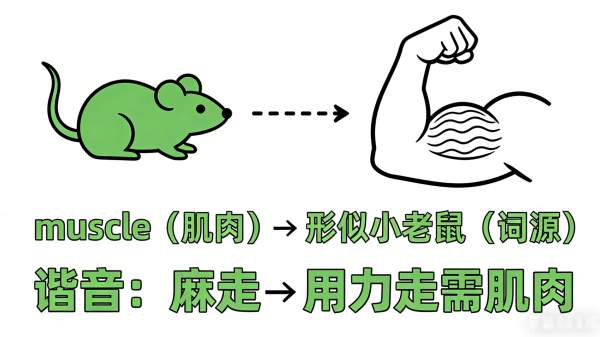
知识扩展
相关变形拓展
复数:muscles→三单:muscles→过去式:muscled→过去分词:muscled→现在分词:muscling→形容词:muscular(肌肉发达的)
易混词辨析
flesh、meat、strength、muscular
1. muscle:名词“肌肉;力量”(侧重“人体或动物体内收缩产生运动的组织,或比喻人的力量”,搭配“arm muscle 手臂肌肉;build muscle 练肌肉;muscle power 肌力”,如“He has strong arm muscles. 他的手臂肌肉很发达。”);
2. muscle vs. flesh:flesh名词“肉;肉体”(侧重“人体或动物的软组织,区别于骨骼、皮肤”,如“animal flesh 兽肉;flesh and blood 血肉之躯”),muscle是flesh的一部分;
3. muscle vs. meat:meat名词“肉;肉类”(侧重“可食用的动物肉”,如“beef meat 牛肉;chicken meat 鸡肉”),muscle可指“食用肉中的肌肉部分”,但“肌肉”不可用meat表示;
4. muscle vs. muscular:muscular形容词“肌肉发达的;肌肉的”(muscle的形容词形式,如“a muscular man 肌肉发达的男人”),核心区别是词性。
单词解说1
muscle在某些非标准或特定语境下可用作及物动词,意思是“强取”“强推”“使具有力量”“强行进入”“干涉”“侵入”,但更常见的用法是作名词。在方言中,它还表示“用力搬运”,其后接名词或代词作宾语。可用于被动结构。
精选例句
1、 Doing exercise every day can make our muscles strong.
每天锻炼能使我们的肌肉变得强壮。(重点:可数名词,复数为muscles,健康类话题词汇)
来源:【中考难度例句】秒词邦编辑整理
2、 As we age we lose muscle tissue.
随着年纪的增大,我们会失去一些肌肉组织。
来源:秒词邦搜集整理
1、 I've torn a calf muscle.
我拉伤了小腿肌肉。
来源:秒词邦搜集整理
1、 "" They were taught that the brain is like a muscle that gets stronger with use and that learning prompts the brain to grow new connections.
他们被教导说,大脑就像肌肉,越用越强,学习能促使大脑生长新的连接。
来源:2016年12月四级第2套题[句子搭配题]
**【点此进秒词邦小程序】查看更多真题例句

 文
文