风物二十四节气|夏至:水边赏荷,入山静居
风物二十四节气|夏至:水边赏荷,入山静居
今日是夏至,夏至既是二十四节气之一,古时也是民间“四时八节”中的一个节日。自古民间有在夏至拜神祭祖的习俗。夏至时节,可以赏荷、食瓜,更可入山静居避暑。
此时荷花正盛,从宋代至今,画家笔下的荷花皆一片清韵,如宋代《出水芙蓉图》设色端庄大气,宋人写真微妙处,让人慨叹;宋人《槐荫消夏图》则写槐树之下,一位高士养神仰以藤笪卧榻之上,读之一片凉爽。
水面闻香,名迹中的荷花
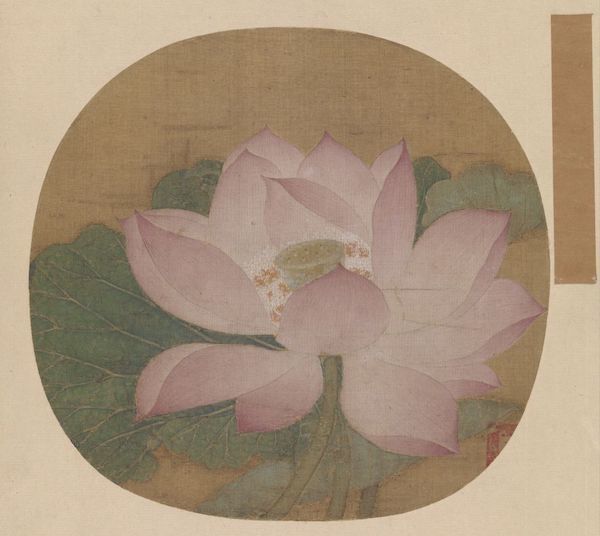
宋 出水芙蓉图 页 故宫博物院藏
宋代《出水芙蓉图》中,一朵盛开的粉红色荷花占据整个画面,在碧绿的荷叶映衬下抢眼而夺目,布局、设色端庄大气,将荷花“出淤泥而不染,濯清涟而不妖”的君子气质表现得十分完美。
莲瓣的描绘技法类似后世的“没骨”法,不见勾勒之迹,渲染出花瓣既轻盈又腴润的质感。画家的写实功力极为扎实,每片莲瓣的形状、角度、色泽和光感都安排得无懈可击。至于瓣上红丝、蕊端腻粉,也一一仔细料理,微妙之处,使人叹为神工!旧题吴炳绘,无据。存《名笔集胜》册中。《虚斋名画录》著录。
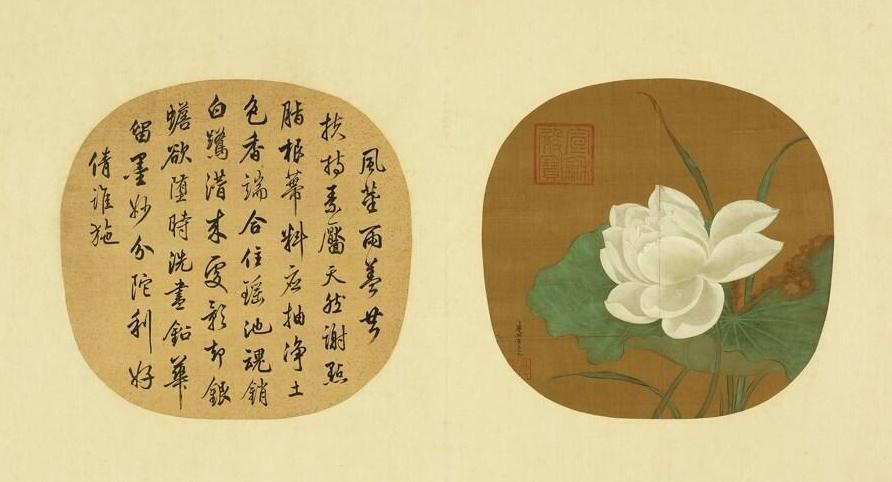
(传)宋 黄居寀 白莲 本幅选自台北故宫博物院藏“历代名绘册”
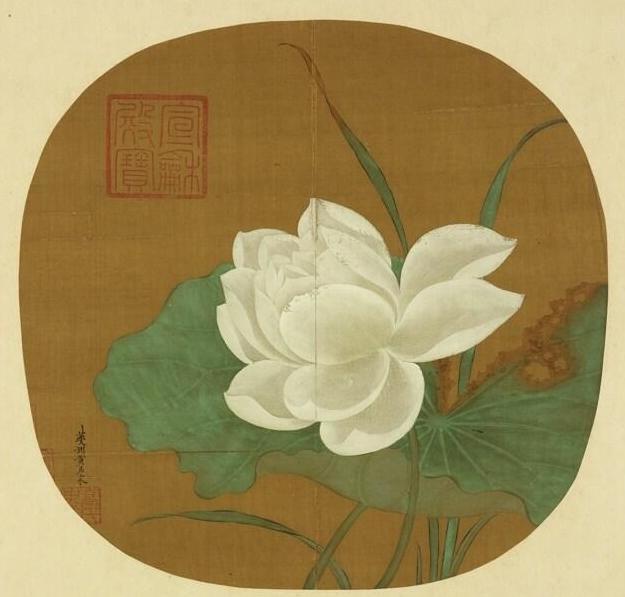
(传)宋 黄居寀 白莲(局部) 本幅选自台北故宫博物院藏“历代名绘册”
宋 缂丝 荷花轴
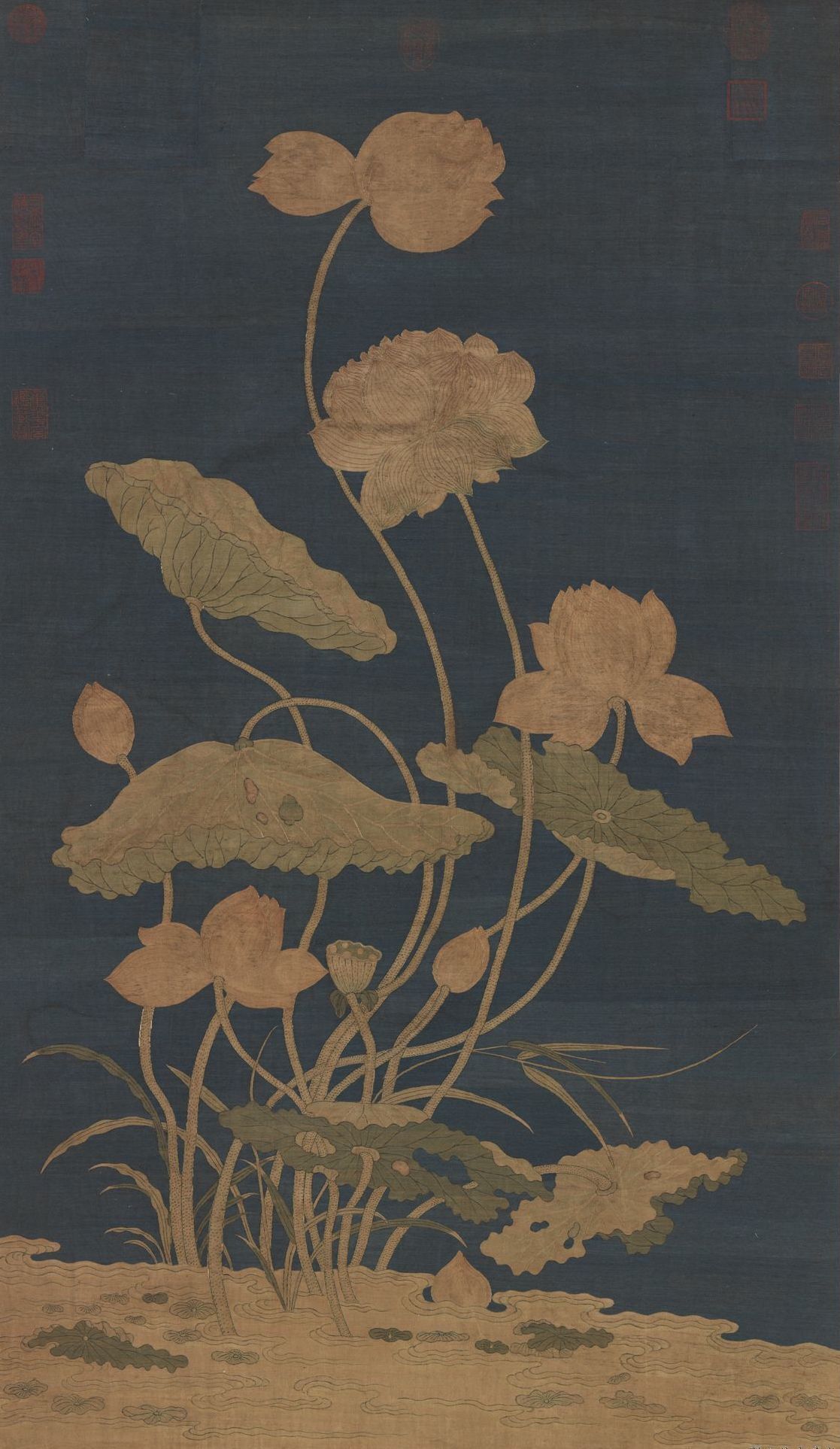
宋 缂丝 荷花轴 台北故宫博物院藏
《荷花水鸟图》轴(元赵孟頫)绘一枝荷花自左向右斜上而出立于水上,一双鹡鸰立于莲荷枝干,荷花双钩填色,以工带写;荷叶叶脉清新,似有微风轻拂;枝干富有弹性,仿佛只要鸟飞走,就会回复直伸之状,形态生动。全幅工而不艳,细而不拘,既无南宋花鸟画的浓艳之弊,又无北宋以来士夫画逸笔墨戏之陋,在强调文人作画重神情的同时,又摈弃文人落笔忽视形象的游戏态度。
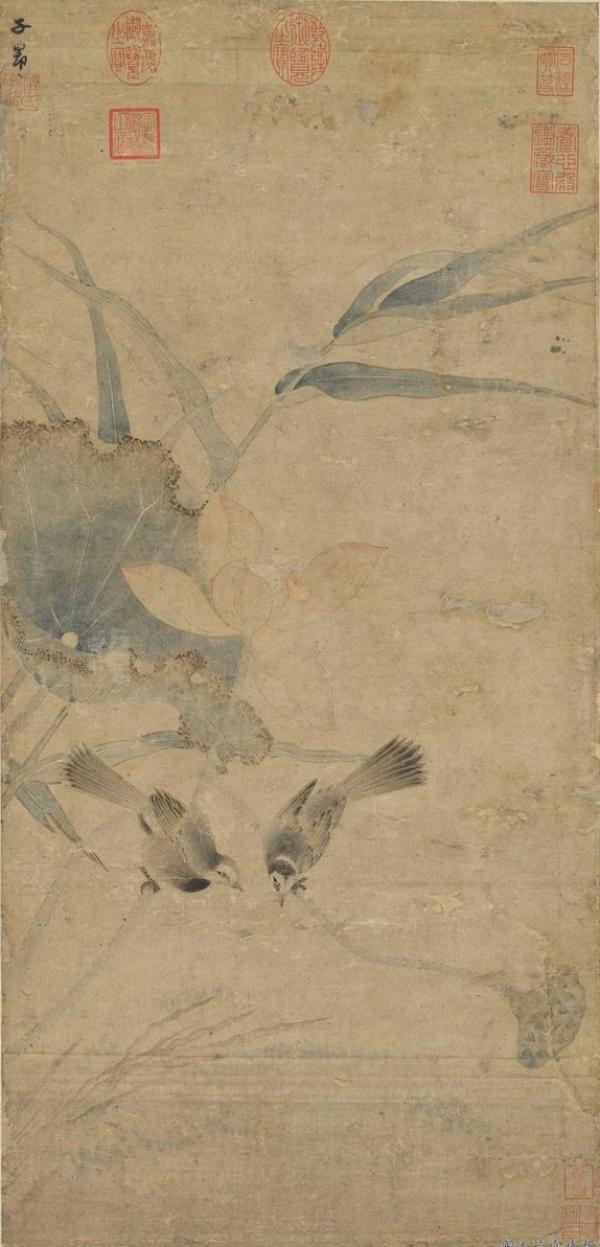
(传)《荷花水鸟图》轴 元 赵孟頫 台北故宫博物院藏
明代沈周《写生册》选自沈周六十八岁所作“写生”册中的第四幅,用意精而笔墨不羁。以大笔挥写荷叶,水墨淋漓交融,芦叶用笔劲利,待放荷花则用淡墨勾画,并稍加晕染,虽淡白犹胜艳红。叶心上正蹲踞的水蛙,更为此作凭添了无限生趣。
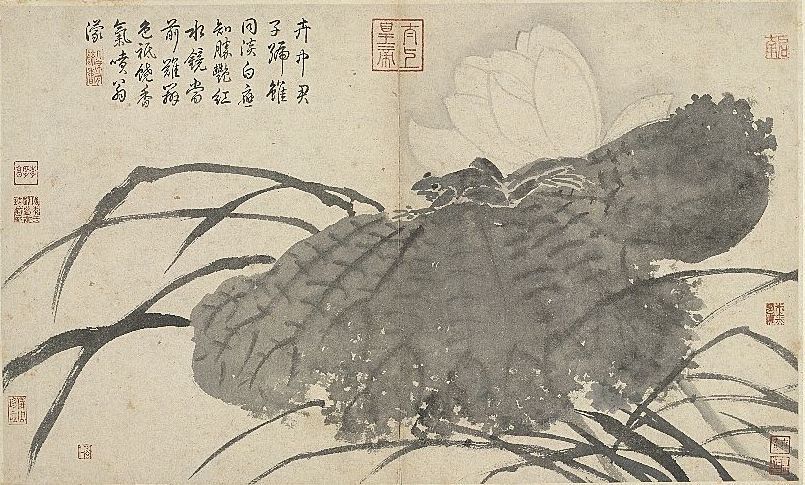
明 沈周 写生册 荷花与蹲蛙 台北故宫博物院藏
消夏避伏,入山避暑
夏至日,古时妇女即互相赠送折扇、脂粉等什物。《酉阳杂俎•礼异》:“夏至日,进扇及粉脂囊,皆有辞。”“扇”,借以生风;“粉脂”,以之涂抹,散体热所生浊气,防生痱子。
(传)宋 黄居寀 白莲(局部) 本幅选自台北故宫博物院藏“历代名绘册”
宋 缂丝 荷花轴
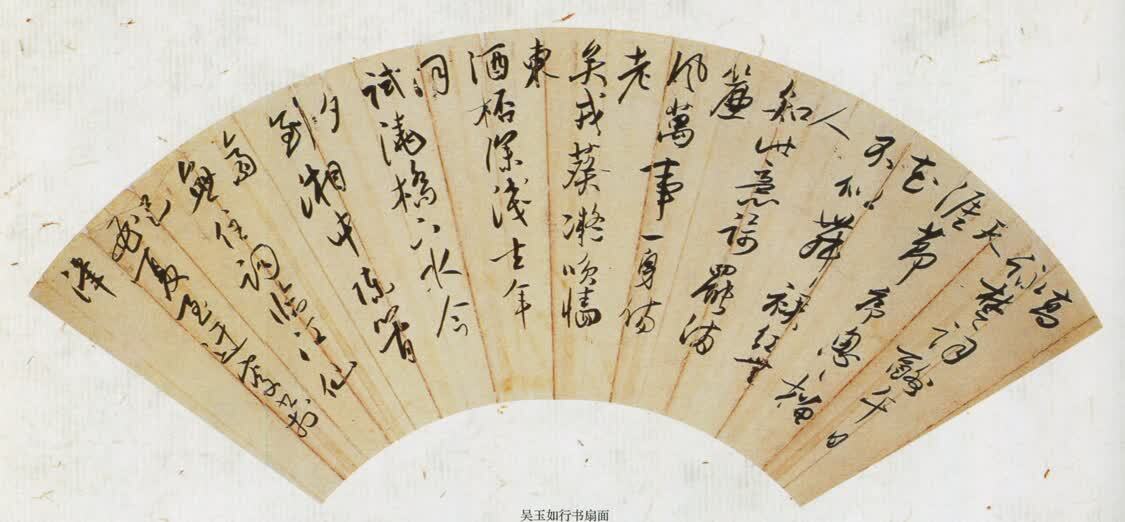
度夏必定离不开扇子。一般人习惯用蒲扇,文人用折扇。书画之扇,既可以扇风,又能欣赏,真正是实用艺术两面光,赏心悦目、心旷神怡之时,清风徐来,面颊生风,汗液挥发,难得惬意。
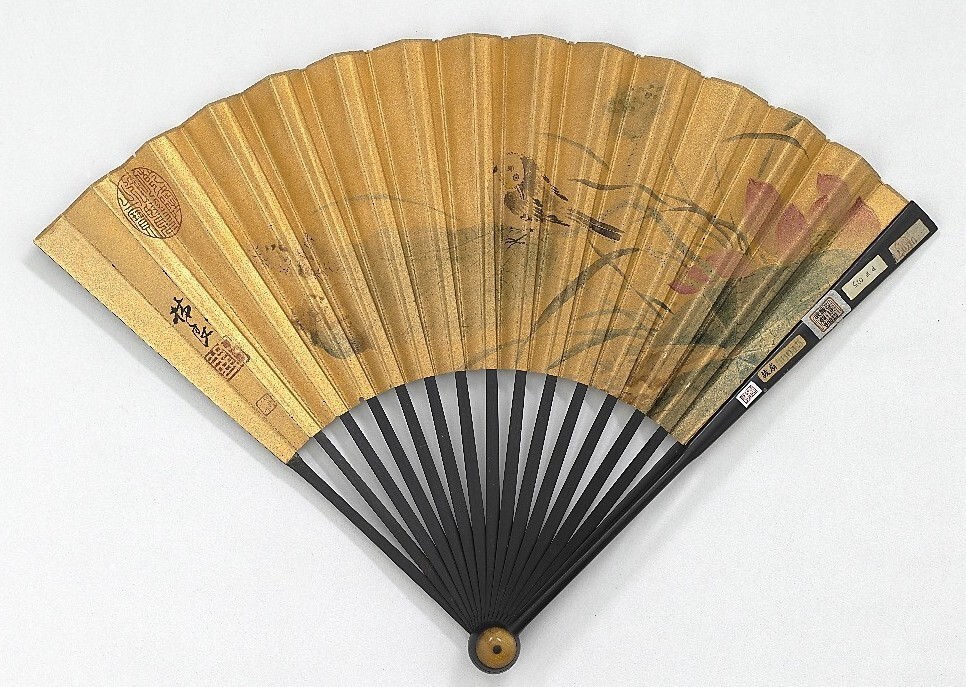
明 林良 画荷花 成扇 台北故宫博物院藏
历史上著名的消夏图有宋人《槐荫消夏图》,元 刘贯道《消夏图》等。北京故宫博物院藏《槐荫消夏图》,写槐树之下,一位世隐高士,养神仰以藤笪卧榻之上,所见案几手卷、香炉、蜡扦外亦有屏风幅装雪景山水,自然凉爽。
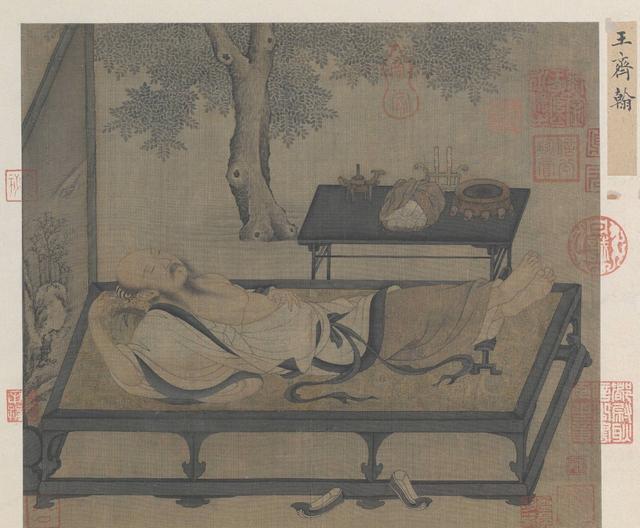
宋人绘《槐荫消夏图》
夏至宜食瓜。清代“扬州八怪”中的金农,面对酷暑,他画两片红壤黑籽的绿皮西瓜,题曰:“行人午热,何物能消渴。想着青门门外路,凉亭侧,瓜新切,一钱便买得。”
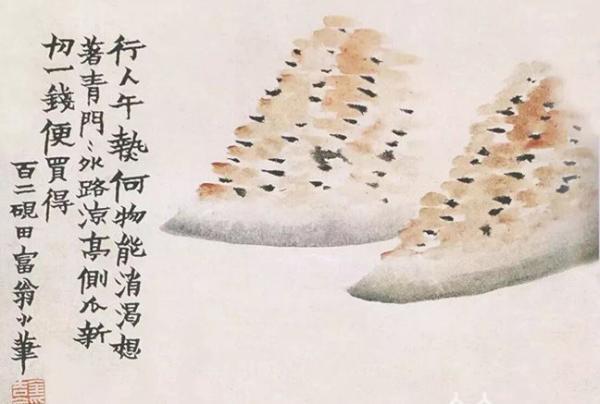
金农笔下的西瓜
也有入山避暑,敦煌壁画中绘有不少在山中静居的画面。唐人似乎更懂“此中有真意,欲辨已忘言”的禅意,从而对山,对水,对此间风景多了几分亲近与好感。
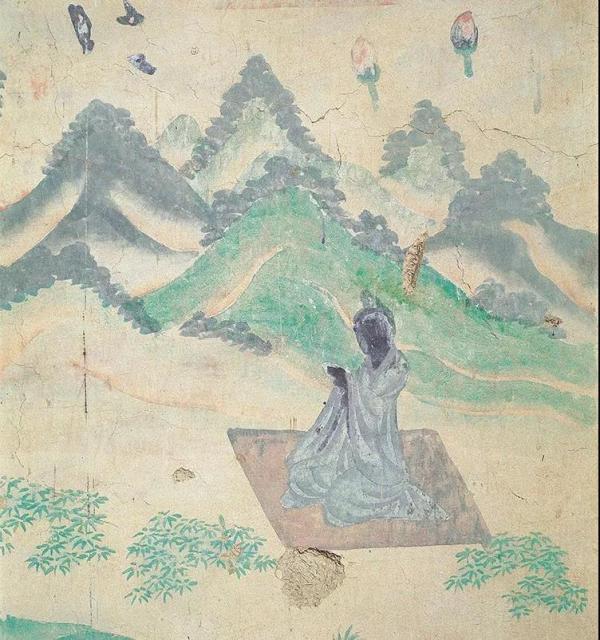
《坐席观山》莫高窟第431窟,初唐
绘于莫高窟第431窟的《十六观》中,韦提希夫人皈依佛法,她静心观山,以期达到理想境界。丘陵、山脉、草木只是简单勾勒,清淡设色,她应该能在这朴素中觅得真心。
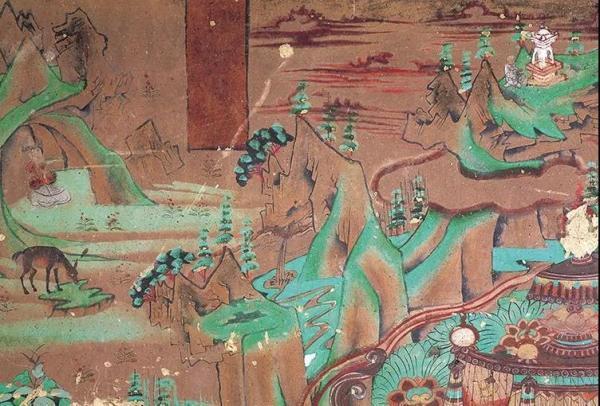
《山中修行》, 莫高窟第112窟,中唐
在莫高窟第112窟《报恩经变》中,壁画中部佛陀说法,上部绘有山峦石洞,花木流泉,盘山古道,宝塔云霞,水墨晕染,色彩清新。鹿女故事穿插其中,少女禅坐窟内,一只雌鹿俯首吃草,各得其乐。
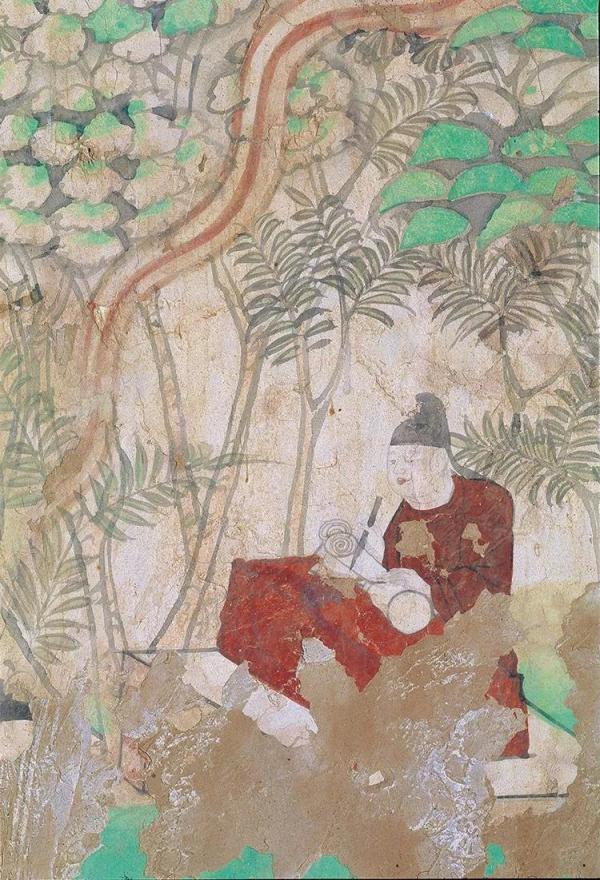
《林间写经》,榆林窟第25窟,中唐
夏至闲居,抄经不失为一大乐事。榆林窟第25窟有《林间写经》,华尔纳当年在榆林窟疯狂拍照,并夸赞它有“惊人的美”。这一窟壁画所绘的色彩,已由开元、天宝时代的富丽堂皇转为质朴纯正。色以青绿、土红为主,薄施淡彩,似有若无,含蓄内敛。
“林间写经”的局部,定格了一位佛教徒在树下执笔写经的状态,他将自己置身枝叶交错的茂林当中,高中低不同的树种姿态,丰富了画面的层次,为写经的人提供了一方“林中净土”。
南宋张即之《佛教遗经》跋即注明抄于“乙卯夏至”,张即之一生抄经颇多,而且都是长篇大论,不是写经生,胜似写经生。读此书法,一种清凉之气自然生发。
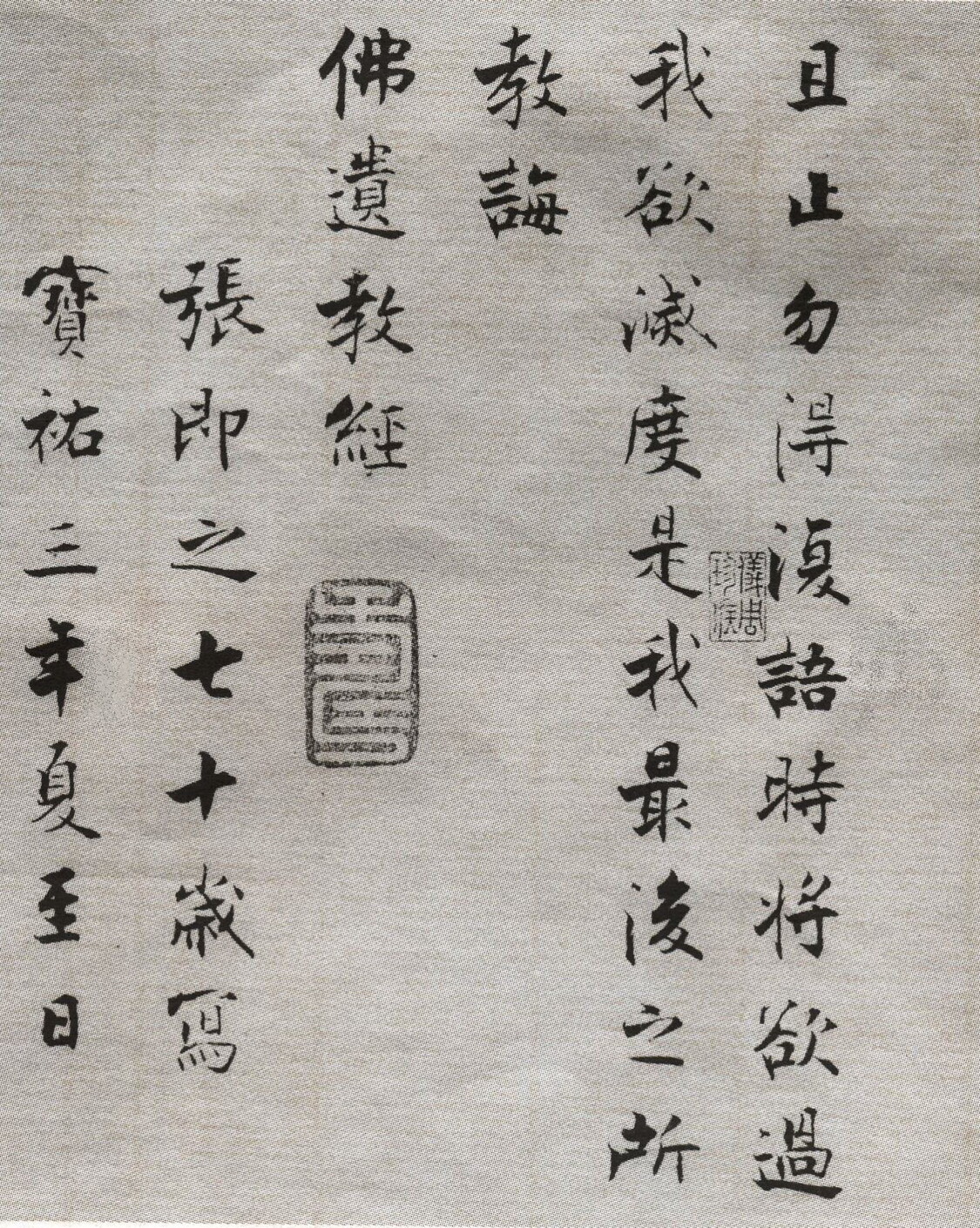
南宋张即之《佛教遗经》即注明抄于“乙卯夏至”
The 24 solar terms of Fengwu | Summer Solstice: Appreciating lotus by the water and staying quietly in the mountains
Today is the summer solstice, which is not only one of the 24 solar terms, but also a folk festival in ancient times. Since ancient times, there has been a folk custom of worshipping gods and ancestors during the summer solstice. During the summer solstice, you can enjoy lotus, eat melons, and even enter the mountains to stay quietly and avoid the summer heat.
At this time, lotus flowers were in full bloom. From the Song Dynasty to the present, the lotus flowers in the painter's paintings are all in a clear and elegant style. For example, in the Song Dynasty's painting "Lotus Blossoms in Water", the colors were dignified and atmospheric, and the subtle details of the Song people's photographs made people sigh with emotion; The Song Dynasty painting "Huaiyin Xiaoxia Tu" depicts a high scholar resting on a rattan pagoda under a locust tree, reading a refreshing scene.
The fragrance on the water surface, the lotus flowers in famous sites
Song Chu Shui Fu Rong Picture Page collection of the Palace Museum
In the Song Dynasty painting "Lotus Blossoms in Water", a blooming pink lotus flower occupies the entire picture, eye-catching and eye-catching against the green lotus leaves. The layout and color scheme are dignified and atmospheric, perfectly portraying the gentleman's temperament of the lotus flower "emerging from the mud without staining, washing the clear ripples without being demonic".
The depiction technique of lotus petals is similar to the later "boneless" technique, without any trace of outline, rendering the petals with a light and plump texture. The painter's realistic skills are extremely solid, and the shape, angle, color, and light of each lotus petal are arranged flawlessly. As for the red silk on the petals and the greasy powder on the tips, they are carefully prepared one by one, and the subtle details make people marvel at their divine craftsmanship! The old question of Wu Binghua is unfounded. Recorded in the book "Famous Brush Collection". Recorded in the "Xu Zhai Ming Hua Lu".
(Legend) The painting of Cai Bailian by Song Huangju is selected from the "Famous Paintings of All Dynasties" in the collection of the Taipei Palace Museum
(Legend) Song Huangju Cai Bailian (Part) This painting is selected from the "Famous Paintings of All Dynasties" collection of the Taipei Palace Museum
Song Kesi Lotus Axis
Song Kesi Lotus Axis, Taipei Palace Museum Collection
The scroll of "Lotus and Water Bird Painting" (Zhao Mengfu of the Yuan Dynasty) depicts a lotus flower slanting upwards from left to right on the water, a pair of wagtail standing on the stem of the lotus branch, and the lotus flower with two hooks painted with colors, written with a work belt; The lotus leaf veins are fresh, as if a gentle breeze is blowing; The branches are elastic, as if as long as the bird flies away, it will return to a straight and lively shape. The entire painting is exquisite but not glamorous, detailed but not restrained, without the drawbacks of the richness and splendor of the Southern Song Dynasty's flower and bird paintings, nor the crude style of literati painting since the Northern Song Dynasty. While emphasizing the emphasis on expression in literati painting, it also abandons the playful attitude of literati painting and neglecting image.
(Legend) "Lotus, Water and Bird Painting" Axis: Zhao Mengfu, Collection of the Taipei Palace Museum
The "Sketching Book" by Shen Zhou in the Ming Dynasty is selected from the fourth painting in the "Sketching Book" written by Shen Zhou at the age of 68, with precise meaning and unrestrained brushwork. Using a large brush to depict lotus leaves, ink and wash blend seamlessly. The reed leaves are sharp with a pen, while the lotus flowers are outlined in light ink with a slight smudge. Although they are light white, they are still better than bright red. The water frog crouching on Ye Xin added infinite vitality as a proof.
The Ming, Shen, and Zhou sketchbooks of lotus flowers and crouching frogs are in the collection of the Taipei Palace Museum
Summer retreat, entering the mountains to escape the heat
On the summer solstice, ancient women gave each other folding fans, cosmetics, and other items. "On the summer solstice, when entering the fan and the powder and fat bag, there are words." "Fan" is used to generate wind; "Powder fat" can be applied to disperse heat and produce turbid qi, preventing the formation of prickly heat.
(Legend) Song Huangju Cai Bailian (Part) This painting is selected from the "Famous Paintings of All Dynasties" collection of the Taipei Palace Museum
Song Kesi Lotus Axis
To spend summer, one cannot do without a fan. ordinary people are accustomed to using a fan, while literati use a folding fan. The fan of calligraphy and painting can both fan and appreciate, truly shining on both sides of practical art. When it is pleasing to the eye and refreshing to the mind, the gentle breeze comes, the cheeks are windy, and sweat evaporates, making it rare to feel comfortable.
Ming Lin Liang painted lotus flowers as fans, collected by the Taipei Palace Museum
Famous summer pictures in history include the Song Dynasty's "Huaiyin Summer Scenery" and the Yuan Dynasty's Liu Guandao's "Summer Scenery". The Palace Museum in Beijing has a collection of "Huaiyin Xiaoxia Tu", depicting a reclusive scholar under the Huai tree, resting on a rattan pagoda to nourish his mind. Outside the desk scroll, incense burner, and wax skewers, there is also a screen with a snow landscape, which is naturally cool.
Song Dynasty Painted "Huaiyin Xiaoxia Tu"
It is advisable to eat melons during the summer solstice. In the "Eight Eccentrics of Yangzhou" during the Qing Dynasty, Jin Nong faced the scorching heat and painted two green watermelons with red soil and black seeds. He wrote, "When it's hot at noon, what can quench thirst? Thinking about the freshly cut melons on the road outside the Qingmen Gate and the side of the pavilion, you can buy them for a penny."
Watermelon under Jin Nong's pen
There are also scenes of entering the mountains to escape the summer heat, and many Dunhuang murals depict scenes of living quietly in the mountains. Tang people seem to have a better understanding of the Zen meaning of "there is true meaning in this, and one wants to distinguish between forgotten words", which has led to a closer and more favorable impression of the mountains, water, and scenery here.
"Sitting and Watching the Mountain" Cave 431 of Mogao Grottoes, Early Tang Dynasty
In the "Sixteen Views" painted in Cave 431 of the Mogao Grottoes, Lady Weitixi converted to Buddhism and calmly observed the mountains in order to achieve her ideal state. Hills, mountains, and vegetation are just simple outlines, with light colors. She should be able to find sincerity in this simplicity.
"Mountain Practice", Cave 112 of Mogao Grottoes, Middle Tang Dynasty
In the 112th cave of the Mogao Grottoes, the "Gratitude Sutra Transformation", the central part of the mural depicts the Buddha's teachings, while the upper part depicts mountain caves, flowing springs of flowers and trees, ancient mountain paths, pagodas and clouds, ink and wash, and fresh colors. The story of the deer girl is intertwined, with the girl sitting in a meditation cave and a female deer bowing down to eat grass, each enjoying its own pleasure.
"Lin Jian Shu Jing", Cave 25 of Yulin Caves, Middle Tang Dynasty
Living leisurely on the summer solstice, copying scriptures can be a great pleasure. The 25th cave of Yulin Grottoes has the "Forest Scriptures", and Warner took crazy photos in Yulin Grottoes and praised its "amazing beauty". The colors depicted in this cave mural have shifted from the grandeur of the Kaiyuan and Tianbao eras to simplicity and purity. The colors are mainly green and earthy red, with light colors applied thinly, as if there is something but nothing, subtle and introverted.
The part of "writing scriptures in the forest" captures the state of a Buddhist writing under a tree. He immerses himself in a dense forest with intertwined branches and leaves, and the different tree species of high, medium, and low positions enrich the level of the picture, providing a "pure land in the forest" for those who write scriptures.
In the postscript to Zhang Jizhi's "Buddhist Legacy Sutra" during the Southern Song Dynasty, it was noted that he copied many sutras throughout his life, and they were all lengthy essays. He was not a scriptwriter, but rather a scriptwriter. Reading this calligraphy, a refreshing aura naturally arises.
Zhang Jizhi's "Buddhist Legacy Sutra" of the Southern Song Dynasty states that it was copied from "Yimao Summer Solstice"
句子成分分析:(划分说明 ) 提示:框中标识可点击
[In the 112th cave (of the Mogao Grottoes, <the "Gratitude SutraTransformation">],) the central part (of the mural) depicts the Buddha's teachings, || while the upper part depicts mountain caves, flowing springs (offlowers and trees), ancient mountain paths, pagodas and clouds, ink and wash, and fresh colors.
句子语法结构详解:
* 第1个 depicts 为谓语,采用一般现在时。动词采用第三人称单数形式。
* while 为连词,引导状语从句。
* 第2个 depicts 为谓语,采用一般现在时。动词采用第三人称单数形式。
* flowing 为现在分词作定语
* Buddha's 为名词所有格。the 为定冠词。
句子相关词汇解释:
Vocabulary:
| cave [keiv] | n. | 洞穴 |
| grotto ['grɔtәu] | n. | 洞穴(尤指园林等中的)石窟 |
| gratitude ['grætitju:d] | n. | 感激 |
| sutra ['su:trә] | n. | 1) (梵文的)箴言;格言,经 2) (佛教或耆那教的)修多罗,经 |
| transformation [,trænsfә'meiʃәn] | n. | (彻底的)变化,改观,转变,改革 |
| central ['sentrәl] | a. | 1) 中心的,中央的 2) 最重要的,首要的,主要的 |
| part [pɑ:t] | n. | 1) 部分 2) 部件,零件 3) 角色,台词 |
| mural ['mjuәrәl] | n. | 壁画 |
| depict [di'pikt] | vt. | 1) 描绘,描画 2) 描写,描述,刻画 |
| Buddha ['budә] | n. | 1) 佛陀(佛教创始人) 2) 佛像 |
| teaching ['ti:tʃiŋ] | n. | 1) 教学,授课,指导 2) 教导,学说,教义,教诲 |
| while [hwail] | conj. | 1) 当...的时候:, 在...期间; 2) 而, 然而(表示对比或相反) 3) 虽然 |
| upper ['ʌpә] | a. | 1) 上边的,上面的,上层的(尤指同类或一对中的一个) 2) 上部,靠上部的 |
| depict [di'pikt] | vt. | 1) 描绘,描画 2) 描写,描述,刻画 |
| mountain ['mauntin] | n. | 1) 高山,山岳 2) 许多,大量 |
| flow [flәu] | vi. | 1) (液体、气体或电)流,流动 2) (人或事物)涌流,流动 |
| spring [spriŋ] | n. | 1) 春天 2) 弹簧 |
| flower ['flauә] | n. | 1) 花; 花朵 2) 开花植物 |
| and [ænd] | conj. | 1) 和, 与, 同, 并 2) 然后,接着 |
| tree [tri:] | n. | 树,树木,乔木 |
| ancient ['einʃәnt] | a. | 1) 古代的 2) 古老的,很老的 |
| path [pɑ:θ] | n. | 1) 小路,小径 2) 路线,道路 |
| pagoda [pә'gәudә] | n. | (南亚或东亚的)佛塔 |
| cloud [klaud] | n. | 1) 云 2) 云状物,(一)群,(一)团 |
| ink [iŋk] | n. | 墨水,墨汁,油墨 |
| wash [wɔʃ] | n. | 1) 清洗,洗涤 2) 水流,波浪 |
| fresh [freʃ] | a. | 1) (通常指食物)新鲜的,新产的,刚摘的 2) 新近的,新近出现的,新近体验的 |
| color ['kʌlә] | n. | 1) 颜色 2) 彩色 |
句子成分分析:(划分说明) 提示:框中标识可点击
He immerses himself in a dense forest [with intertwined branches] and leaves, ||and the different tree species (of high, medium, and low positions) enrich the level (of the picture), providing a "pure land [in the forest"] [for those (who writescriptures)].
句子语法结构详解:
* immerses 为谓语,采用一般现在时。动词采用第三人称单数形式。
* leaves 为谓语,采用一般现在时。动词采用第三人称单数形式。
* 第2个 and 为并列连词,连接并列句。
* enrich 为谓语,采用一般现在时。
* providing 为现在分词,作状语。
* who 为关系代词,引导定语从句。
* write 为谓语,采用一般现在时。
* he 为人称代词主格。himself 为自身代词。those 为指示代词。the 为定冠词。a 为不定冠词。
句子相关词汇解释:
Vocabulary:
| immerse [i'mә:s] | vt. | 1) (使)深陷于,沉浸在 2) 使浸没于 |
| himself [him'self] | pron | 他自己 |
| dense [dens] | a. | 1) 密集的,稠密的 2) 浓密的,浓重的 |
| forest ['fɔrist] | n. | 1) 森林 2) 一片,一丛 |
| branch [bræntʃ] | n. | 1) 树枝 2) (学科,语言等)分支 3) 分支,分部,分行,分枝机构 |
| and [ænd] | conj. | 1) 和, 与, 同, 并 2) 然后,接着 |
| leave [li:v] | vi. | 离开 |
| different ['difәrәnt] | a. | 1) 不同的,有区别的,有差异的 2) 分别的,各别的,各种的 |
| tree [tri:] | n. | 树,树木,乔木 |
| species ['spi:ʃiz] | n. | 种,物种(分类上小于属) |
| high [hai] | a. | 1) 高的 2) 有某高度的 |
| medium ['mi:diәm] | a. | 中等的,中号的 |
| low [lәu] | a. | 1) 低的,矮的,离地面近的 2) 在底部的,近底部的 |
| position [pә'ziʃәn] | n. | 1) 位置,方位 2) 恰当位置,正确位置 |
| enrich [in'ritʃ] | vt. | 1) 充实,使丰富,使富含(某物) 2) 使富有,使富裕 |
| level ['levl] | n. | 1) 水平,级别,层次 2) 水平高度 |
| picture ['piktʃә] | n. | 1) 图画,绘画 2) 相片,照片 |
| provide [prә'vaid] | vt. | 1)
以上是秒词邦为您整理编写的文章《风物二十四节气|夏至:水边赏荷,入山静居》的全部内容。秒词邦是国内权威分题型分考点背诵中高考/四六级考研/专升本/出国单词的专业单词软件。扫描如下小程序码,进入秒词邦官方小程序获取更多英语相关资料! 【关键词:高考单词;高考英语;高中单词;高中英语;单词app;单词软件;记单词app;记单词软件;背单词软件;背单词app;英语单词;四六级单词;四六级英语;四六级单词app;四六级单词软件;考研单词app;考研单词软件;核心单词;高考冲刺复习;高考英语教材;高考英语真题;四六级真题;四六级试题;考研真题;考研英语单词;考研英语真题】 |